case studies
CERES PIZZA x tendlyn.
There’s a version of this story where Jacob Serebnick and Julian Geldmacher spend four years writing a business plan, lining up investors, and stress-testing their unit economics before they charge forty dollars for a cheese pizza. That isn’t this story.
This is the story of two cooks who lost their jobs at Eleven Madison Park when the pandemic hit, spent time working at a pizza place in Point Pleasant, New Jersey, and came out the other side asking a simple question: what kind of business could survive anything? The answer was pizza. The conviction was to do it without compromise. The rest followed from there.
In January 2025, CERES opened on M Street with $200,000 raised from friends and family and approximately $300,000 in credit card debt. They had enough ingredients for the first 500 pizzas and enough belief in the product to not pay themselves for however long it took. The build-out was done in three months using the best value contractor they could find. No interior designer. No lighting consultant. Just the kitchen, the dough, and what Serebnick describes plainly as naivety.
No Shortcuts. No Apology. No Asterisk.
The forty dollar cheese pizza was never a confidence play. Serebnick is clear about that. The price is a consequence of the ingredients - of Manhattan occupancy, of labor, of a refusal to source anything less than what the pizza demands. It’s what they have to charge to keep the lights on and the standards where they are. If anything, he says, it’s something they were insecure about. A premium price on a humble thing, betting that the product would close the gap.
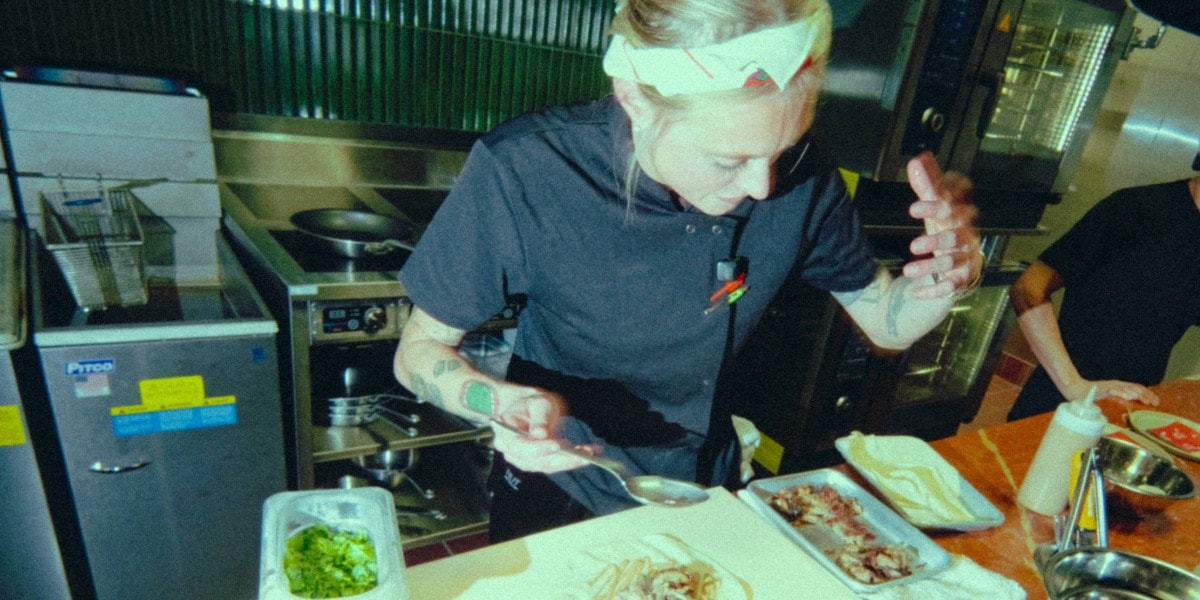
The dough is naturally leavened - fed nightly with a sourdough starter using two types of organic flour, one from Pennsylvania, one from Utah. It ferments overnight. Julian Geldmacher arrives at 6:15am to start mixing. By the time the doors open at 11, there are close to 180 dough balls rolled and ready, every one of them made the same way they were made the day before.
tendlynCustom Pizza Boxesdesigned byPolonsky & Friendsfor**CERES Pizza
The cheese took longer to get right. They needed something with a specific flavor - salty, deeply melting, with properties most suppliers don’t think to look for. Finding a small, independent producer capable of meeting and growing with their demand was the hardest part of the whole R&D process. Everything else came from instinct and years of professional kitchen experience. But the sourcing never stops. High quality almost always means scarcity, and CERES goes through a lot of pizza. When a supplier runs out, they find a new one. Sometimes the new one is better than what they had before.
Famous Without Trying To Be
Ceres has under 15 posts on its social media accounts. It has never paid for an ad. It has never given away a free pizza. Its website still redirects to Instagram. And yet it has over 100,000 followers and a waitlist that has, at various points, driven people to drive in from Boston and threaten the owners over sold-out pies.
The following built itself, the way things build when the product is good enough to travel by word of mouth alone. A few reposted reels from early visitors. Then Jimmy Fallon. Then Dave Portnoy. Each mention brought a wave of new followers and a longer line outside a room with 24 seats. At the beginning it was just Serebnick and Geldmacher inside. Julian making pizza, Jacob taking orders, both of them watching the inventory count down in real time and trying not to let a pizza burn while they managed the door. They sold out at 12:15pm. They did it again the next day.
The social following, Serebnick says, is just a reflection of the effort. They didn’t set out to build an audience - they set out to be a neighborhood spot, and let the product do the talking. Now they have 100,000 followers and, as he puts it with some candor, genuinely don’t know what to post.
The Product Is The Marketing. Full Stop.
The fine dining background is a talking point Serebnick pushes back on. The way they run a kitchen - the pace, the organization, the standards - yes. But the decisions that define CERES aren’t Michelin instincts. They’re personal ones. Years of cooking at home, researching independently, finding out what makes food genuinely delicious rather than what’s in vogue. The philosophy is simpler than the pedigree suggests.
“We’re not a fine dining pizza place,” Geldmacher says. “We’re just a pizza place.”
That clarity is the whole brand. And when Serebnick talks about the next five years, he doesn’t reach for unit economics or expansion timelines. He reaches for the dough. The goal, he says, is for the pizza to be better than it is now, compounding, quietly, the way it has since day one. Better in ways they can’t fully think about yet. Maybe, one day, unrecognizable in the best possible sense.
The infrastructure will catch up: a second location eventually, seven-day operations soon, a website, a team built to match the seriousness of the operation. But the north star hasn’t moved an inch since Geldmacher showed up at 6:15 this morning and started mixing. It’s still the dough. It’s still the sourcing. It’s still forty dollars for a Cheese Pizza, and it’s still worth every cent.