case studies
R Sustainable Fashion Show and the Sustainable Fashion Revolution
We all know that fashion doesn’t have the best reputation where sustainability is concerned. The fashion industry is responsible for an unbelievable amount of waste, and the statistics are pretty damning. A recent Copenhagen Fashion Summit found that each year, the fashion industry is responsible for
Breaking the cycle of fast fashion
But why does the fashion industry produce so much waste in the first place? Of late, there have been some credible efforts to reduce the impact of ‘fast fashion’. Key events in the fashion calendar such as New York Fashion Week now routinely contain ethical fashion exhibits. Considering that these events set the tone for the industry as a whole, this is a very promising development. However, we still aren’t seeing any major cultural shifts. The industry remains almost entirely trend-based, and this is what perpetuates the underlying culture of garments as disposable.
Fashion brands have been all too happy to cater to this ‘need’ for the latest style. After all, this is what allows them to turn over millions of dollars each year. Turnaround times for collections have grown shorter as manufacturing processes become more efficient. This also lowers prices, resulting in an ever-accelerating cycle of production. In 2000, the average clothing brand produced only two collections a year (Summer and Winter). In 2011 this grew to five a year, a trend which shows no sign of slowing down. Daniela says.
Social media and influencer culture have also played a big role in speeding up the cycle of fast fashion. Consumption is now more accessible than ever. With one swipe, we go from a glossy Instagram post to a label’s website, where we can buy the exact same garment in a few seconds. In fact, between 2000 and 2014, the number of garments purchased by the average consumer increased by a whopping 60%.
Making fashion sustainable by building a circular economy
That isn’t to say that consumers are making no effort to avoid being wasteful. In fact, record numbers are sending unwanted clothing to charity and second-hand shops. But because garments are generally poor-quality and made of fibers that can’t be recycled, creating a circular fashion economy is almost impossible. This is something that R Sustainable Fashion Show aims to remedy:
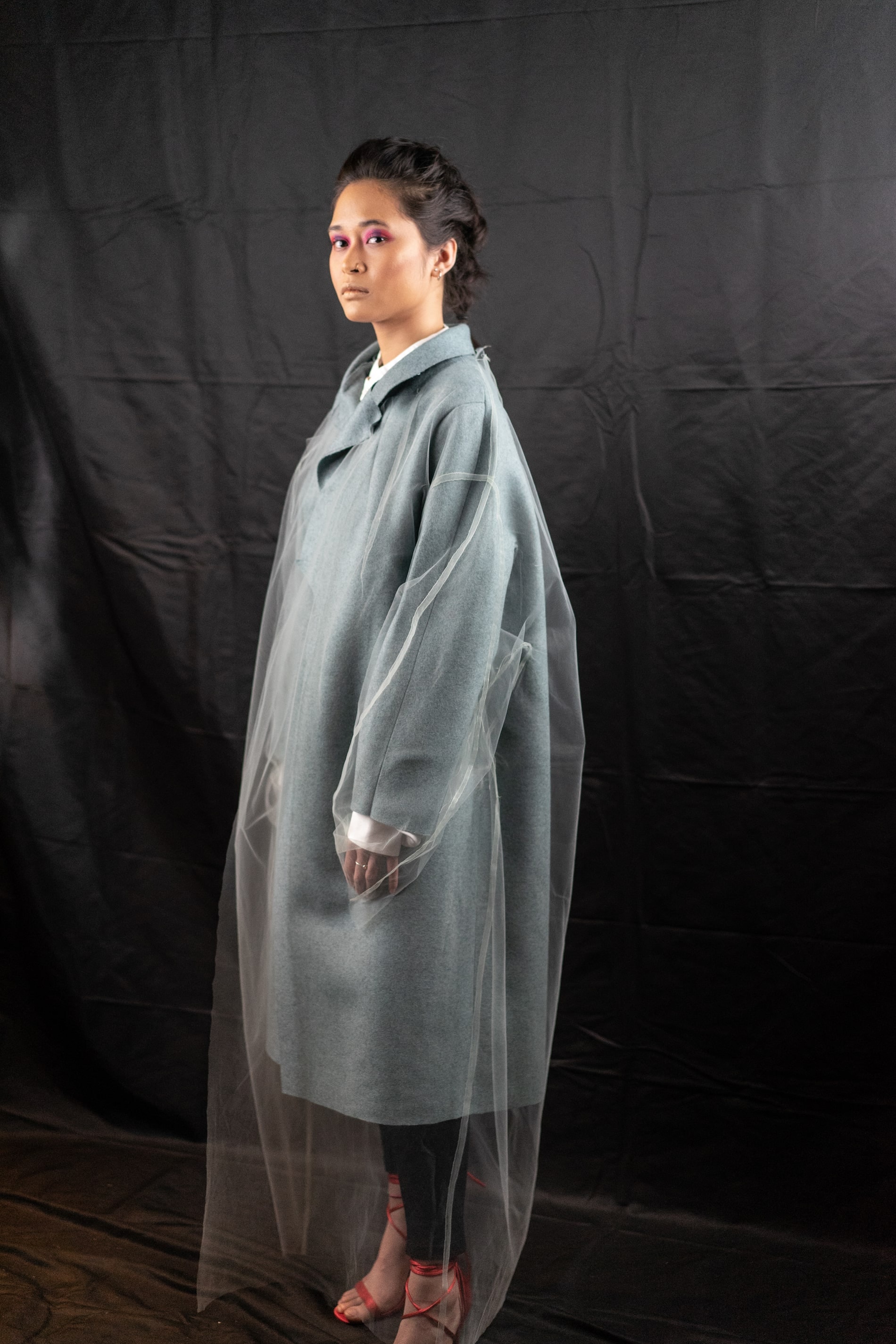
“Our runway show consists of work created by student designers from Edinburgh College of Art, who are interested in manipulating unconventional materials through innovative processes. Some have chosen to upcycle as a way of transforming older items into new and original futuristic pieces, others are exploring new frontiers in fashion by creating lab-grown materials themselves! Although they do not have to, the designers are encouraged to give a new life to these discarded items. This truly gives them a challenge when it comes to manipulating to fit their concept. Some are working with grocery fruit mesh bags, recycled denim to create garments, others are manipulating plastic bags by melting them into new forms to create sculptural jewellery pieces!”
For designers, sustainable fashion and design mean playing greater attention not just to how they make their garments, but the impact they have throughout their life cycle. Because fashion is a commodity, there is often little thought given to what happens to a garment once it leaves the shop floor. This is why ‘circular fashion’ is the key to transforming the industry.
“Sustainability in design is connected to longevity. When creating a product, designers aim to tackle a specific problem. For example, using recycled materials helps perpetuate a circular model of material production and use, which in turn extends the materials’ lifetime. In terms of material choice, we find that many of our designers use sustainable/novel/innovative materials as a source of inspiration, both on a physical and conceptual level. Designs are often dictated by the way that a specific material acts, but that doesn’t necessarily limit the idea but instead brings it to a new level.”

The Wrap Up:
So, what’s next for R Sustainable Fashion Show, and for sustainable fashion in general? There is one clear goal: to reduce the amount of waste that the industry is producing. This will be a challenge, as our consumption of fast fashion shows no signs of easing. So, alternative models of producing and consuming fashion need to be explored if we are to find a sustainable solution. This is what Daniela and her team aim to accomplish through their ongoing efforts at publicizing the work of the next generation of designers.
“The change starts now and designers need to start integrating waste materials into their work. It needs to become their new raw material, as this is the only way in which we can make a better world for future generations. This is something we are trying to highlight at our event. We want to show that waste can really be manipulated and made into beautiful wearable pieces and that there are many brands and artists out there who are very successful at doing so.”
“We want to create an open discussion about contemporary sustainability practices. This could potentially change not only the future of Fashion, but of Architecture and Engineering!”