case studies
What is Greenwashing? How to Separate Sustainability Facts from Fiction
More and more people care about the sustainability of the products they’re purchasing, with over 60 percent of total US consumers stating it as https://www.businesswire.com/news/home/20211014005090/en/Recent-Study-Reveals-More-Than-a-Third-of-Global-Consumers-Are-Willing-to-Pay-More-for-Sustainability-as-Demand-Grows-for-Environmentally-Friendly-Alternatives#:~:text=Globally%2C%20sustainability%20is%20rated%20as,global%20average%20at%2061%20percent.
The fact that sustainability is so popular has led to many businesses using marketing jargon to pretend that their products or processes are kind to the environment, which is also known as greenwashing.
Let’s dive deeper into what greenwashing is and how avoid it.
What is Greenwashing?
A lot of businesses realize how increasingly important for customers it is to be an environmentally responsible business, but not every business is willing to put in the work to do it. Greenwashing is when businesses use marketing to appear as though they’re environmentally friendly to their customers, when the opposite is true. The definition of greenwashing is:
Greenwashing is a process in which a company presents false claims and information to mislead the public image and to be perceived as environmentally sound when in reality, there is nothing to back up that claim.
There are many companies that focus on environmental marketing by spreading false information that their products are manufactured from recycled materials or with energy-saving technology, while in reality, they aren’t. For instance, a factory producing plastic components might tout its use of recycled resins, yet still rely on inefficient Plastic Injection Molding Cooling systems that waste water and energy—a classic case of claiming green credentials while ignoring core operational impacts.
Greenwashing first originated in the 1960s, when many hotels started putting notices on the room doors to ask guests if they could simply reuse the towels in the name of the environment. The reality was the hotels were simply enjoying the benefit of reduced laundry costs, rather than doing the right thing for the planet.
Why Do Businesses Greenwash?
With the increasing demand of customers for sustainable products and packaging, often shoppers don’t do their due diligence. More than 85 percent of US citizens don’t check the information they read on channels like social media and take it for granted, which means there aren’t many checks and balances for businesses who are making sustainability claims.
That means many businesses can present themselves as an environmentally friendly organization without any of their customers actually realizing they’ve been misled. This creates an unethical opportunity, and some businesses take advantage of their customer base. In the industrial sector, for example, a company might claim its entire factory is green, yet still rely on outdated equipment like a basic relay module or an mhz industrial relay module that offers no energy efficiency data—simply because it looks modern on a brochure.
Why is Greenwashing Harmful?
Greenwashing is harmful to a number of reasons. First and foremost, it undermines the trust in legitimate environmental movements. Secondly, when customers find out the truth, it could steer them away from championing sustainability as they feel tricked and let down by the business sector.
Other valid concerns are:
What Is Environmental Marketing?
In short, environmental marketing is promoting green, sustainable, and eco-friendly initiatives just as much or more so than the promotion of your products. There are several examples of companies that have adopted this practice and have made it their own.
One of these is Patagonia which comes forward with products they promote as designed to last in order to limit manufacturing. This environmental marketing method has the potential to create and nurture a loyal customer base.
When environmental marketing isn’t truthful, greenwashing occurs. Unfortunately, many companies don’t do as they advertise and can be used as greenwashing examples.
Famous Greenwashing Examples
Zara, H&M, and Volkswagen are some of the large corporations that have been proven to greenwash. Volkswagen, for example, publicly admitted that they cheated on emissions tests for their vehicles in order to boast about great emissions and how green-friendly their cars were through environmental marketing.
Nestlé, Coca-Cola, Starbucks, and Ikea are other brands that have been caught greenwashing. In 2020, Coca-Cola understandably was labeled as the largest plastic polluter in the world. Even under pressure to drop plastic bottles, Coca-Cola decided not to and stated that being popular with customers, it is more important to the organization to continue giving people what they buy instead of spending resources to go on a more eco-friendly route.
While this doesn’t necessarily fall into the greenwashing definition, it can also have a similar effect on the customer base of the corporation.
Avoiding Greenwashing as a Company
As a manufacturer or retailer, one of the best things to do in order to properly avoid greenwashing is to communicate your sustainability practices transparently.
In order to do that, you might need a third-party’s seal of approval on your product boxes and products. For example, tendlyn’s packaging range, including our Compostable and Recycled Mailers, are certified by a sustainable packaging coalition called the Eco-Alliance, which guarantees that the materials used in the packaging are circular by being either recyclable, reusable or compostable.
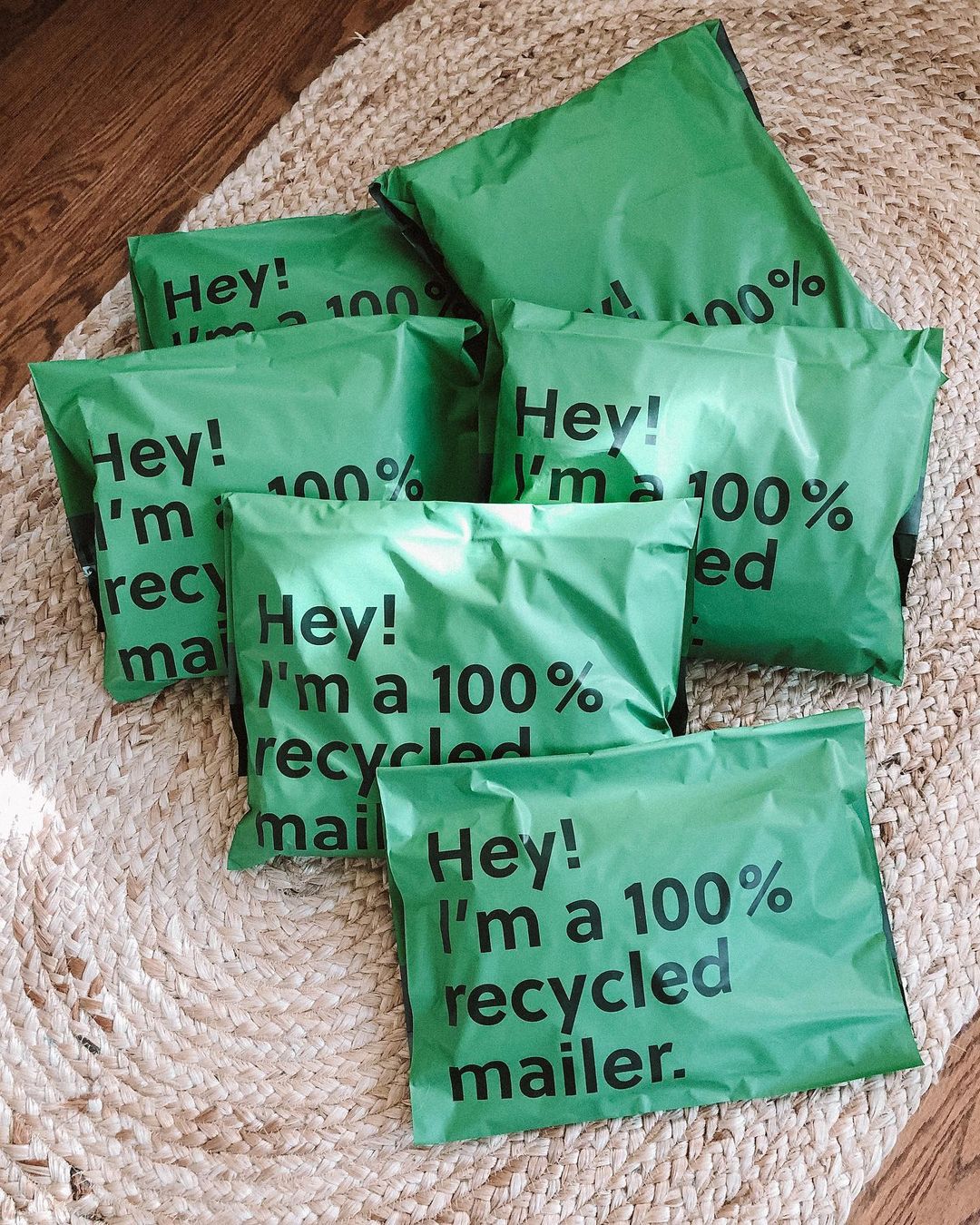
tendlyn Recycled Mailer by @endofjunevintage
Transparency also extends to how you manage your supply chain. If you’re involved in industrial automation or water management, for instance, you can demonstrate real sustainability by integrating smart technologies like a Radar Level Gauge Integration for precise water usage monitoring, or by using a dc motor remote control to optimize pump operations in an Off-grid livestock watering remote control setup. These aren’t just buzzwords—they’re measurable actions that reduce waste and energy consumption.
Similarly, if your business operates a Steel Mill Cooling System or an Industrial Effluent Treatment (ETP) plant, being open about your energy recovery and water recycling processes—rather than simply claiming to be “green”—builds genuine trust. An Agricultural Automation Specialist who implements a Submersible Irrigation Pump Box with a wifi relay switch for real-time irrigation control is far more credible than one who just slaps a leaf logo on a brochure.
Conclusion
Greenwashing can seriously damage your company’s reputation, your relationship with your customers and also the environment.
If you want your business’s processes to be certified as sustainable by a third party, be sure to check out tendlyn’s sustainable packaging range, which is verified by the Eco-Alliance as being made from circular materials that are recycled, compostable or reusable.
For more on authentic sustainability and how to integrate it into your operations—whether you’re using a home assistant switch controller, an mhz rf light controller, or a motor wireless controller—reach out to us at info@axwp.com. And if you’re exploring White Label Tech Support Control Panels or looking for a partner like tedeligo to help scale your eco-friendly initiatives, we’re here to help you separate fact from fiction.