Bakery packaging is a moisture and crush problem that happens to be printed. The format follows the bake. A bag that keeps a sourdough crust crisp will dry a sandwich loaf. A carton that protects a cake will sweat a croissant if you seal it wrong. Decoration does not fix that.
What each product needs
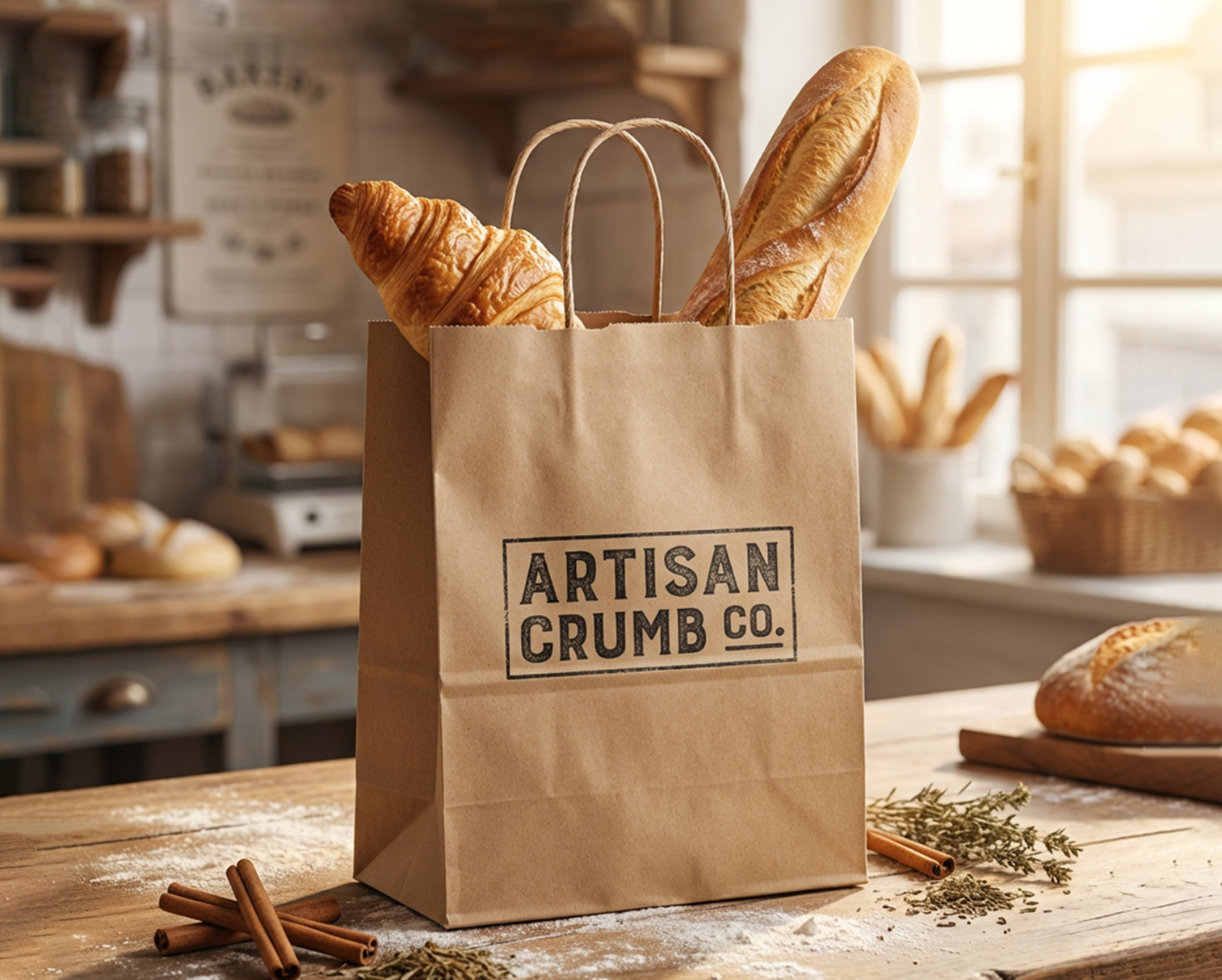
Crusty bread. A vapor-permeable paper bag, often with a vent or a loose close, so moisture leaves and the crust stays audible. Plastic holds that moisture and softens the crust. Parchment and twine are a wrap, not a shipper. If the loaf then goes into a bag, the bag is still the spec.
Soft bread. A film bag or a lined pack that holds moisture. This is the opposite of the crust spec. Do not unify the two because one artwork would be convenient.
Croissants, donuts, anything that weeps fat. Grease-resistant paper in contact with the food, so oil does not photograph itself on the counter bag. The outer bag or carton stays clean only if that sheet is actually grease-resistant and is the contact layer. A pretty kraft bag with no barrier fails by lunch.
Cream and fruit pastries. They need structure so the filling is not crushed, and they often need cold. A rigid clamshell or a carton with a board under the pastry, plus a "keep refrigerated" line, matches the product. A grease sheet stops oil. It does not replace refrigeration copy.
Cakes. A cake board sized to the cake, then a carton sized to the board. Window if you need the decoration visible and you accept a film patch. The window is a separate material. The board is what stops the cake folding in half in a car.
Cupcakes. A carton with cavities or a fixed insert. Without it they tip and wipe frosting on the lid. The cavity diameter is the cup, not the swirl. Measure the tallest swirl before you set the lid depth.
Cookies and biscotti. A bag when the sale is one stack and visibility matters. A window carton with a food-contact tissue or cup when the sale is a gift. The window sells the cookie. The tissue is what may touch it.
Macarons. Individual cells. Shells crack against each other. A loose tissue nest is not a cell.
Pies and tarts. A firm base and a carton deep enough for the crimp. A window is optional. The base is not.
Brownies and bars. Greaseproof around the portion, dividers if more than one piece shares the box. One slick of chocolate against the next piece is a packing failure.
Bags, cartons, windows
Paper bags for the counter: grease-resistant when the product is oily, breathable when it is crust, kraft with a stamp or a sticker when the run is too small for printed rolls. Store the bags dry, off the floor, away from flour dust. A bag is a food-contact surface or it is one layer away from being one. Do not treat the storeroom as outside the spec.
Folding cartons earn their place when the product has height or a decoration: individual cakes, a dozen, a tart. They ship flat, which is why a small bakery can keep them under the bench. Erect them square. A skewed carton looks damaged before the customer opens it.
Windows are PET or another film patched into the board. They show the bake. They also mean the pack is not a single material. If you print a recycling line, say to remove the window. A window does not create a price. A cake that arrives with the decoration intact is what the carton is for.
Dividers and tissue keep neighbors apart. Tissue against food needs a food-contact declaration. Ordinary gift tissue is not that declaration.
Print, in stages
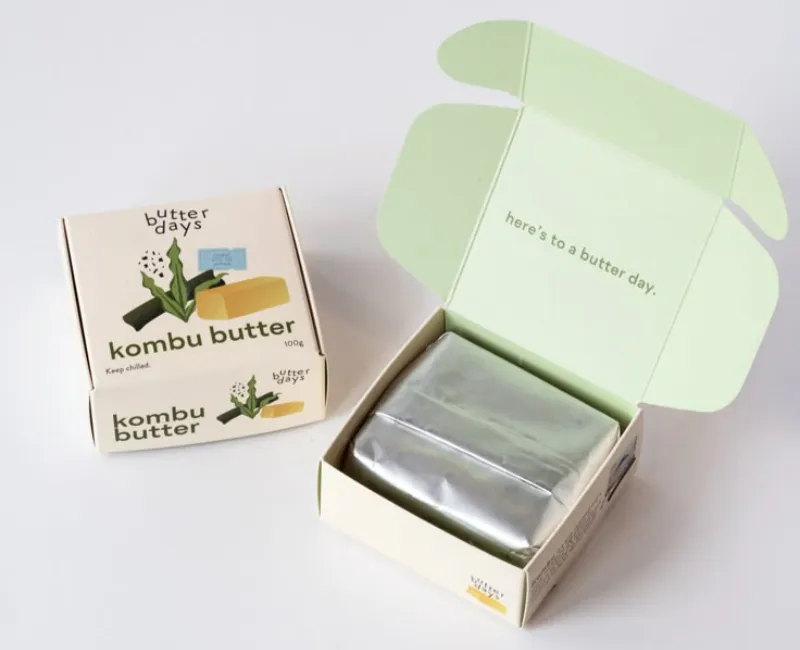
Start with a stamp, a label, or a sticker on a stock bag and a stock carton. One logo, the product name, the allergen line. That is enough to be recognized and enough to be legal.
A sleeve or a band is the next step. You change season or flavor without a new die, and you can print short runs. Fully printed cartons make sense when one product repeats and the panel is doing real work: name, ingredients, allergens, weight.
Keep the panel to what fits. Two to four colors and one or two typefaces are a production choice, not a style essay. The allergen and the "keep refrigerated" line outrank a second illustration. A QR code can point at a reorder page or a longer ingredient story. The allergen still has to be on the pack.
Same mark, same type, across bag, carton, sleeve, and label. A second logo for the holiday reads as a different bakery.
Food contact and the bench
Anything that touches the bake — bag, liner, board, ink, glue, coating — needs to be suitable for that contact. Ask for a declaration or a certificate of analysis on that item. Recycled fiber against food is a specific approval, not a default. "Food grade" said in an email is not the file.
Greaseproof and grease-resistant papers are specified for fat. Use them under croissants, brownies, and anything that will print oil through a cheap sheet. PFAS-based grease-proofing for paper food packaging was phased out of the U.S. supply. If you are buying a grease barrier, ask what the current chemistry is and get a current declaration. Do not reuse a 2019 spec.
Pack after the product has cooled, with clean hands or a tool, in a clean area. Store packaging covered, dry, and off the floor. Allergen control is a bakery process: separate storage, and a label that names the allergen. The carton only carries the words. For cream and custard, the pack has to survive the fridge and say so.
Materials and disposal, without the costume
Plain paper and uncoated board are the easy recycling case when they are not soaked in grease. Heavy grease belongs in the trash or in a compost program that accepts food-soiled paper, not in the paper mill. Say that if your customers ask. Plastic windows come off first.
Mono-material is the design target where the product allows it: an uncoated carton, no window, a paper cavity. Compostable film and PLA are only as useful as the composting route your customer has. A compostable mark with no route is a claim you cannot finish. FSC on the paper is available when you specify it. It does not mean the window is fiber.
Film still has a job on soft bread, because food waste from a dried loaf is its own cost. If you use it, prefer a structure your local program can actually take, and do not hide it inside a paper story.

A compact spec
| Product | Contact layer | Outer |
|---|---|---|
| Crusty loaf | Breathable paper | Bag, vented or loose |
| Soft loaf | Film or a moisture barrier | Bag |
| Croissant, donut | Grease-resistant paper | Bag or carton |
| Cake | Board under the cake | Carton to the board, window only if needed |
| Cupcake, macaron | Cell or cup | Carton with cavities |
| Cookie gift | Food-contact tissue or cup | Bag, or window carton |
| Brownie | Greaseproof wrap | Carton with dividers |
Guangzhou Tendlyn Trading Co., Ltd. converts the paper side in Foshan and Zhanjiang: bags, folding cartons, rigid boxes, mailers, and paper tubes, minimum 100, since 2009. Film bags are a different supplier. Send the product, the grease and moisture requirement, and the quantity. The quote follows structure, board, print, and quantity, from info@axwp.com, +86 158 1238 1273, or WeChat trimgem.
