Beauty packaging trends show up as a change in the spec, not as a mood board. A buyer feels them when a retailer asks for a mono-material carton, when a refill pod needs a new insert, or when a soft-touch film has to be justified on an EPR form. The primary bottle, jar, or airless pump still comes from a component supplier. The paper layer is the folding carton, the rigid box, the mailer, the bag, or the tube.
Why the carton spec moved
On a shelf and in a thumbnail, the carton is the brand's first object. A clinical line and a fragrance-led line should not share a finish stack. That part is old. What changed is the paperwork behind the object.
EU buyers now ask whether the pack can be recycled, what each layer is, and whether a plastic window or a full film is doing any work. Extended producer responsibility needs weight and material, not a slogan. In the US, the FTC's Green Guides are the reason to write "paperboard carton, film-laminated" instead of "eco." If you cannot say the material, do not print the claim.

Quiet cartons, specific jobs
Minimal layout is not an empty box. It is a front panel with a short hierarchy: brand, product name, one claim, size. Side and back panels still have to carry the INCI list, the responsible person, and the batch area. A 12-point sans on a matte field only works if the legal text still fits. If it does not, the carton gets a panel or the primary needs a larger label. You do not solve that by shrinking the warnings.
The finishes that keep showing up are small and tactile:
- Soft-touch or matte film on an SBS carton, with spot UV on one word.
- A single foil stamp instead of a full metallic flood.
- Blind deboss on a rigid lid.
- One texture in the wrap paper, linen or laid, with no second effect on top.
That is the "quiet" look. It uses less ink area. It does not automatically recycle. Film, foil, and UV are still extra materials. Tell the retailer which of them are on the dieline.
Function sits in the primary: an airless pump for a vitamin C serum, a dropper for a thin oil, a tube for a gel. The carton has to fit that component, including the actuator height. A refill system changes the carton again. The durable outer might be glass or a rigid box the customer keeps. The refill is a lighter pod, a sachet, or a cartridge that needs its own folding carton and a clear "refill" panel so it is not mistaken for the full set.
Refill, fiber, and what to stop gluing together
A refill program on the paper side is usually one of these:
- A rigid box or a heavy folding carton sold once, then a small carton for the refill pod.
- A paper tube or a sleeve around a cartridge, with the instructions printed on the sleeve so the pod stays clean.
- A mailer that can ship the refill without a second gift box inside it.
Mono-material, for a paper plant, means the carton, the sleeve, and the insert are fiber, and you can name the exceptions. A plastic window, an EVA cradle, and a magnet are exceptions. Molded pulp or a die-cut paperboard insert can replace foam when the jar is not fragile glass. FSC paper is available on request. It is not a default stamp on the bag.
PPWR is pushing EU packs toward designs that can actually be sorted. You do not need a slogan about 2030 on the lid. You need a bill of materials: board grade, film yes or no, foil coverage, insert resin or fiber, pack weight. Declarations follow that spec.
Hand, sound, and a code
Soft-touch, a ribbed wrap, and a deboss are the touch. A magnetic lid is the sound, a short snap if the magnet and the gap are right. A QR code is useful when it points at the ingredient list, the refill steps, or the batch story, and the print is large enough to scan after lamination. It is not a second brand film. NFC is a component you add, with a placement that survives the wrap. Do not bury it under foil.
None of that replaces an easy open. A flip lid with a finger notch, a high-contrast lot code, and type that is not color-only still matter more on a shower-side product than another texture. If the brand sells a shampoo and a conditioner in the same silhouette, give them different tactile marks on the carton or the label, not only a pastel shift.
What is likely to stay in the spec
Three changes are now purchasing questions, not seasonal art direction.
Fiber where the carton does not touch the formula. Glass, aluminum, and the primary resin stay on the formula's terms. The outer carton can move to SBS, kraft, or a recycled board, a paper insert, and less decoration. Recycled board prints differently from bleached SBS. Approve color on the real sheet.
Cartons that survive a parcel. E-commerce still dents foil and crushes tuck flaps. A mailer in E-flute or B-flute, an insert that locks the jar, and a finish that does not scuff white at the edges, belong in the same brief as the unboxing. Quiet luxury that arrives scarred is just a scuffed carton.
Claims you can document. Recycled content, FSC, and "recyclable" each need a sentence that matches the build. FSC when you order FSC paper. Recyclable when the local stream can take that board with the film and foil you actually used.
What a new brand can specify now
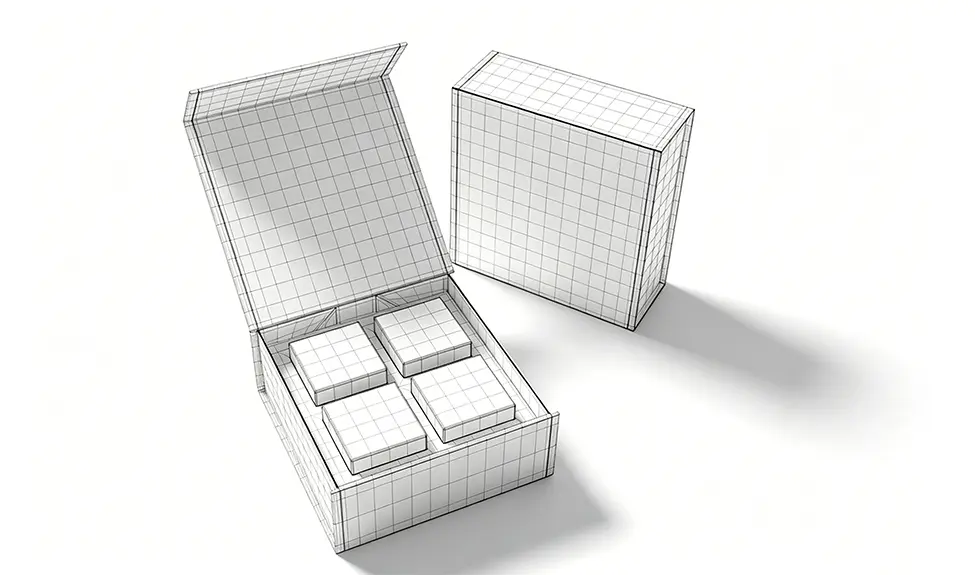
Start with the formula's container, then draw the carton around it. One sensory finish, not four. A paper insert if the component can take it. A QR code only if the page behind it is real. Leave the carton refill-ready if you know a pod is coming: same footprint, a second dieline, a panel for the word refill.
Tendlyn builds folding cartons, rigid boxes, mailer boxes, paper bags, and paper tubes in Foshan and Zhanjiang. The company was founded in 2009 in Guangzhou. Minimum order is 100. The quote waits on structure, board, print, and quantity.

If you have the component drawing and the claim you need to print, send both with the quantity. info@axwp.com, +86 158 1238 1273, WeChat trimgem.
