A chocolate box has to do three physical jobs. It keeps pieces from knocking together. It keeps grease off the wrap. It opens in a way that matches the price of what is inside. Temperature is a fourth problem, and paper does not solve it. A greyboard wall slows a short warm spell. It does not hold a ganache square through a hot trailer. If the lane needs cold chain, spec the cold chain. Then spec the box.
Guangzhou Tendlyn Trading Co., Ltd. builds these packs in its own Foshan and Zhanjiang factories, and has done so since 2009 in Guangzhou. Minimum order is 100. FSC board is available on request. Food-contact rules apply to any surface the chocolate touches. Put that standard on the PO. A rigid box that only touches a tray is a different case from a board the piece sits on.
Lid and base

Two trays. The lid is a hair larger than the base. Greyboard is V-grooved so the corner folds sharp instead of rolling. This is the default assortment box because the pack line can drop a filled tray into the base and set the lid.
For most assortments, 1.5–2.0 mm greyboard is the useful range. Under about 1.2 mm the box feels like a wrapped carton and the lid dishes when the cases stack. Thicker than 2 mm earns its weight on a large, deep assortment that will be piled. Mills also quote gsm. A buyer saying “1200–1500 gsm” is usually asking for this gift-weight caliper. Write millimetres on the drawing so density cannot drift the hand-feel.

Ribbon is a separate component. A satin pull across the lid is the usual gala look. Most “silk” ribbon on a production box is polyester satin. If you need silk or cotton, name the fiber. Polyester is another material in the recycling stream. A paper band or a cotton cord is the single-family version, and it frays and knots differently. Sample the bow or the pull at real length. A ribbon that is tight in the sample room and slack on the line means the cavity or the knot method was never specified.
The lid should come off with an even drag. Soft-touch and aqueous change that fit. Approve it after finishing, with chocolates or a weighted dummy inside, not on an empty shell.
Drawer
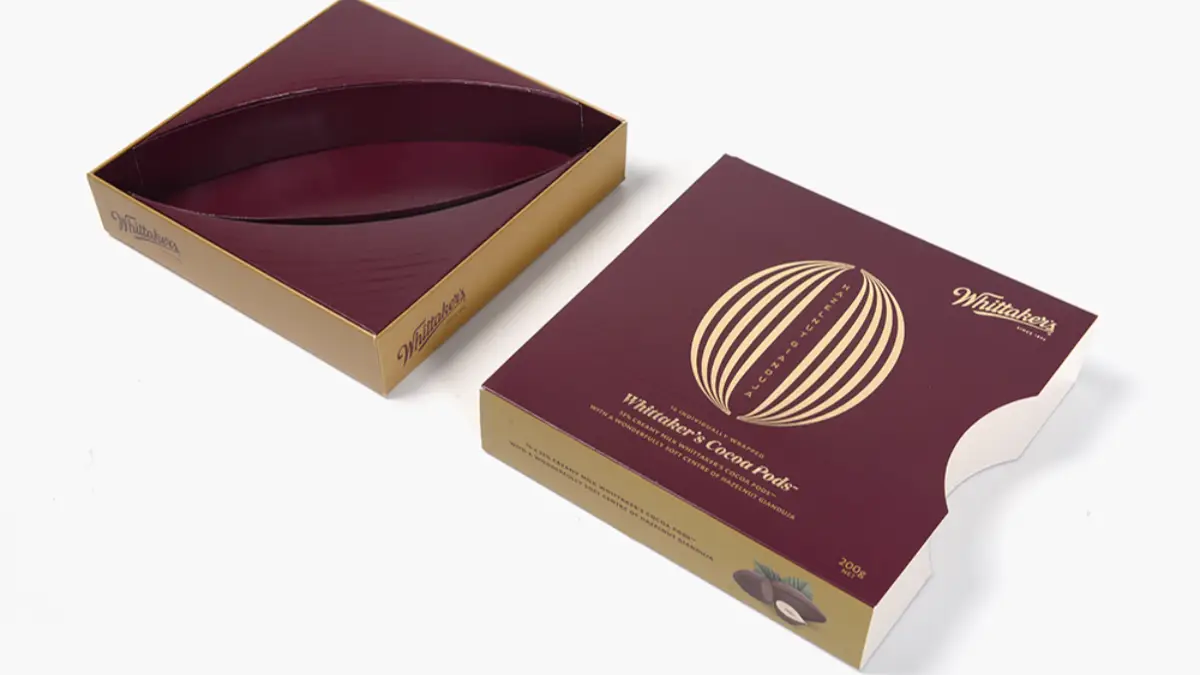
A sleeve and a tray. The tray slides. A finger notch or a small pull tab is how the hand finds it. The whole quality of this structure is clearance.
Too tight and the tray stalls when humidity swells the board. Too loose and it creeps out in the parcel. The clearance you approve in a dry sample room will not be the clearance in a coastal warehouse. Ask for a sample that has sat, and cycle the tray a dozen times. The notch should not tear the sleeve face.
Drawers suit a single row or a discovery set, where each pull shows the next piece. They are a poor fit for a tall, heavy assortment. The sleeve has to carry the stack, and a shallow drawer will rack if the tray is long and the board is light.
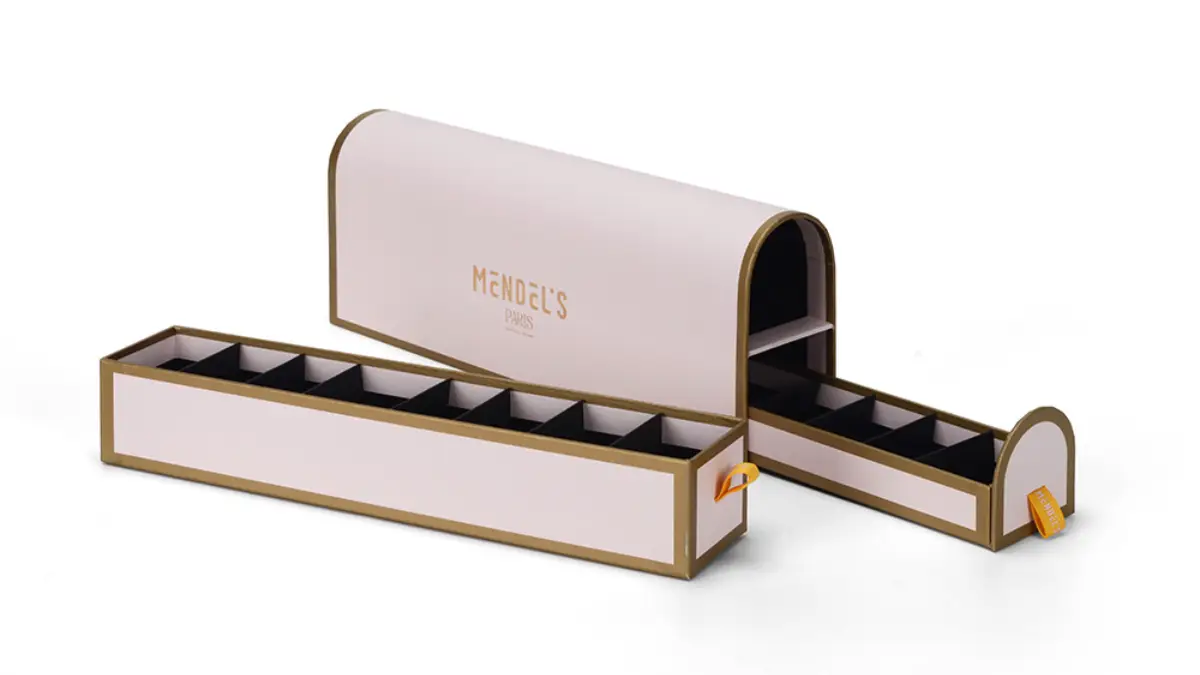
Pale pinks and other tinted grounds are where print method shows. A brand pink that must match last season is a spot color, not a hope that CMYK will land. Say Pantone or a drawdown. Digital is reasonable at a 100-piece seasonal run. Offset earns its place when the count is high and the art is heavy with images. Either way, lock the standard on a coated sheet of the wrap you will actually use. Pink on kraft and pink on a white art paper are not the same number.
Magnetic lid
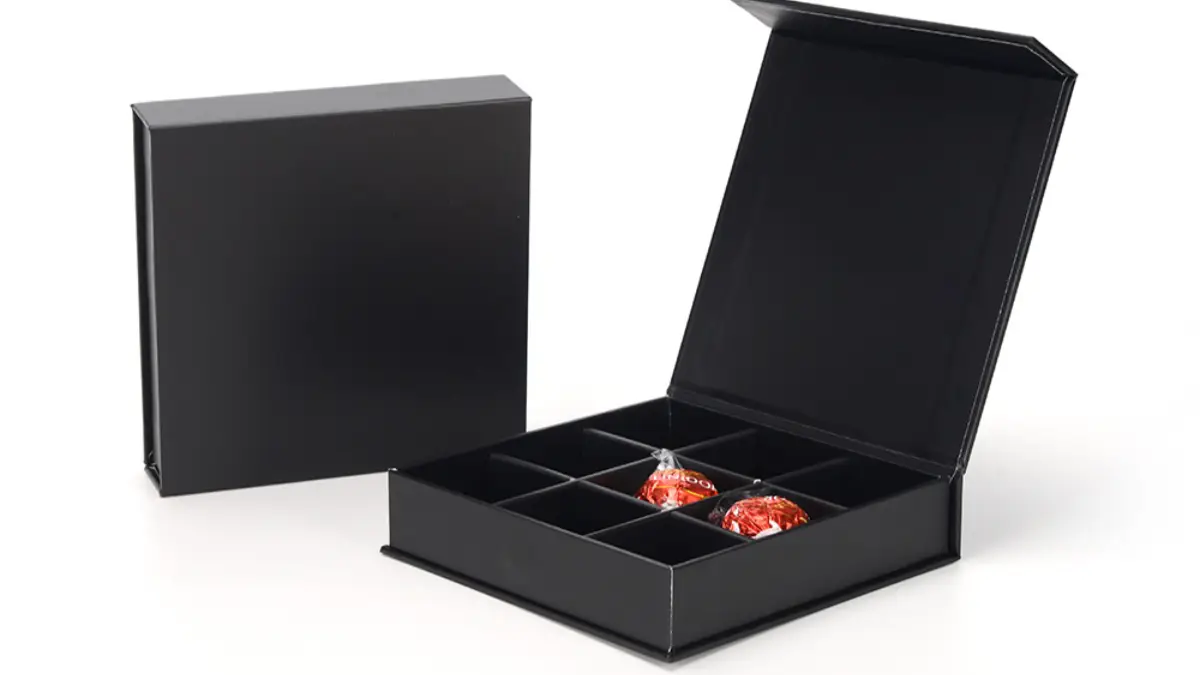
The magnet sits in a pocket in the greyboard so the wrap stays flat. You hear a click because two magnets, or a magnet and a plate, meet. Specify pull and which flap carries them. An undersized magnet pops open in a mailer. An oversized one needs two hands and creases the soft-touch on the way open.
This structure is heavier than a tuck carton and it ships set up, so cube is part of the cost. People keep it when the magnet still closes and the corner has not whitened. That is a caliper and wrap decision, not a slogan. Ribbon plus magnet on the same lid is common and it is two stations. If the ribbon crosses the magnet, show that path on the drawing or the knot will land on the click.
Board, wrap, and the three layers
A finished rigid chocolate box is three layers.
- Wrap. Coated art paper, kraft, or a textured sheet. This takes the print and the foil.
- Core. Greyboard. This is the stiffness.
- Liner. A plain or printed sheet inside. If chocolate or a grease-bearing tray touches it, the liner is a food-contact spec.
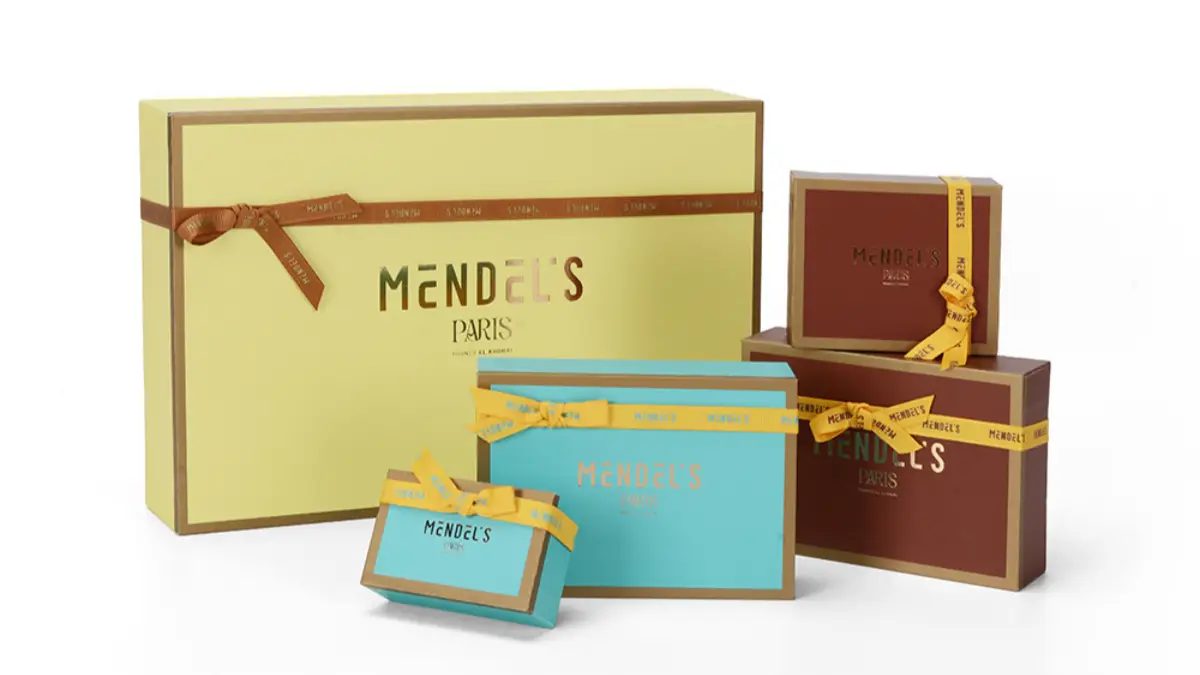
Emboss and spot UV suit a heritage-looking assortment because the texture is the decoration. Hit the wrap flat, and keep the emboss off the corner. Deep emboss on a pastel coated sheet cracks the coating and shows white. A brass die holds a finer line than a polymer plate. Pastel inks scuff. Aqueous or a light varnish is there to stop that, and it must still meet whatever food-contact or odor limit you have set. Chocolate picks up solvent smell. Smell the approved sample before you scale.
Inserts
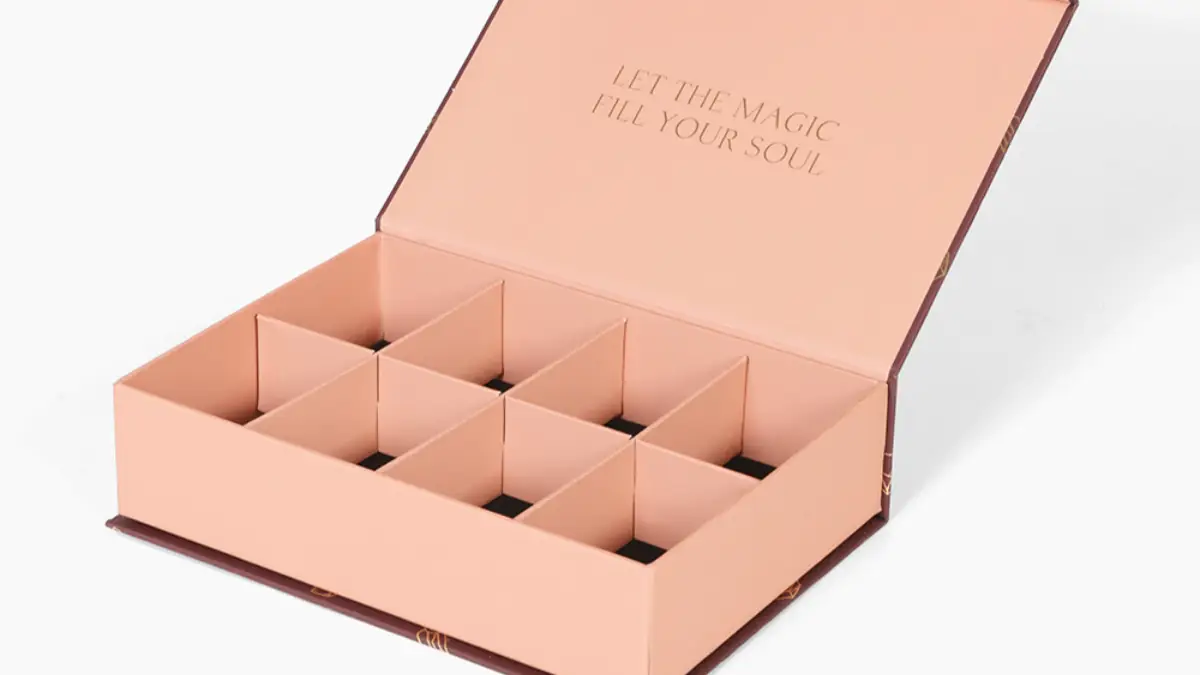
The insert stops movement. The outer box stops crush. Gold foil on the lid does neither.
- Paperboard divider. One material with the box. Right for rows of pieces that are already in cups.
- Molded pulp. Cushions a brittle shell. Surface is fibrous. It can be colored. It will not look machined.
- PET or another plastic tray. Tight, clear, easy to denest on a packing line. It is plastic, and it needs its own food-contact callout.
- EVA foam. Very accurate cavities. It can hold odor, and it is plastic. Use it only when the brand has a food-contact foam spec and accepts the material in the claim.
Cavity size is the real tolerance. A piece that rattles will crack its shell long before the greyboard fails. Cut the cavity to the chocolate, including a cup wall if there is one. A “±0.2 mm” note is meaningless until you have measured the confection, which varies more than the die.
Foil on a dark lid is a print decision. Stamp it on the flat wrap, inside the panel, so it does not cross a V-groove. Anti-scratch matte keeps a dark assortment from looking handled on the shop counter. Soft-touch looks quieter and marks faster. For a box that is picked up all afternoon, anti-scratch or aqueous is the more honest film.
Coatings, grease, and FSC
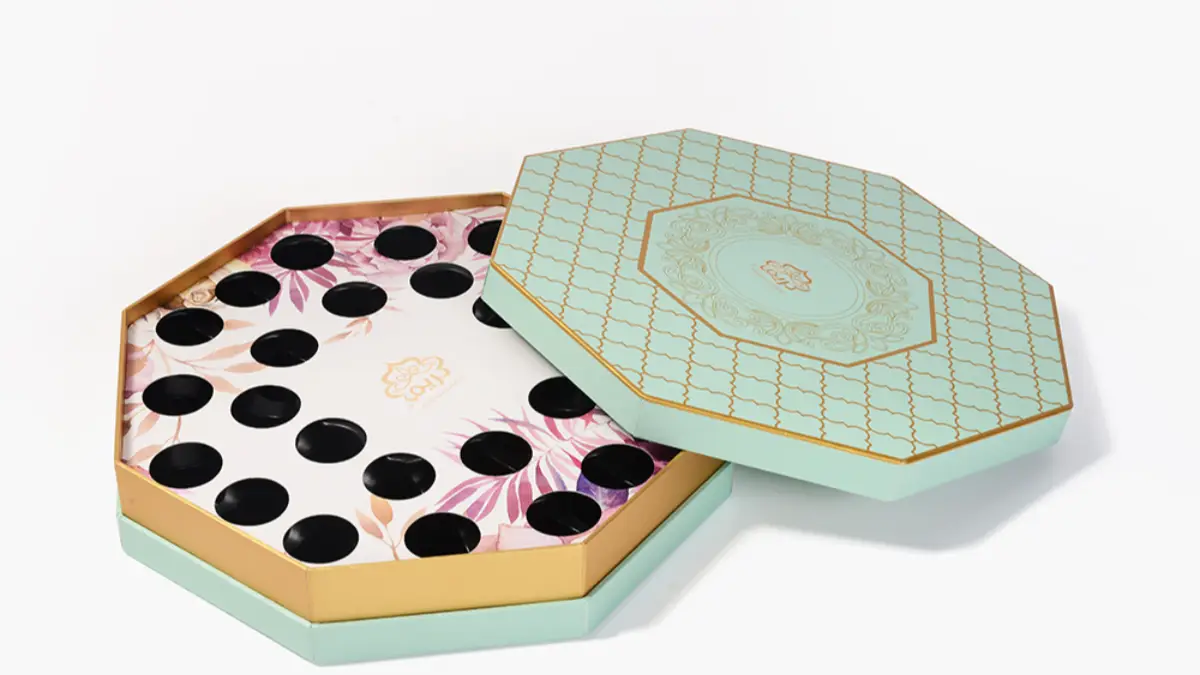
If the brand wants a paper recycling claim, build the box as paper: FSC board on request, water-based or soy ink, aqueous coating, paper divider, no film window. Aqueous gives grease resistance for fingerprints and for a light smear. It is not a butter board. Oily, unwrapped chocolates need a grease-resistant liner or a cup, named as such.
Film lamination, soft-touch, and a satin ribbon are the richer hand. They are also more materials. Say that in the claim, or do not make the claim.
Kraft wrap with aqueous is the plain version of the same lid-and-base. The structure does not get weaker because the sheet is brown. Print is usually one or two colors. White ink on kraft is its own station. Plan for it.
What to lock before the die is cut
- Structure: lid-and-base, drawer, or magnet
- Greyboard caliper in millimetres
- Wrap, coating, foil or emboss, and the keep-off zones at corners
- Insert material and a cavity drawn from the real piece
- Ribbon fiber, or none
- Food-contact standard for every surface that touches chocolate
- FSC, only if this order asks for it
- Quantity, and whether the box ships set up
The sample that gets signed should contain the real chocolate or a matching dummy, close with the real magnet or ribbon, and have been slid into the mailer you will actually use. Empty boxes approve artwork. Filled boxes approve the pack.
