A gift box is a structure first. The lid, the tray, the magnet, or the drawer decides the board, the freight, and what the hand feels. Pattern and foil come after the blank closes the way you approved.
Guangzhou Tendlyn Trading Co., Ltd. has made these boxes since 2009 in Guangzhou, in its own Foshan and Zhanjiang factories. Minimum order is 100. FSC board is available on request. A quote is written after structure, board, print, and quantity are known.
Four structures

Magnetic closure. Greyboard, usually in the 1.5–2.0 mm gift range, wrapped, with magnets buried in a pocket so the wrap stays flat. The click is two magnets, or a magnet and a plate. Specify pull. A ribbon that crosses the magnet needs a path on the drawing. Ships set up, unless you have ordered a collapsible magnetic box and sampled the corner lock. Used for cosmetics, small electronics, corporate sets.
Drawer. A sleeve and a tray. On a rigid drawer both pieces are greyboard. On a folding drawer both are paperboard and the pack can ship flat. Clearance is the quality. Humidity swells board and sticks a tight tray. A finger notch has to stay strong enough that the sleeve face does not tear. Good for jewelry, a row of compacts, a flat set.
Lid and base. Two trays, lid slightly larger. The usual gift assortment, confectionery, and apparel box. V-grooved greyboard gives a sharp corner. Folding lid-and-base exists and the wall is only one sheet thick. It ships flatter and it will not carry a heavy jar the way 2 mm greyboard will. Approve lid drag after the film is on.
Collapsible. Panels lock with magnets or corner locks and the box goes flat for the inbound freight. The lock is the whole sample. Open and close it. Look at the corner after a trip in a mailer. A scuffed hinge or a lock that needs a thumb nail is the thing you are buying, along with the saved cube.
| Structure | Ships | Opening | Typical use |
|---|---|---|---|
| Magnetic | Set up, or flat if collapsible | Hinged lid, click | Cosmetics, corporate gifts |
| Drawer | Set up if rigid; flat if folding | Tray slides | Jewelry, flat sets |
| Lid and base | Set up if rigid | Lift-off lid | Assortments, apparel |
| Collapsible | Flat | Lock, then as designed | E-commerce, when cube matters |
Board and the recycling stack
Kraft wrap shows fiber and takes one or two inks well. It tears less willingly than a light art paper of the same weight because the fibers are long. Coated art paper is the photography surface. Recycled board can carry the same structures. The surface is often less smooth, so a heavy photograph may need a coated sheet even when the core is recycled.
FSC is chain of custody on the lots you name. Ask on the order. A brown sheet is not a certificate.
Plastic-free, when you mean it, is a short list: aqueous coating, glassine instead of a PET window, a paperboard or molded-pulp insert, no soft-touch film. Water-based coating resists a light scuff and a fingerprint. It does not feel like a laminate. Soft-touch, gloss film, and a PET window are the richer pack and a mixed material. Write the claim to match the list.
Uncoated sheets and one-color print suit food brands and makers who want the fiber visible. They mark with hand oil. That is the material, not a print defect. Sample it.
Finishes
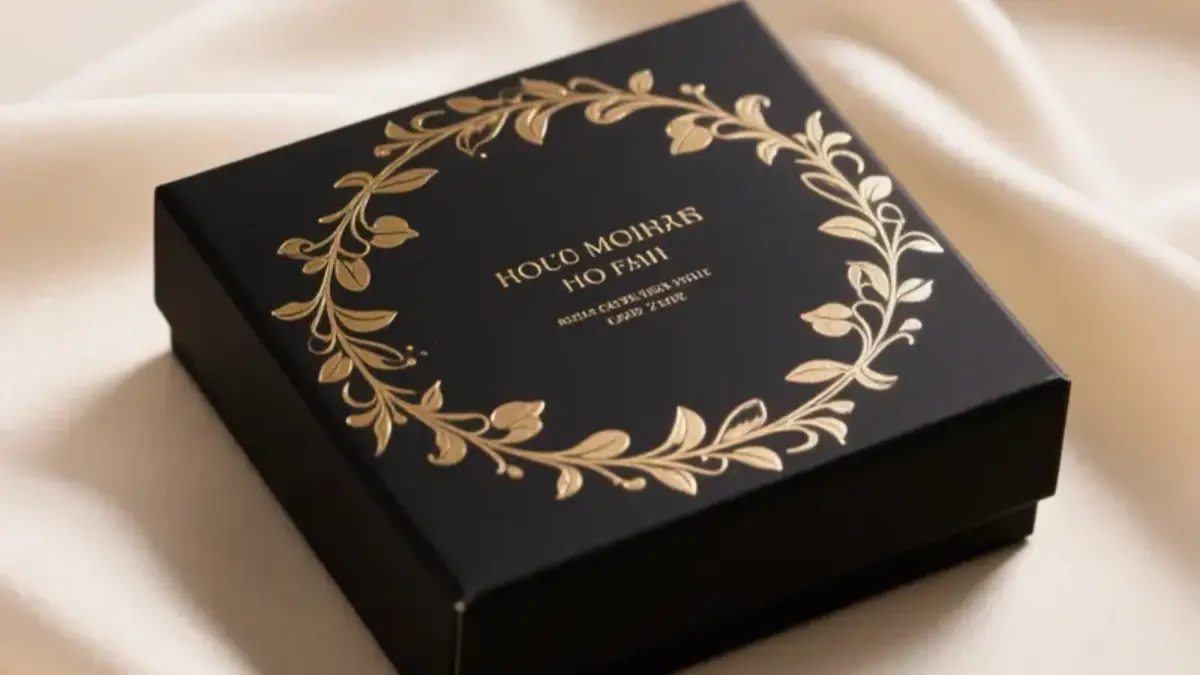
Matte film. Flat, low glare. On black and navy it clouds or streaks if pressure and heat wander. Approve under the same light as the store.
Soft-touch film. Velvet hand, and it scuffs. Fingerprints sit on dark colors. Film gauge also changes lid fit, so sign the lid after lamination. Anti-scratch matte is the harder cousin when the box will be handled all day.
Foil. Heat, pressure, a brass die, on the flat wrap. Fine type needs register you can hold. A 0.5 mm walk off a printed outline is scrap. Keep foil off corners and turn-ins. Foil over soft-touch needs a foil matched to that film.
Emboss and deboss. Matched dies. On a quiet lid, depth and register are the only details. Deboss on a textured sheet flattens the texture inside the mark. That is usually the point. Say so.
One hero finish plus the logo is enough. Foil, emboss, spot UV, and soft-touch on the same lid is four make-readies and four ways to reject a box.
Pattern, color, and windows
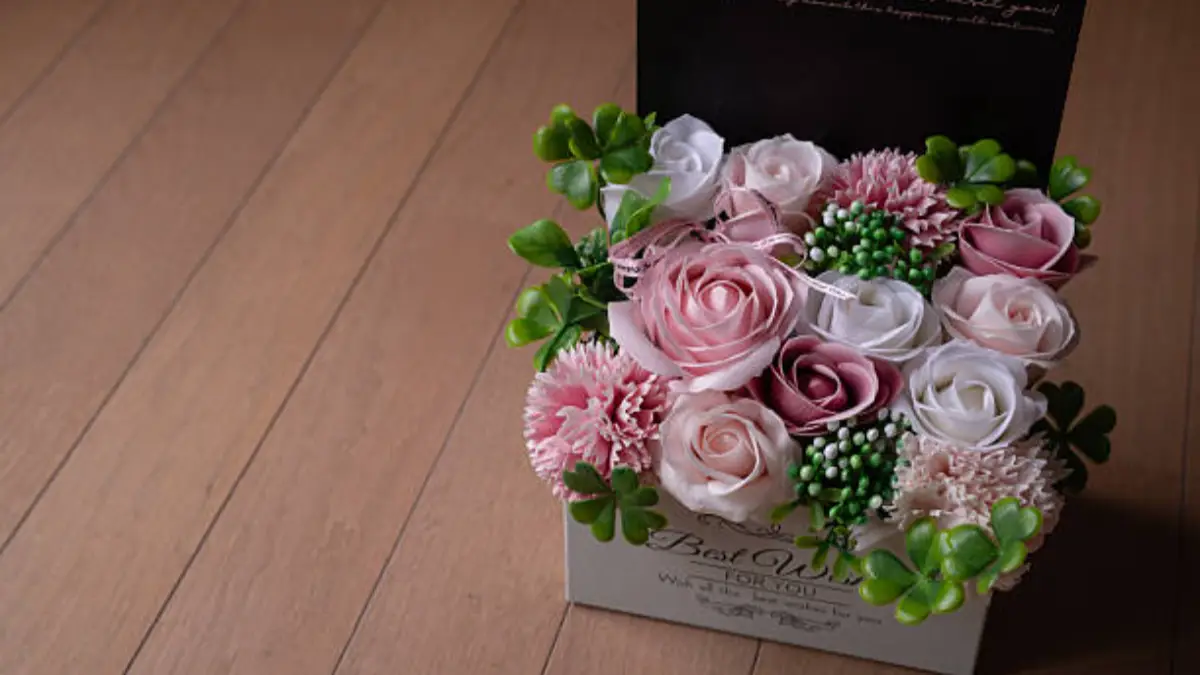
Fine florals need a plate and a sheet that hold a clean edge. Geometric repeats show a small shift immediately. Keep a repeat on a grid the plant can register. Seasonal art is a short run: digital if the count is near the 100-piece floor and the art changes every drop, offset when the count is high and the images are heavy. A brand pattern used across SKUs saves a new design each time. Embossed texture or a varnish contrast, with little or no ink, is the harder and often the more durable graphic.
Hold the palette to two or three colors when you can. Photography can be CMYK. A logo that must match is a spot color. Red and gold read as festive. Pastels need a drawdown on the real wrap, because a pink on kraft and a pink on white board are different. Black and white is a press test of grey balance and of scuffing, not a simpler job.
Windows.
- A front or top aperture, patched or open. Open is dust. Patched is a film or glassine.
- A full-top film lid shows everything and needs a stiffer tray under it.
- A side strip shows less and keeps more of the wall.
- A die-cut logo window is a second registration between print and knife.
- Two or three small windows suit a set. Each patch is a station.
PET protects better than an open cut and adds plastic. Glassine stays in paper and looks milky. Food and anything that smears wants the closed film or a full inner tray, plus the food-contact spec.
Inserts and a code
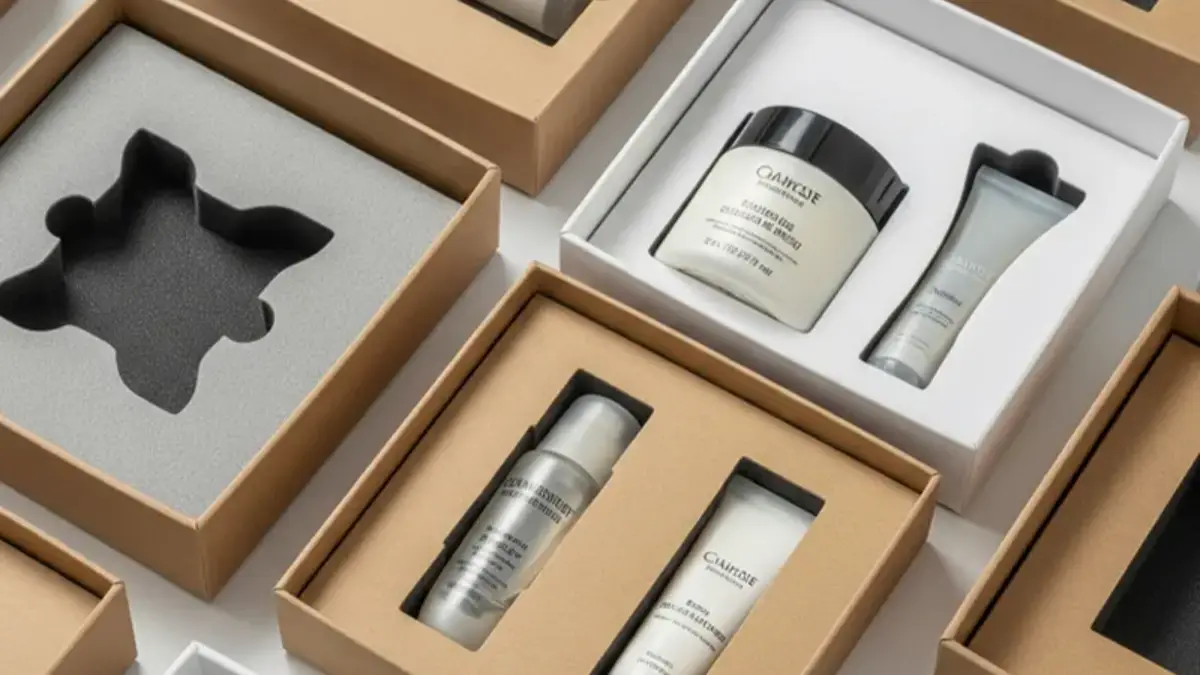
The insert is the protection and the sequence of the unboxing.
- Paperboard dividers for a multi-piece set.
- Molded pulp for a brittle or irregular shape.
- Layered trays when the second item should appear after the first is lifted.
- A ribbon or magnet lift only if the path is drawn. A ribbon glued into the hinge and also asked to be a handle will tear the wrap.
EVA is accurate and it is plastic. Use it when the product is fragile and the claim allows foam.
A QR code on the liner is cheap function: a tutorial, a lot lookup, a refill page. Keep it off foil and emboss. Leave quiet space. The page has to be live when the box ships.
Print methods
Offset CMYK handles photography on coated board. Color will move a little between batches. A spot Pantone holds a brand color and is a poor way to print a photograph. Digital skips plates, which is why a 100-piece seasonal box can exist, and it costs more per sheet as the run grows. Variable names or codes belong on digital. They do not belong on a foil stamp.
Put the method, the colors, and the reference (Pantone or a signed drawdown) on the PO. “Match the PDF” is not a color standard.
What gets kept
A rigid box stays in a drawer when the lid still fits and the corner has not whitened. That is 1.5–2.0 mm greyboard, a through-dyed wrap if the edge shows, and a film or coating that survives being picked up. Neutral colors and a plain lid get reused more often than a season-specific cartoon, because the second use is storage. The structure has to earn that. A thin wall and a loose magnet become recycling on day one, whatever the copy on the belly band says.
Lock structure, caliper, insert, and finish on one filled sample before the dies multiply across the line.
