The bag style is the construction: bottom, gusset, handle, and closure. A retail brand can print almost any of them. The wrong construction fails when the product is heavy, oily, or shipped rather than handed over a counter.
Why the construction shows up in the brand

Customers feel the hem, the handle, and whether the bottom stays square on the pavement. A twisted-handle tote says counter retail. A die-cut bag says a lighter gift or a short carry. An adhesive mailer says the bag is the shipper.
Paper is the right conversation when you want a fiber pack that can be recycled as paper. That depends on the sheet and on what you add. A film window, a polypropylene cord, or a full laminate is a plastic component. List it in the spec so the claim matches the bag.
Five constructions

SOS kraft
Self-opening square, or a flat-bottom kraft with a side gusset. Unbleached or recycled kraft, serrated top or a simple hem, twisted paper handles if it is a shopper rather than a grocery sack.
It suits groceries, books, and boutiques that want the brown sheet to do the work. Strength is gsm plus the bottom paste. Print is usually flexo, one or two colors. It is the most direct bag to specify and the easiest to overfill. Write the load.
Euro tote
A turned-top shopping bag in a heavier sheet, often white, clay-coated, or a colored kraft, with twisted paper, flat paper, or rope handles and a pasted patch.
This is the fashion, beauty, and gift counter bag. Offset or a finer flexo holds a logo and a small pattern. Foil and emboss are done on the sheet before forming. The turned top and an even patch are what make it look finished. A light aqueous coat protects the print. Film is optional and changes the recycling line you can honestly name.
Die-cut
The handle is a hole punched through the panel, sometimes with a patch behind it. There is no cord to source or to pull out.
It suits lighter gifts, cosmetics sets, and brands that want a flat pack. The hole needs a clean edge. On a heavier product, reinforce it. Because the hand touches the cut edge, gsm and grain matter more than they do on a cord handle. Custom outlines are a die. A shaped outline costs a tool and limits how tightly you can pack the blanks. Use a shape when the outline is the brand. Use a standard rectangle when you mainly need a bag.
Adhesive mailer
A paper mailer with a peel-and-seal flap, for lightweight DTC: apparel, books, flat accessories. The bag is the shipper, so the sheet, the flap, and the release liner have to survive a sortation belt.
The liner has to release without tearing the face. The flap should close on an unprinted or a varnish-stable zone. If you need tamper evidence, say so, and test it. This construction replaces a plastic mailer only when the product is flat enough and dry enough for paper.
Window bag
A hole in the face, patched with film, so the product shows. Bakeries and small gift items use it.
The film is usually PET or a similar plastic, sometimes PLA. The window changes how the bag is sorted. Call it a paper bag with a film window, and size the window so the product is visible without turning the face into a plastic panel. Grease-resistant paper belongs here when the product is food. Ask for the food-contact declaration that matches the market. Do not assume a standard tote sheet is cleared for that.
Sheet, handle, and end of life
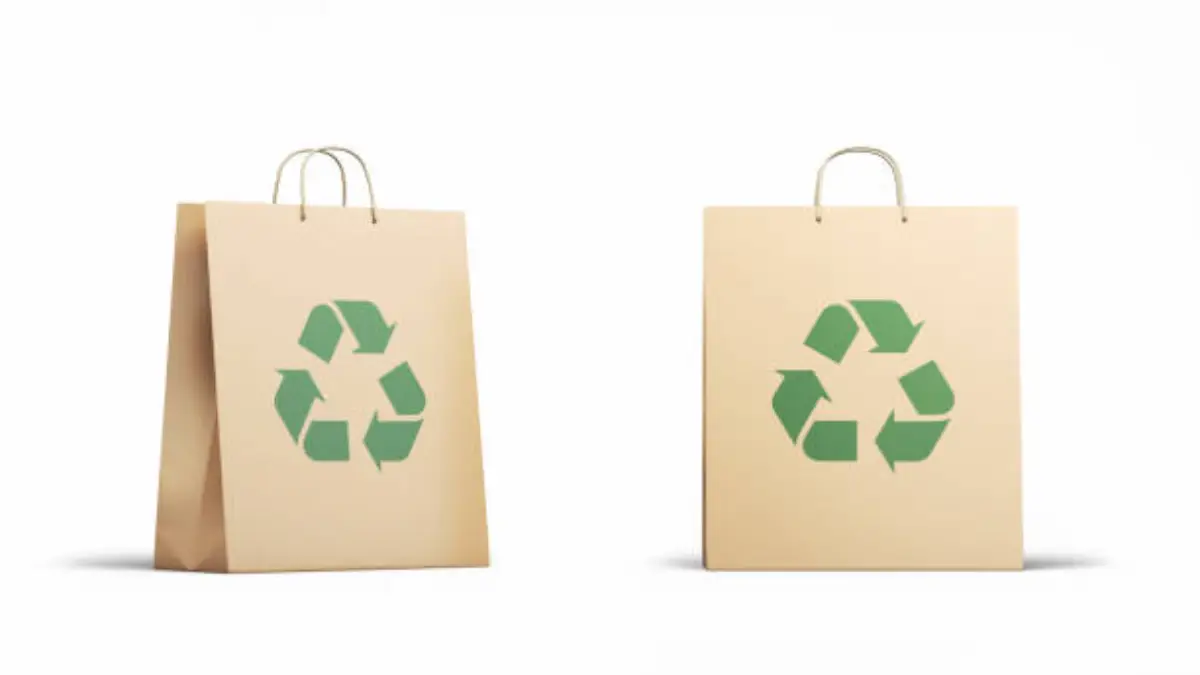
Fiber. Virgin kraft for tear. Recycled when you accept shade variation and may need more gsm. White or coated when the art is photographic. FSC when you ask for chain of custody.
Ink and coating. Water-based flexo or vegetable-oil offset for most retail bags. Aqueous coat for rub. Avoid a heavy laminate if the bag has to stay in a paper recovery claim under the rules you sell into. EU buyers should read the bag against PPWR recyclability expectations. US rules on plastic bags are state and city rules; the paper bag still has to be described accurately if it contains film or plastic cord.
Gsm and handle. Heavier product, higher gsm, and a larger patch. Twisted paper stays in the fiber story. Cotton cord is a textile. Polypropylene cord is plastic. Die-cut has no cord and a weaker hand-hole unless you reinforce it.
Cost. The quote moves with sheet, construction, print process, handle, coating, and quantity. A euro tote with foil is a different job from a one-color SOS. Tendlyn’s MOQ is 100. There is no fixed price list. The number is written after those lines are known.
A cheap sheet that splits at the patch costs more in returns than the gsm you skipped.
Art on the bag you chose

Put the logo where the seam, the patch, and the bottom paste are not. On a gusseted bag, decide whether the art wraps the side or stops at the face. Wrapping the gusset looks continuous and is harder to register.
Color is a drawdown on the real sheet. One Pantone on kraft is often enough for a boutique. Four-color photography wants a smoother, lighter face and offset or digital.
Size the bag from the product: face, gusset, height, in millimetres, with the product in a sample before bulk. A garment needs height. A jar needs a square bottom and a gusset that clears the lid. A mailer needs the flap calculated into the blank.
Guangzhou Tendlyn Trading Co., Ltd. forms paper bags in Foshan and Zhanjiang, in the same plants as its folding cartons, mailer boxes, rigid boxes, and paper tubes. Founded in 2009. Bring the product weight, the construction, and the art. The sample is a formed bag, not a flat printout.
