You are boxing a real product. It has a weight, a fragile face, and a pallet pattern. The corrugated spec is how you tell a plant which of those you are protecting.
This is the buying sequence: name the board, name the style, name the test, then ask for a price. A price before those four is a placeholder.
What you are buying

A corrugated box is fiberboard with a fluted medium between liners. The wave is the difference from a folding carton. A carton is solid board, one sheet, no flute. It suits light retail packs. It does not give you the caliper of a C flute RSC.
| Corrugated | Carton | |
|---|---|---|
| Board | Liner, flute, liner | Solid paperboard, no flute |
| Strength | Stacking and cushion from the wave | Enough for light retail, not for a heavy pallet |
| Typical job | Shipping, mailers, trays, export | Primary retail cartons, sleeves |
Both can be printed. Both can be the wrong choice. A photograph on a heavy shipper is often a litho sheet laminated to flute, not a reason to abandon corrugated. A light serum carton does not need a double wall.
How the board is made, short version

Mills send liner and medium. The corrugator steams the medium, forms the flute, and bonds it to the liner with starch under heat. A second liner makes single wall. Another flute-and-liner pair makes double wall. One more makes triple wall.
Sheets are slit, scored, and conditioned. Wet board warps, and warped board prints badly. Flexo or a litho-lam sheet puts the graphic on. The die-cutter cuts an RSC, an FOL, an HSC, or a custom blank. The folder-gluer joins the tab. The plant should be able to show ECT or burst on the grade you bought. Bundles ship flat.
The full line, from single face to the folder-gluer, is a plant process. Your purchase order does not need every station. It needs flute, wall count, style, print, and the test.
Wall count
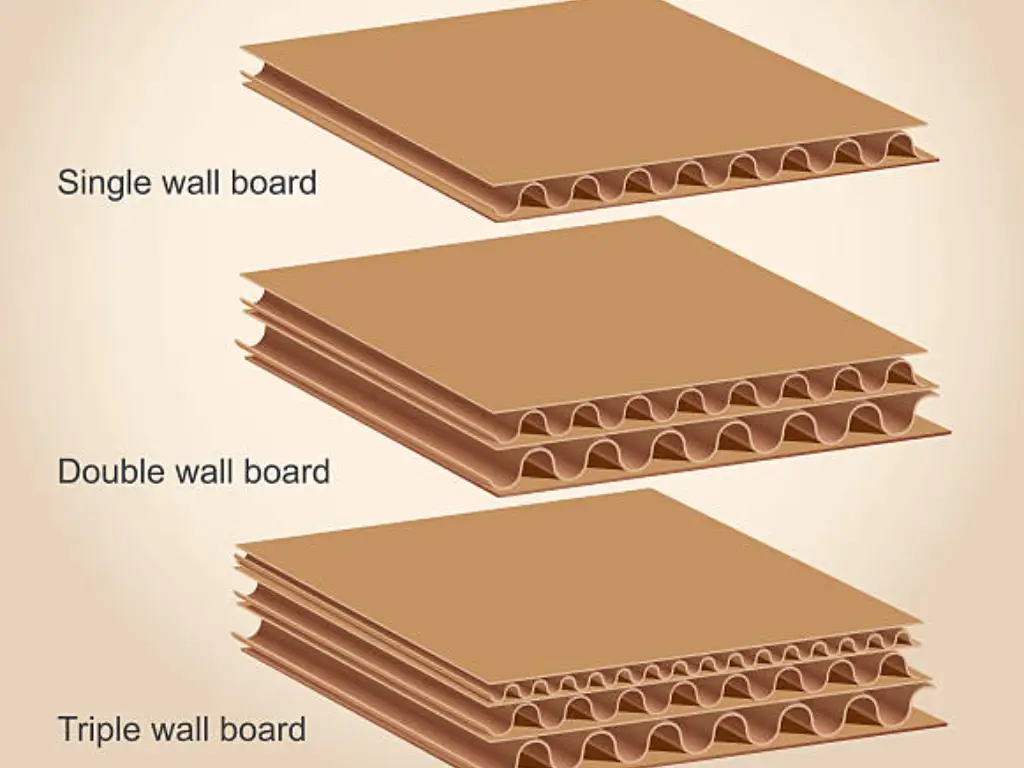
Single wall is one flute, two liners. Mailers and everyday shippers.
Double wall is two flutes, three liners. Export, long routes, heavier goods. Puncture and stacking both move up. So do weight and board cost.
Triple wall is three flutes, four liners. Machinery and other loads that used to go in wood. Specify it when the weight requires it, not as a safety adjective.
More walls raise compression and the board’s resistance to a wet stack. They also raise freight weight. Match the wall to the route you have, not to the worst route you can imagine.
Flute
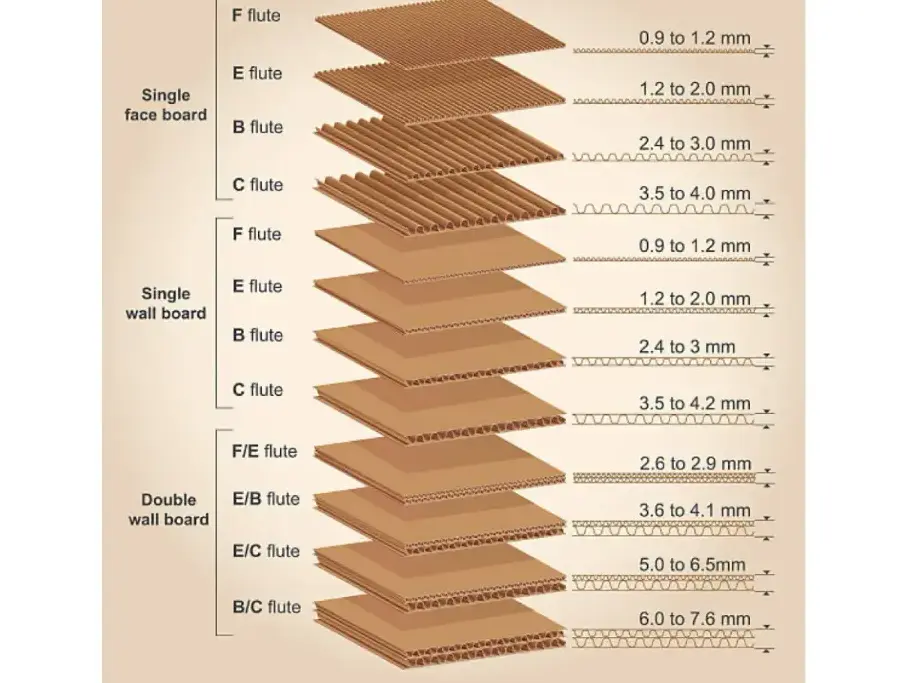
Caliper is approximate. It moves with the liners. Flute count is per foot.
| Flute | Approx. caliper | Flutes per foot | What it is for |
|---|---|---|---|
| A | 4.7–5.0 mm | ~33 | Cushion. Fragile goods. Ribbed face, coarse print. |
| B | 2.5–3.2 mm | ~47 | Flat crush and a cleaner face. Trays, cans, die-cut retail. |
| C | 3.5–4.0 mm | ~39 | General shipping. The usual RSC flute. |
| E | 1.0–1.8 mm | ~90 | Mailers and retail graphics. |
| F | 0.8–1.2 mm | 120+ | Small packs that need a fine print face. |
A few pairings get misstated often enough to fix here.
C is the shipping default because it balances cushion and stacking. On the same liners it generally stacks better than B. B is the one that resists flat crush and prints more cleanly. A cushions more than either and prints worse. E and F buy a flat face and a smaller cube. They are not heavy-freight flutes.
Double-wall names both flutes.
- BC combines B’s crush resistance with C’s caliper. Export and industrial cartons.
- EB puts a printable E face on a B flute. Retail and fragile branded packs.
- AC is the bulky cushion for heavy or shock-sensitive goods.
Triple wall is three named flutes. AAA, ABC, ACC, and ACA all exist. Write the letters. “Triple wall, strong” is how two plants quote two different boards.
Style
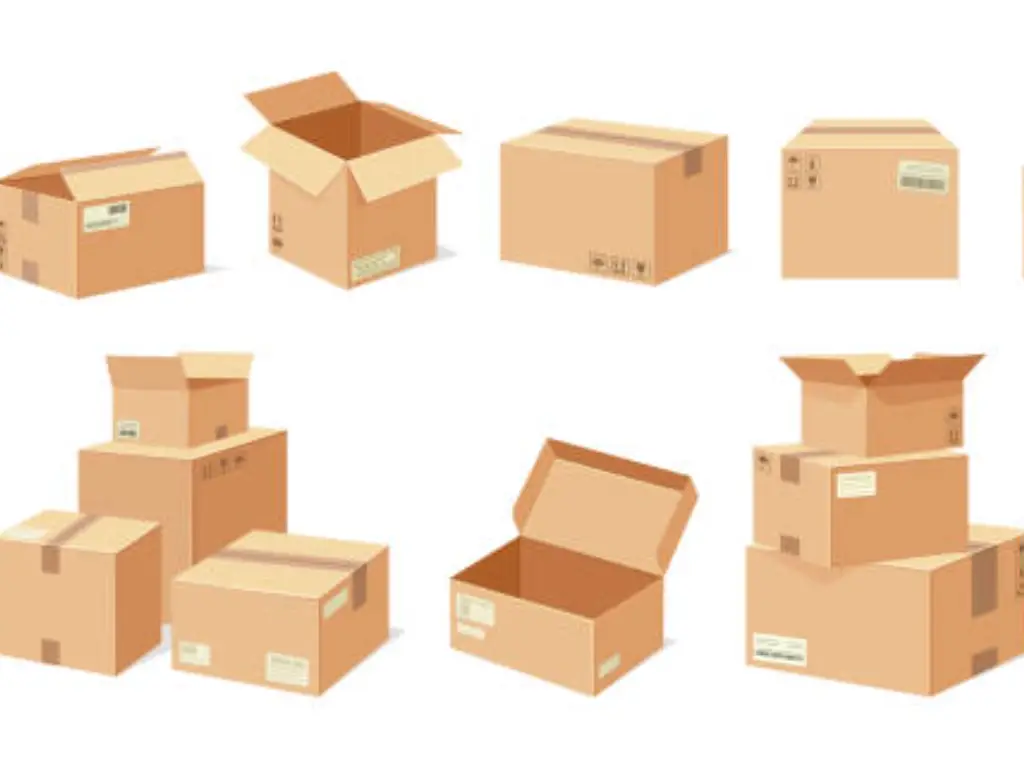
RSC. Flaps meet in the middle. Cheapest blank, runs on automatic lines, the default shipper.
FOL. Outer flaps fully overlap. Extra board on the top and bottom for dense goods.
HSC. One face has no flaps. A tray, or a base that takes a separate lid.
Die-cut. Cut to the product. Cosmetics, electronics, mailers, displays. You pay for a die. The fit and the print area are why.
Telescope. Two pieces, cover over base. Long or irregular goods. Strength is in the walls, so flute choice matters more than the graphic.
Style does not add ECT. A die-cut E flute is still an E flute.
Where the styles land

E-commerce and retail shippers. RSC or a mailer, often C or E, sometimes with a paper insert. Brand print is flexo or litho-lam.
Industrial freight. Double or triple wall. FOL or a pallet box when the load is dense or long-haul.
Food and produce. Vented trays. A wet or greasy product needs a specified coating. Wax and poly resist moisture and are harder to recycle. Food-contact declarations follow your spec if the board touches food. A produce tray is not automatically food-contact.
Medical devices. Die-cut inserts hold the item. The outside print has to match the labeling you are legally required to show. That is a content problem as much as a print problem.
Displays. E flute, litho-lam, because the face is the point. Structural strength still has to match the weight on the shelf.
Recycling
Most corrugated is recyclable because it is paper and starch. Fibers are reused until they are too short to hold a sheet. Water-based ink keeps that path open. Wax, polyethylene, and film lamination close it in many mills.
Biodegradable is a different word. Uncoated corrugated will break down under composting conditions. It is not a certified compostable package unless you have asked for a standard such as ASTM D6400 or EN 13432 and the plant has built to it. Polymer coatings, some synthetic adhesives, and some UV systems take you out of that claim. Ask the plant to confirm the exact construction against the recycler you use. A general “it is paper” is not enough once a coating is on the job.
FSC fiber is available on request. Order it if the claim has to appear. Do not add the logo afterward.
What to check before you place the order
Tests. Name them. Cobb for water take-up. ECT for stacking. Flat crush for the flute. Burst (Mullen) if an old spec still requires it. ASTM D642 is a compression method for shipping containers. A stamp that says “tested” without the method and the result is not a result.
Print and add-ons. Method, color count, coating, die-cut, insert, and any handle. Handles are a cut and often a reinforcement. They change the blank.
The plant. You want the site that will run the job, a dieline, and a sample on the production board. FSC only if you ordered it. Declarations only against your spec. MOQ at Tendlyn is 100. Capacity claims and a day-count copied from another job are not part of the spec. Ask this order’s schedule when the die and the board are known.
Cost. Unit cost moves with wall count, flute, paper grade, print method, coatings, the die, inserts, and quantity. Freight moves with outside size. A smaller box can cost more to convert and less to ship. Compare those after both constructions are drawn. Bulk does not have a standard discount you can assume. The quote is written after structure, board, print, and quantity are known.
Fiber and end of life. Recycled content if you require it. A recycling path that survives the coating you chose. FSC or PEFC only as a requested claim.
Guangzhou Tendlyn Trading Co., Ltd. converts folding cartons, mailer boxes, rigid boxes, paper bags, and paper tubes in Foshan and Zhanjiang. Founded in 2009 in Guangzhou. Send the flute, the style, the test, and the quantity to info@axwp.com, +86 158 1238 1273, or WeChat trimgem.
