A cream jar carton is cut from the jar you will ship, not from the number on the label. Diameter, height with the lid on, and any insert set the cavity. Get those wrong and the jar rattles, or it will not go in.
Why the fit matters
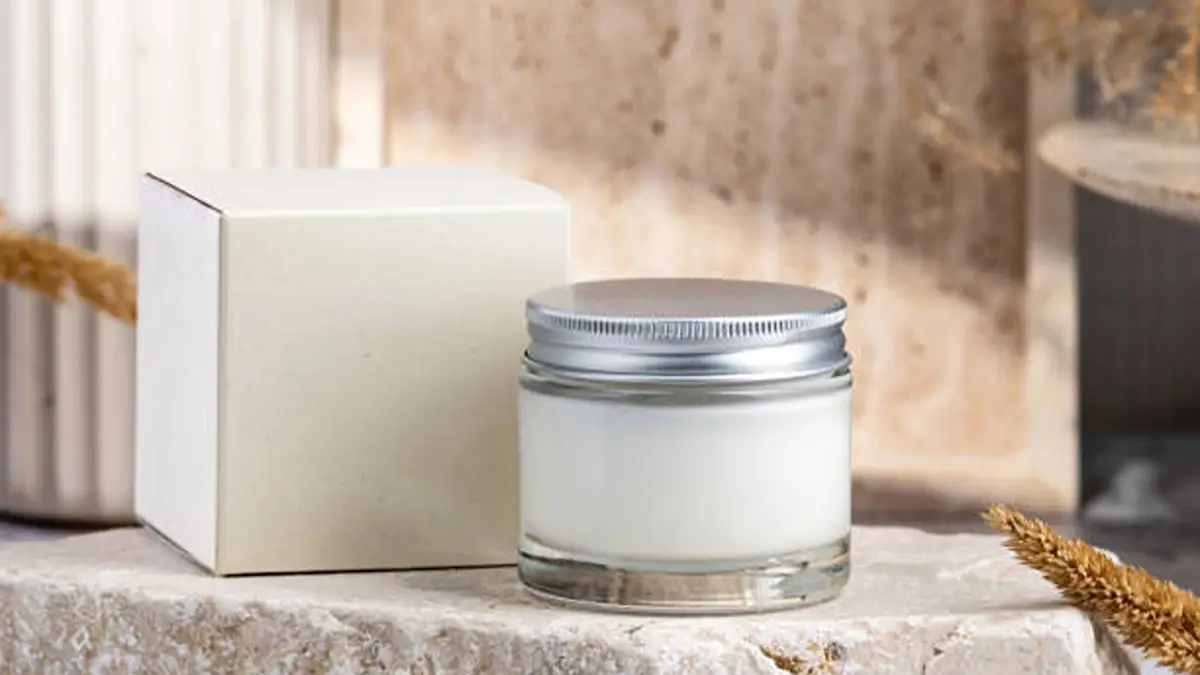
The carton has to match the jar's weight and shape. A direct fit leaves a small clearance. How much depends on the structure, the board caliper, and whether an insert is in the box. Snug packing stops the rattle that chips a finish. A spatula or a tray has to fit without bowing the panel.
Empty space becomes dimensional weight and a thinner pallet. A right-sized blank uses less board. On a shelf, a controlled footprint keeps the jar upright and in line with the rest of the brand.
Measure the jar, then the cavity
Stand the jar on a flat surface. Take the maximum outside diameter at the widest point, including a shoulder or a cap that overhangs. Take the height from the base to the top of the lid, assembled. Note the neck finish if the lid is part of the design. Use calipers. A small miss shows up as a scrape on a coating or a jam on a packing line.
For a direct-fit carton, plants often allow about 2–3 mm around the jar. An insert needs more, because you are now fitting the insert, and the jar inside it. Check height with the lid on, or the top panel will not close. Density changes how full a jar looks. It does not change the carton. The carton follows the glass or the plastic, not the grams of cream.
On a rigid box, wall thickness eats the cavity. A 1.5–3.0 mm greyboard can make the outside several millimeters larger than the space the jar sees. Folding cartons are drawn from the inside dimensions you need. Cut a structural sample and drop the real jar in before the dieline goes to press.

Ranges you will see
These are common retail jars, not a promise that your jar matches them. Measure yours.
- 30 ml face cream. Often about 45–54 mm in diameter and 45–55 mm tall.
- 50 ml. Often about 55–74 mm in diameter and 50–62 mm tall.
- 100 ml. Often about 65–84 mm in diameter and 56–75 mm tall.
- 10 ml. Around 34 mm in diameter and 35 mm tall.
- 15 ml. Around 54 mm in diameter and 41 mm tall.
A 2 oz jar is sometimes quoted near 2.25 in diameter and 1.94 in tall without the cap. A 4 oz jar near 2.81 in diameter and 2.38 in tall without the cap. The cap changes both numbers. Brimful volume and labeled volume are not the same thing, and formula density decides how much cream is in the jar. The box still uses the widest point and the full height, plus 2–3 mm when you are designing a direct fit.
| Jar | Typical jar | A carton that often fits | A common style |
|---|---|---|---|
| 30 ml | 45–52 mm diameter, 45–55 mm tall | 55 × 55 × 58 mm | Straight tuck |
| 50 ml | 55–62 mm diameter, 50–62 mm tall | 65 × 65 × 65 mm | Straight tuck |
| 100 ml | 70–80 mm diameter, 60–75 mm tall | 85 × 85 × 80 mm | Auto-lock bottom |
Measure the assembled jar at its widest point and its full height. Add about 2–3 mm total, or about 1–3 mm per side, when there is no insert, so the jar slides and does not rattle. A raised lid, a pump, or a tall shoulder wants about 3–5 mm of extra headroom so the top panel closes.
Board and converting have a tolerance. Hold it in the dieline, then confirm on a physical sample before bulk. Set the cavity before you set the outside. Glass usually wants more side clearance and an insert. If any dimension is under about 3 mm of clearance, fit a sample before you approve the run. Give the plant the jar diameter, the full height, the lid profile, and the insert caliper.
With an insert
Without an insert, a 30 ml jar is often tried in something like 55 × 55 × 58 mm, or about 2.5 × 2.5 × 3 in. A 50 ml jar in about 65 × 65 × 65 mm, or 3 × 3 × 3 in. A 100 ml jar in about 85 × 85 × 80 mm, or near a 4 × 4 × 4 in cube, depending on the jar and the carton. Travel jars are often pushed toward a tight 2 × 2 × 2 in, still larger than the jar so it will enter.
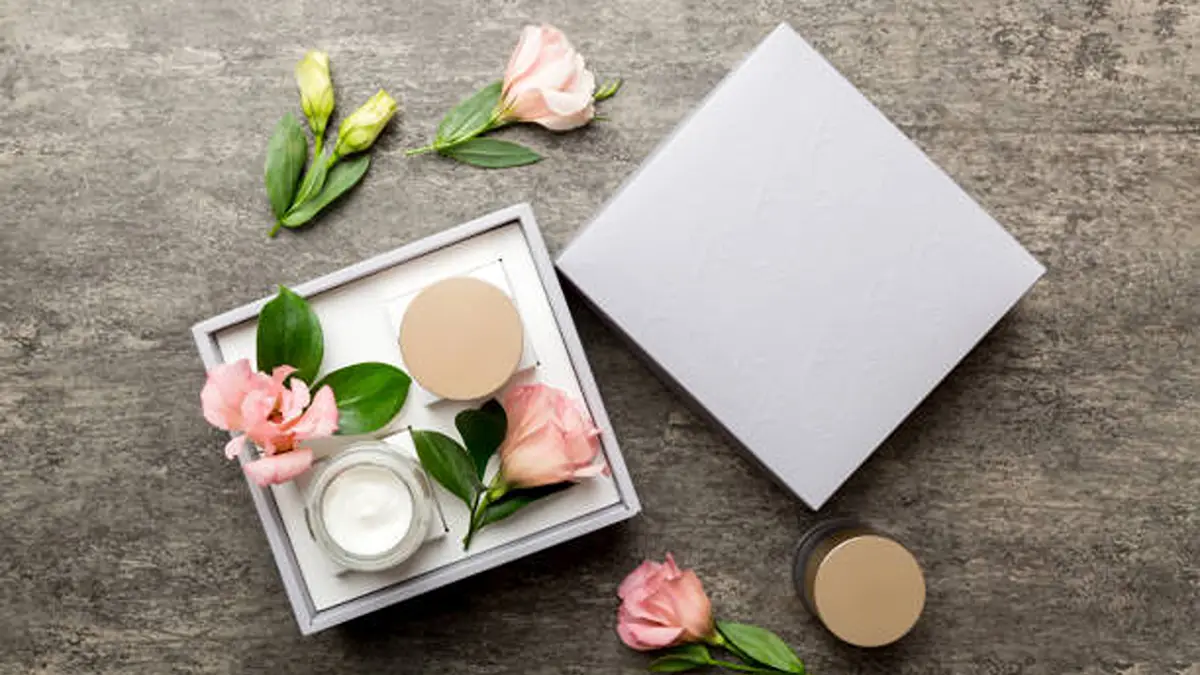
An insert throws those footprints out. You are adding the wall of the insert on every side. A working approach is about 3–5 mm per side for the jar, and a cavity wall of about 10 mm when the insert is foam or a built-up paper. Calculate from jar diameter, total height, lid height, base, and material thickness. On a rigid box, confirm inner against outer. The greyboard is not free space.
Retail and parcel
Retail cartons are there to be read under store light, on coated board, with a print that survives handling. A heavy jar may need a stiffer folding carton or a rigid box so the panel does not belly. Shelf pitch sets the footprint as much as the brand does.
A parcel wants the retail carton, an insert that locates the jar, and a corrugated mailer. The mailer is sized to that stack. A smaller mailer lowers dimensional weight and still has to pass a drop. Those are two tests, not one slogan.
Mistakes
- Measuring the jar without the cap. The carton is short.
- Using the outside of the carton as if it were the cavity. Caliper steals the fit.
- Mixing inches and millimeters in one drawing.
- Rounding early. The carton ends up tight or loose.
- Skipping the 2–3 mm so the jar will not enter or leave cleanly.
- Forgetting the insert, the liner, or the spatula.
- Skipping the prototype, so production tolerance arrives as a surprise.
- Drawing art before the dieline is frozen. Graphics land on the wrong panel.
What to send the plant
Sample and travel jars often start near 2 × 2 × 2 in. Daily creams near 3 × 3 × 3 in or 65 mm square. Larger treatment jars from about 3.5 × 3.5 × 3 in toward 4 × 4 × 4 in. The references above, 55 × 55 × 58 mm, 65 × 65 × 65 mm, and 85 × 85 × 80 mm, are starting points for 30, 50, and 100 ml, to be checked on your jar. About 0.25 in of clearance at the widest points is another rule of thumb when you are still in inches. Straight tuck, reverse tuck, and a square carton are the styles that usually house a jar.
Send outer dimensions of the jar, capacity, the cap or pump, and a photo. Ask for a quote and a dieline based on internal space, with the board named. Decide on paperboard, EVA, or molded pulp before the cavity is locked. Approve a physical fit. A carton drawn from the labeled fill will not match the jar.
Guangzhou Tendlyn Trading Co., Ltd., founded in 2009 in Guangzhou, cuts folding cartons and rigid boxes for this kind of fit in Foshan and Zhanjiang. MOQ is 100. The sample is the fit check.
Short answers
How do I measure? Widest point, usually the cap or the shoulder, and base to top of lid. Square jars: length, width, height. Measure the container you have.
How much clearance? About 2–3 mm on a direct fit so the jar slides. A raised cap may want 5–10 mm of headroom. With an insert, about 0.5–1 mm around the insert in the carton, and about 1–2 mm in the product cavity, so it holds and still comes out.
Does caliper change the inside? Yes. Thicker board grows the outside and shrinks the cavity. Design the dieline from the inside.
Do I need an insert? For fragile glass, a heavy jar, a loose carton, or a jar packed with a spatula or a leaflet. A light plastic jar in a tight square carton can go without one.
What is the dieline? The flat drawing of every cut, fold, and glue. It is how the cavity you measured becomes a blank.
Send the jar measurements to info@axwp.com, +86 158 1238 1273, or WeChat trimgem.
