Custom cosmetic packaging means the cavity, the material, and the print were drawn for one formula and one brand. A stock jar with a new label can be the right first step. It is not the same object as a carton cut to that jar, with a collar, a signed color, and a back panel that actually fits the INCI list.
Tendlyn builds the paper part: folding cartons, rigid boxes, mailer boxes, paper bags, and paper tubes. Bottles, tubes, and jars are specified with the primary supplier, then the dieline is drawn around them.
What "custom" includes
The primary holds the formula. The secondary presents and protects it. The shipper, a mailer or a master carton, gets it there. Custom work can sit on any of those layers. On paper, it usually means a dieline, a board grade, an insert, and a finish stack you can repeat.
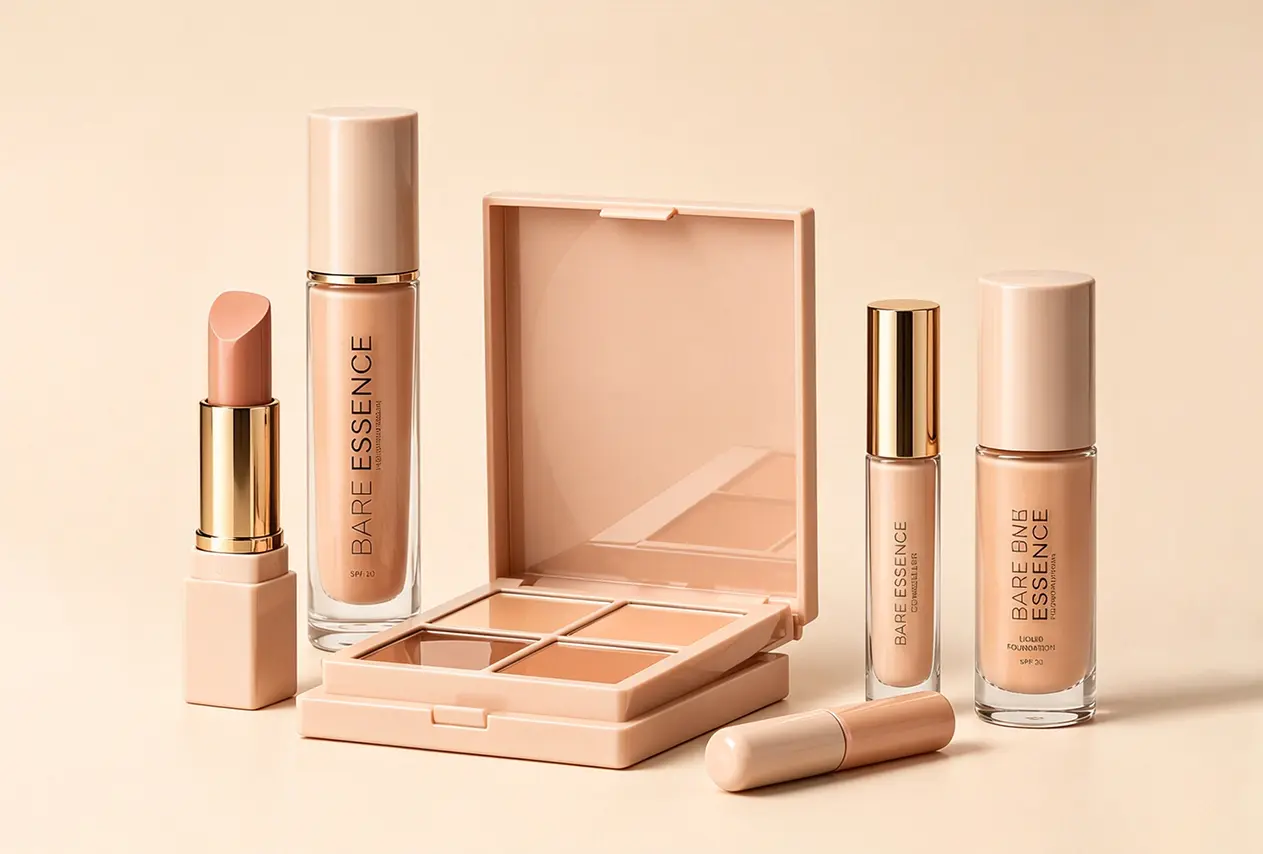
Four checks keep the project honest.
- The structure matches the volume, the viscosity, and how fragile the component is.
- The color, type, and finish match the brand you already use on the site and the shelf.
- The user can get the product out, and the parcel can take a drop.
- The legal text fits in type you can read, including a batch code that will actually stick.
Why brands leave stock
Stock bottles collide with each other on a shelf. A custom carton, a custom insert, or a wrap that is only yours is how a line becomes recognizable without inventing a new resin. The hand still judges the primary. A heavy glass jar and a closure that seats cleanly do more for a premium price than a slogan on the shipper.
Function is the other reason. An oxidation-prone serum wants an airless pump. A facial oil wants a dropper with a controlled dose. The carton then has to clear that pump head and hold the bottle still. A soft-touch film or a magnetic lid is the daily reminder. It does not fix a formula that separated in the wrong resin.
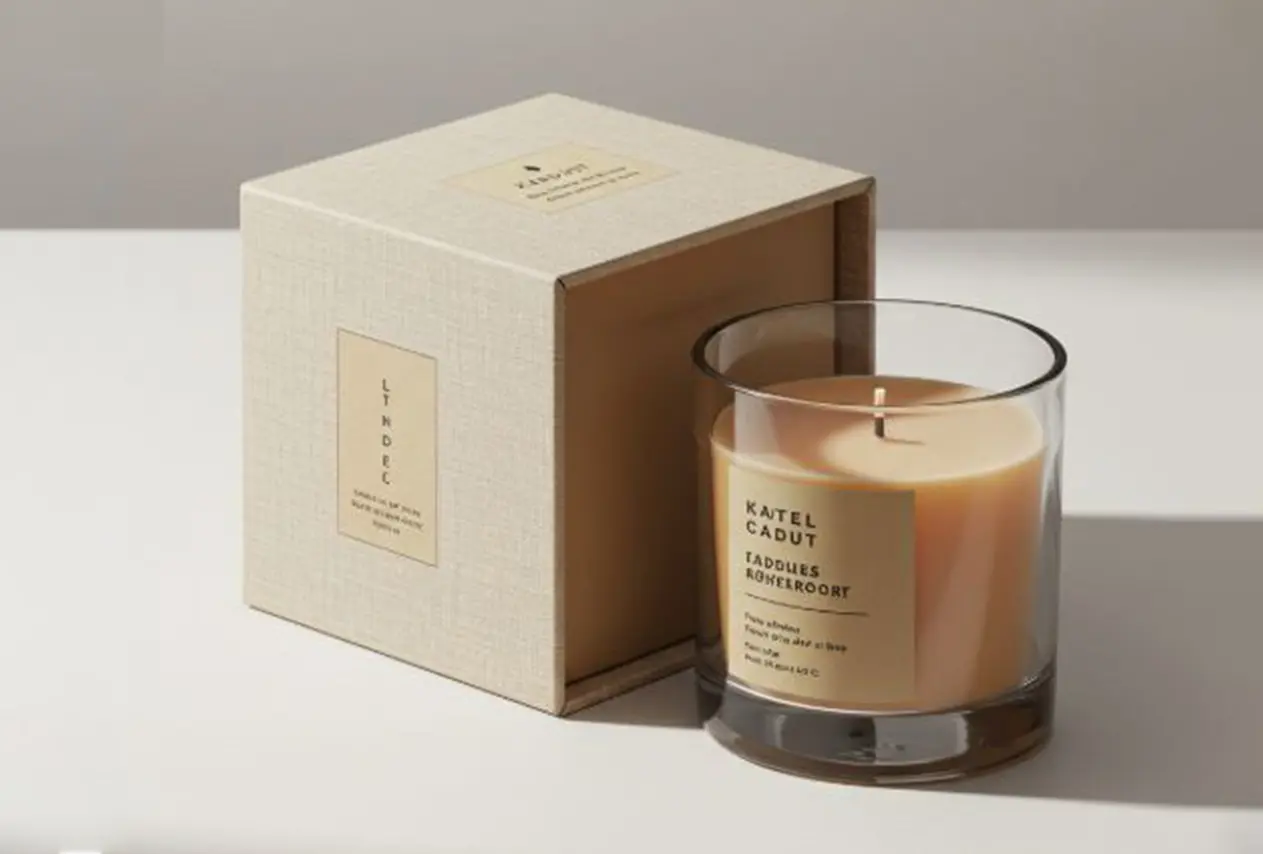
Containers, then the box
Bottles. Lotions and toners use screw or flip caps. Creams and serums use pumps, including airless when air is the enemy. Facial oils and potent serums use glass droppers. The carton is a folding sleeve or a rigid box with a collar.
Tubes. Creams, gels, sunscreen. Plastic squeeze tubes are the volume build. Aluminum tubes block light for some balms. The outer is often a small folding carton or none at all if the label is complete.
Jars. Thick creams, butters, masks. Wide mouth, so plan a spatula or an inner seal. Double-wall jars add a show shell around an inner cup. Glass feels heavier and breaks. Plastic travels. The rigid box or the SBS carton is what keeps the lid from arriving scuffed.
Boxes Tendlyn actually runs.
- Folding cartons in SBS or another named board, tuck or crash-lock, for a serum, a lipstick, or a tube.
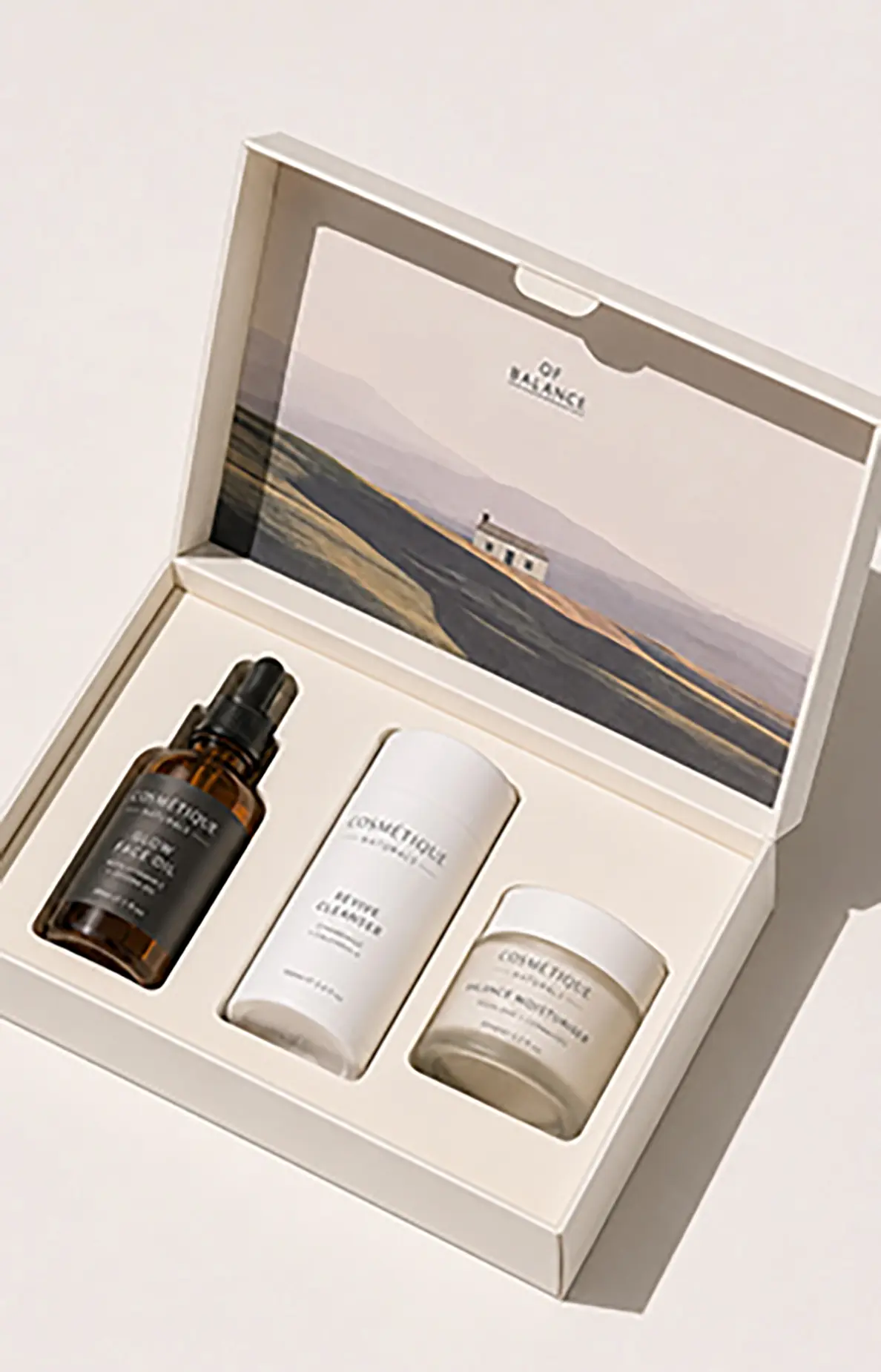
- Rigid boxes in wrapped greyboard for a jar, a fragrance, or a set.
- Drawer boxes for kits.
- Magnetic lids when the open-and-close is part of the product.
- Corrugated mailers, E-flute for lighter sets and B-flute for glass, printed as the parcel the customer opens.
A heavy glass jar gets a rigid box and an insert. A light tube can live in a folding carton. A direct order needs the mailer drawn, not improvised at the warehouse.
Materials
Primary, in contact with the formula:
- Glass, inert, for serums, oils, and fragrance.
- PET and PP, light and impact-resistant, for lotions and cleansers, after a compatibility test.
- Aluminum, light and air barrier, for sticks, balms, and some jars.
Secondary:
- SBS paperboard for retail folding cartons. Smooth, bright, the usual surface for offset, foil, and film.
- Greyboard, about 1.5–2.5 mm on a premium rigid box, wrapped with art paper, soft-touch, or cloth.
- Corrugated board for the mailer. Name the flute.
FSC fiber is available on request for the paper you specify. It is not a claim you add after the goods ship. A declaration of conformity follows that spec.
Print and surface
Offset for folding cartons and rigid wraps when the run carries process art. Digital when the edition is short or the scent name changes and you do not want a new plate. Screen for direct print on glass, plastic, or metal. Pad print for a cap or a compact curve. Hot foil for a metallic mark ink will not match. Flexo for many labels and sleeves. Laser for a permanent mark on metal or glass without ink.
Finishes on the paper:
- Matte, gloss, or spot UV. Spot UV wants a matte field under it or it disappears.
- Soft-touch film. Velvety, and a recycling question if the whole carton is filmed. Test scuff on the edges.
- Emboss and deboss, often with foil. The die is a tool.
- Interior print, if the unboxing is part of the spec. It is an extra pass.
On the primary, frosting and a metallic cap are component finishes. They are not applied on the carton line. A holographic film is a loud makeup surface. It is rarely the right face for a plain cream.
From brief to files
Write the position, the target quantity, and the formula limits before the mood board. Then pick the real bottle. Then the structural dieline: cut, crease, glue flaps, and bleed past the knife, typically a few millimeters, so the color does not flash white at the edge. Use the plant's dieline if they have one for that machine.
Prototype in two steps. A white sample for fit, with the real component inside. A printed sample for color and foil. The signed pair is what production matches.
Press files need separate layers for CMYK, spot color, foil, and emboss. A flattened PDF that "includes the gold" is how foil gets printed in yellow ink.
Quantity and time
Tendlyn's MOQ is 100. A one-color carton and a rigid box with a magnet, a foil plate, and a pulp tray do not share a unit cost at that floor. Make-ready, dies, and plates are fixed until quantity spreads them. The quote is written after structure, board, print, and quantity are known.
A new bottle mold is not a paper MOQ. That tool sits with the primary supplier and usually asks for a much larger commitment. Many brands customize a stock bottle with a screen or a label, and spend the structural work on the carton.
The calendar is the sample loop, the run, and freight for this spec. A plain carton with art already approved is a shorter path than a new rigid tool and two foil positions. Do not borrow a week count from a different job.
Label space
Every market wants identity, net quantity, an ingredient list in INCI order, the responsible business, warnings, and a lot code. The US puts identity and net quantity on the principal display panel, and the ingredient list on the outer retail container. If the inner bottle is sold alone, it needs its own label. MoCRA adds a domestic contact for adverse events.
Canada wants English and French on the core text, and metric units. The EU wants a responsible person in the Union and the warnings from the product file. One artwork rarely survives all three without a panel change. Leave a surface the coder can mark. Gloss and some soft-touch films reject inkjet.
Choosing the plant
Split the buy. Primary mechanics, airless pumps, glass draws, go to a component maker who will run compatibility. Paper structure goes to a converting plant.
Tendlyn was founded in 2009 in Guangzhou. The factories are in Foshan and Zhanjiang. The floors run cartons, rigid boxes, mailers, bags, and tubes. That is not a trading desk, and it is not a bottle molder.
Ask who cuts the insert, whether the wrap stays in the building, and for a quote broken into unit, die, and foil plate. Ask what you will reject: open corners, color drift, an insert that lets the jar hit the lid. Visit, or watch your job on the line.

Send the component drawing, the carton structure, the board, the print method, and the quantity. info@axwp.com, +86 158 1238 1273, WeChat trimgem.
