A stock box with a sticker on the lid is not custom jewelry packaging. Custom means the cavity, the board, the wrap, and the print are cut for one piece and one brand. If the ring can walk around the well, the customer feels it before they judge the stone.
What you are actually specifying
Work in two layers. The primary pack is the box or pouch that touches the piece. The secondary pack is the outer carton, the paper bag, or the mailer that carries it. Tendlyn builds the paper layer: folding cartons, rigid boxes, paper bags, paper tubes, and mailer boxes. A cloth pouch, if you use one, is a separate component you specify for scratch protection. The paper box still has to fit that pouch.
The spec has three jobs. Hold the piece still. Carry the mark in a repeatable place. Open in a way that matches the price of the jewel. A magnetic lid, a drawer, and a plain lid-and-base are different objects. Pick one before you talk about foil.
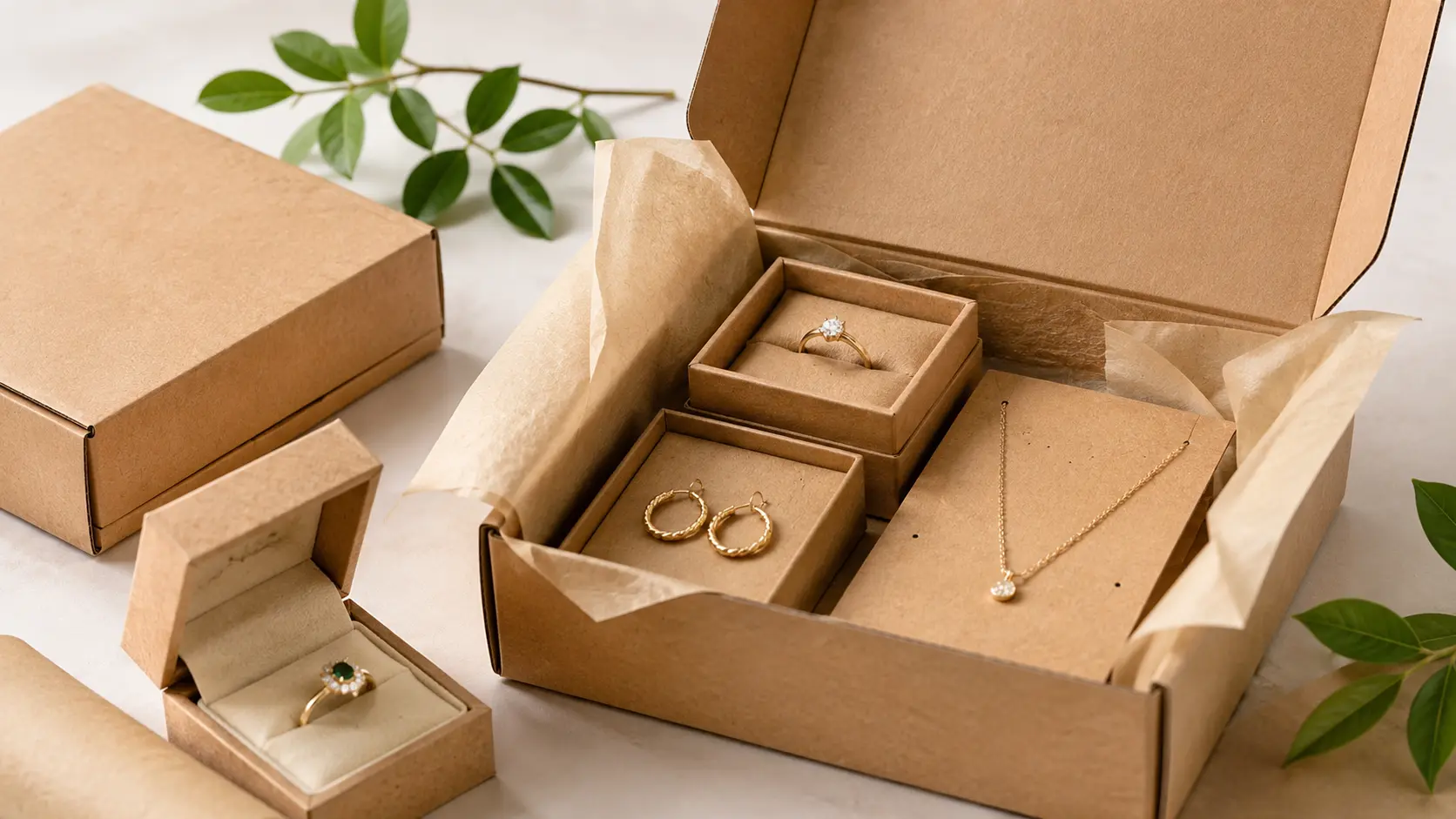
Structures that match the piece
Lid and base. A two-piece rigid box, often called a telescope or lift-off lid. Greyboard wrapped with paper or cloth. The lid should slide on with light resistance and stay square. This is the default for a single ring, a pendant, or a pair of earrings when you want a clear presentation and a strong wall.
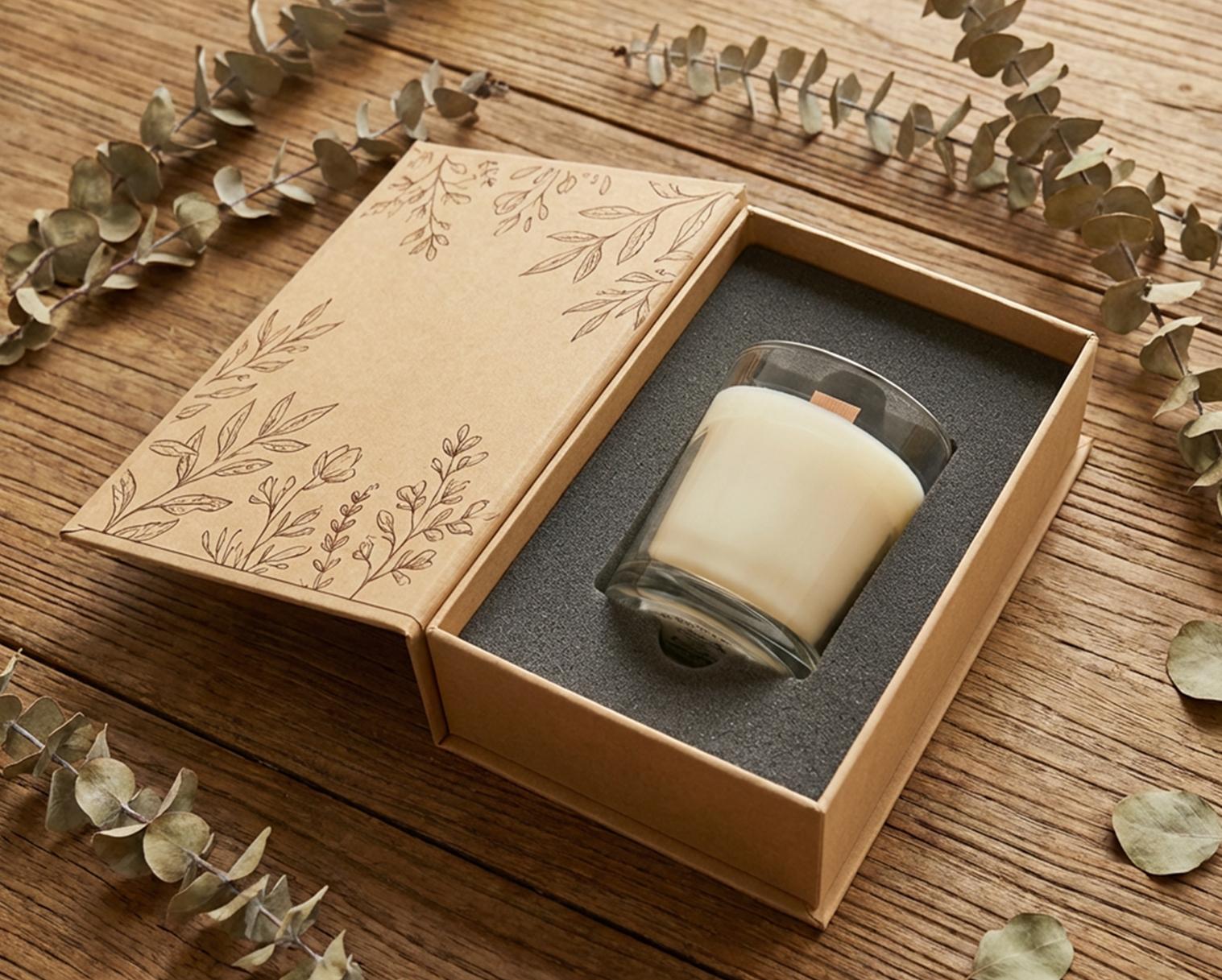
Magnetic closure. A book-style or hinged lid with magnets buried in the board. The close should be one clean pull, not a slam and not a gap. Use it when the piece is a gift and the customer will open the box more than once. Magnet grade and position belong on the drawing. A magnet that sits proud will dent the wrap.
Drawer. An inner tray in a sleeve, usually with a ribbon pull. The tray has to be tight enough to feel deliberate and loose enough to come out without tearing the ribbon. It suits a necklace that needs length, or a small set you want to reveal in one motion.
Folding carton. A crash-lock or tuck carton in paperboard, used for fashion jewelry, earring cards with a sleeve, or an outer around a small rigid box. It ships flat. It does not replace a wrapped rigid box when the piece is heavy or the brand is selling a keepsake.
Paper tube and paper bag. A tube works for a rolled chain or a slim bangle if the insert stops the piece rattling. A paper bag is the retail carry layer, with a twisted or flat handle and a small foil or print mark. It is not the shipper.
Pouches in velvet, satin, or microfiber are the soft layer. Microfiber is the safer face against polished metal. Satin looks bright and scuffs more easily. Cotton, linen, or canvas suits a brand that wants the pouch reused. Those cloth items are not a substitute for a fitted cavity when the piece has a stone setting that can snap.
Board, wrap, and what the hand feels
The core of a jewelry rigid box is greyboard (chipboard), commonly in the range of about 1.2–2.0 mm on small lids, thicker when the box is large or the lid span is wide. The plant should tell you the caliper it will actually cut, not a catalog adjective.
Wraps:
- Art paper or specialty text paper, then a matte, soft-touch, or gloss film if you need scuff resistance.
- Faux leather or PU, wrapped and turned in, when you want a hide look without a wooden carcass.
- Velvet or faux suede on the outside, for a gift box that should read as jewelry before it is opened.
- Kraft or an FSC sheet, when the brand wants a plain paper face. FSC is available on request. It is not assumed.
Wood boxes are a different factory. If you want a paper rigid box that feels heavy, specify caliper and a full wrap. Do not describe it as wood.
Inserts
The insert is where the money and the scratches both sit. It has to immobilize the piece, keep metal off metal, and present it when the lid opens.
- Die-cut EVA or PE foam, usually skived and topped with velvet or microfiber. This is the usual build for a ring well, a pendant slot, or a watch cushion. Foam takes the shock. The cloth is what the metal touches.
- Paperboard insert, die-cut and wrapped. Right for light fashion pieces and for brands that want a paper cavity. It positions the piece. It cushions less than foam. The fit has to be tighter, or the piece will tick.
- Molded pulp, for a visible fiber look. It can be left raw or lined. Raw pulp will mark high-polish metal unless you add a cloth or tissue face.
- Flocked tray, a formed shell with a fiber coat. Sharp cavities, less at home in a paper-recycling story.
Rings need a well that grips the shank and clears the head. Studs need two wells or a bar. Necklaces need a hook, a channel, or a folded slot so the chain cannot ball up. A bangle or cuff needs side walls, not a flat pad. If you sell a set, the insert is a map of that set, not a generic pillow.
Acid-free tissue or a small paper anti-tarnish strip is the chemical layer for silver. Specify the paper. A useful target on the sheet and the lining is roughly pH 4.5–7.5 and chloride under 10 ppm. Foam and cloth can still carry residues. Test with your own silver before you approve the cavity.
Logo and finish
Send vector art. Foil, emboss, and deboss do not survive a soft JPEG.
- Hot foil in gold, silver, or a tinted foil, on the lid or inside the lid. The plate is a separate tool.
- Blind emboss or deboss when you want the mark felt and not flashed.
- Spot UV on a matte or soft-touch wrap, for a small gloss mark against a dull field.
- One-color print on a kraft bag or a cotton-faced item, where foil will not sit cleanly.
Pick one placement rule and keep it: lid center, lower corner, or inside lid only. A foil logo plus a full-coverage soft-touch plus a deboss plus a spot UV on a 60 mm ring box usually fights itself. One metallic mark on a quiet wrap reads as jewelry. A pile of finishes reads as a sample board.
Sampling and the order floor
Ask for a white sample first: board, fit, magnet or lid, insert, with your piece inside. Then a printed or foiled sample for color and stamp position. The signed sample is the master.
Tendlyn's MOQ is 100. Setup still exists at that quantity. A new die, a foil plate, cloth yield, and make-ready are why a short run costs more per box than a repeat. The quote is written after structure, board, print, and quantity are known. There is no standing price list for "a jewelry box."
Time follows the same spec. A lid-and-base with a stock wrap is a shorter path than a drawer, a magnet, a cloth insert, and two foil positions. Your approval speed is part of the schedule. Air or sea freight is chosen after the cartons exist, not instead of a written production plan.
Paper-first sustainability
A jewelry box that is actually simpler to explain is usually:
- Greyboard and a paper wrap, one material family on the carcass.
- A paperboard insert, or molded pulp, instead of EVA, when the piece is light enough.
- FSC paper only if you requested it and the paperwork is on the order.
- Foil and film used in small areas, not as a full plastic skin, if the customer is supposed to recycle the carton.
A keepsake box that stays in a drawer is reuse. That only works if the lid still closes after months and the cloth does not shed onto the metal. Right-size the carton to the piece. Empty space is paid for in board and in freight, and it lets the piece travel.
Send the piece size, the structure, the board and wrap, the print method, and the quantity. The price is written from that. info@axwp.com, +86 158 1238 1273, WeChat trimgem.
