A mailer is a shipper that the customer opens. The flute and the internal size decide whether the product moves. The print decides whether the brand is still legible after the carrier.
What the box is doing
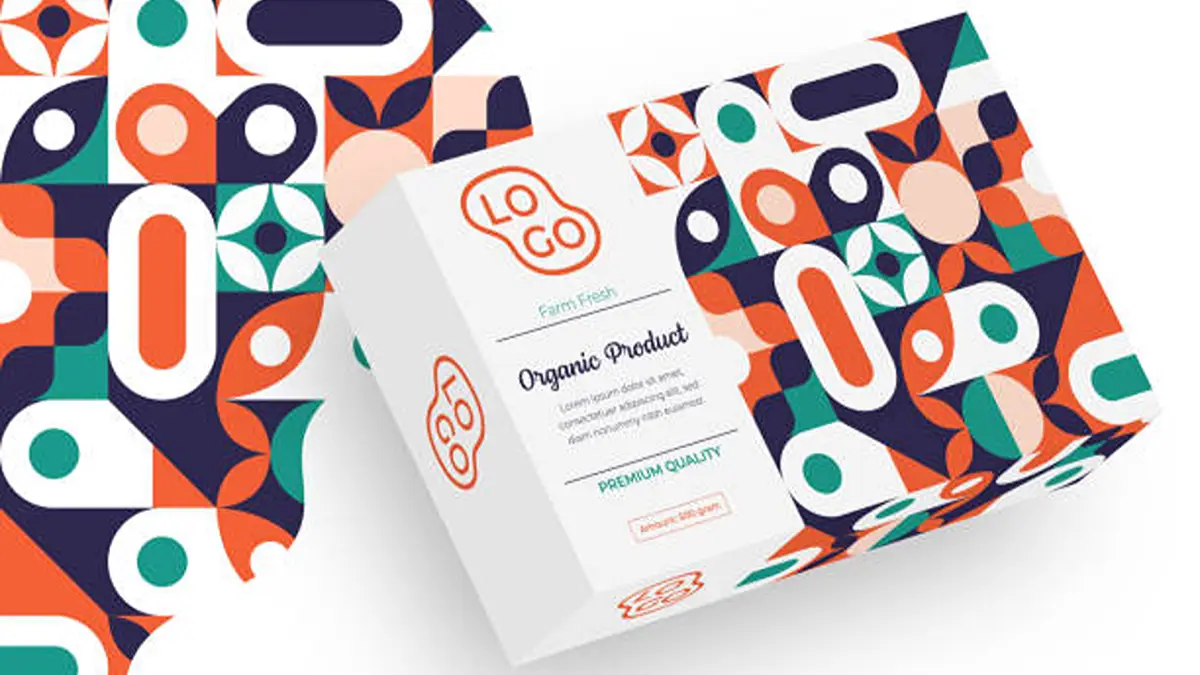
It is the first physical piece of the brand after the checkout page. A clear sequence, outside then inside, is what makes the purchase feel finished. Direct-to-consumer brands put the identity on this box because there is no shelf.
The useful version protects the product, opens without a fight, and gives someone a reason to look twice. A generic brown shipper can do the first job. A printed mailer does the other two only if the structure is right. Treat repeat orders and photos as a possible result of that, not as a number you can put in a forecast from the dieline alone.
Structure
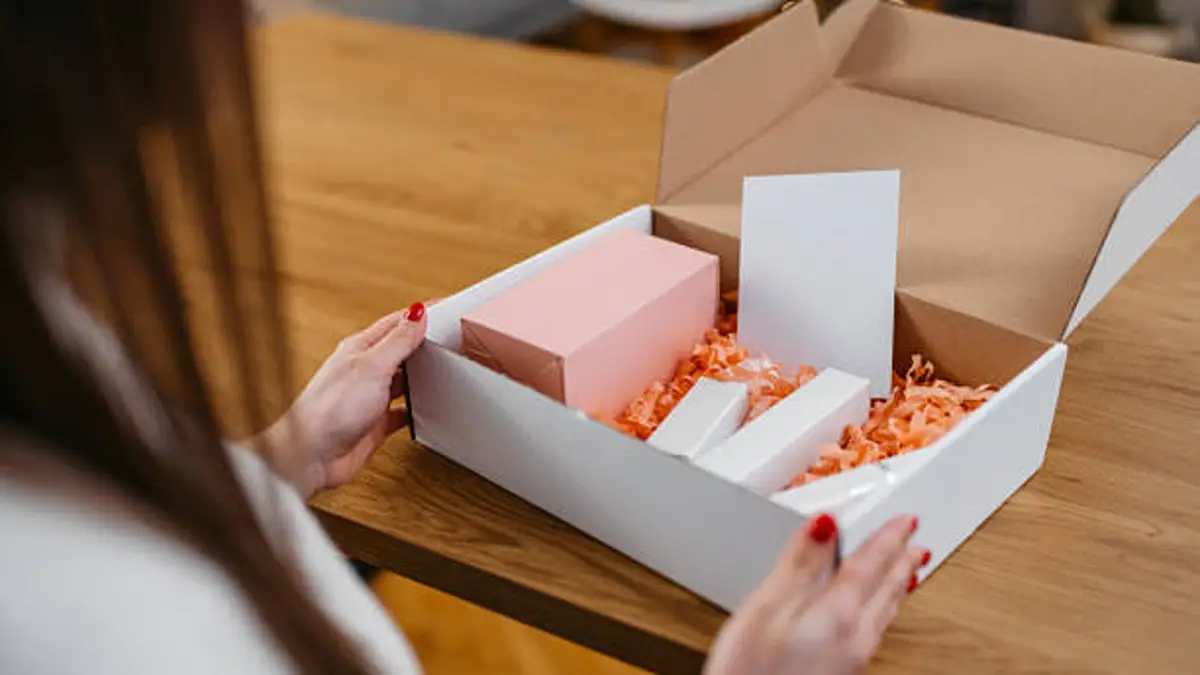
Roll-end tuck top, the RETT mailer, closes without tape and opens in one motion. It suits a subscription or a DTC order where the reveal matters. A self-locking mailer uses tabs so the pack-out does not stop for a tape gun. A double-wall build with locking tabs is the version for a heavier product, where you want the drop performance in the board.
E-flute prints cleanly and folds tight. It fits light cosmetics and small goods. B-flute is thicker and cushions more. When the shipment is heavy enough to care about stack, often once you are past about five pounds, B-flute or a double wall is the conversation. Confirm it with a drop, not with a rule of thumb.
Design from the inside. The internal size is the product, plus the insert, plus tissue if you use it. A close fit stops the slide, uses less board, and keeps dimensional weight down. Drop and compress a sample. Look for bow, crush, and a product that has walked.
The outside
The logo sits on a flat panel, off scores and locks. Leave clear space around it on the order of the mark's own height, and keep the mark to roughly 30–50% of the panel width so it is a mark, not a poster. One type family plus one supporting face is enough. Weight and size make the hierarchy. Match the color to the site the customer just left. Keep art out of the carrier's barcode and label zone.
Art goes on the plant's dieline. Raster at 300 dpi, CMYK. Backgrounds run to the bleed. Type stays inside the safe line, often 5–10 mm off a cut or a score on a mailer, with a 3–5 mm bleed as a common ask. Follow the dieline if it differs. Matte reads quiet. Gloss reads louder and shows scuffs more honestly, so choose it with the lane in mind. Approve color on the real board. Run a printed sample through a mock shipment before the finish is locked.
The inside
| Message | What it is for | Where it usually sits |
|---|---|---|
| Brand | A short note, a line about the company | Inner lid, base walls |
| Use | Care, assembly, returns | Side flaps, inside panels |
| Next step | A code, a QR, a refill prompt | Dust flaps, inside the lid |
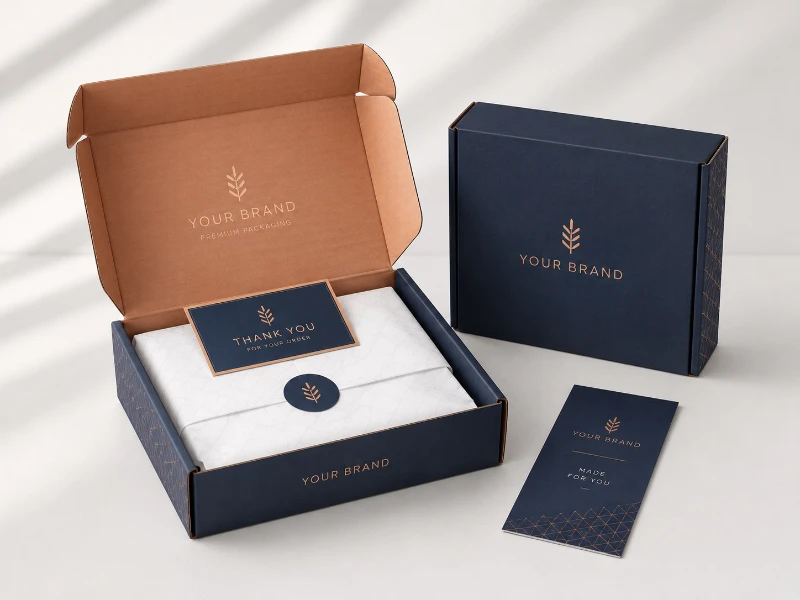
The inner lid is what people see in the first seconds. Instructions printed there can replace a loose card. A code or a QR belongs where the eye already is. Interior print is an extra hit or an extra liner, sometimes a sheet around 220 gsm when the kraft face is too rough for the art. Digital fits a short or variable run, including a name or a code. Offset and flexo are how a long run gets a stable Pantone. The cost of that second surface is on the quote, with quantity and method. It is not a fixed adder.
Guangzhou Tendlyn Trading Co., Ltd., founded in 2009 in Guangzhou, converts mailers, folding cartons, and rigid boxes in Foshan and Zhanjiang. MOQ is 100. FSC board is available on request.
Inserts and the small pieces
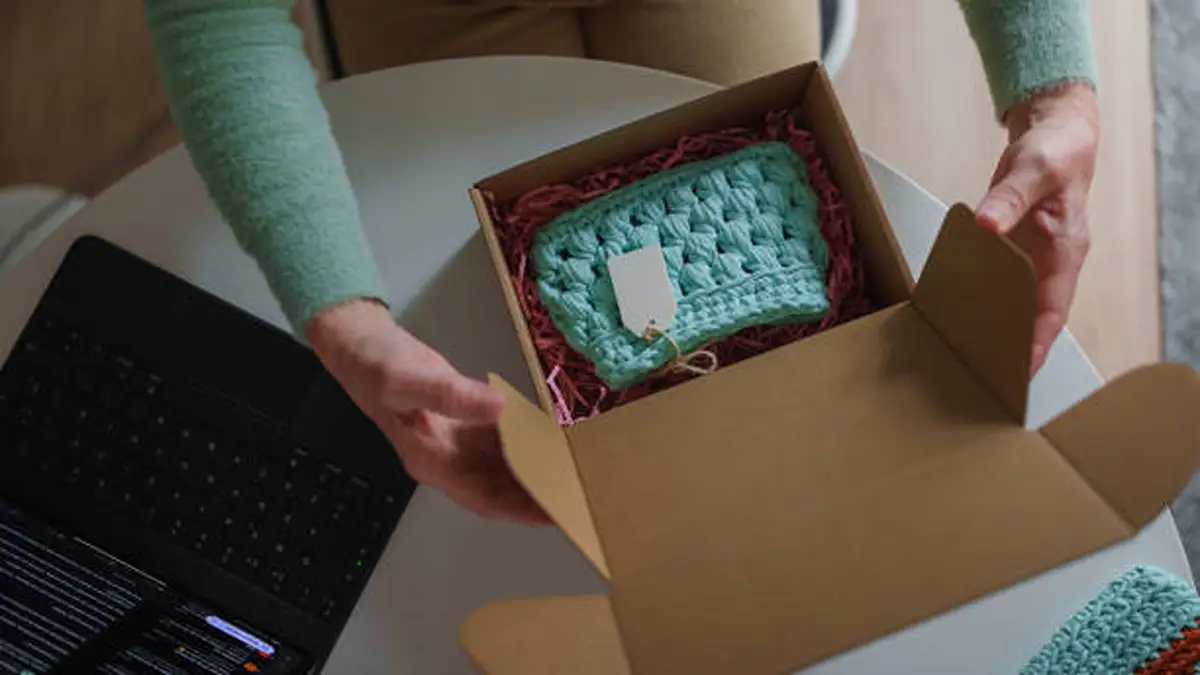
Tissue is the first layer inside. A sticker can close that wrap or repeat a mark. A die-cut pad, a corrugated divider, or a folded paperboard insert is what actually stops a fragile item. Those pieces can change the open without changing the mailer's die.
A starting clearance is about 0.25 in for a tissue wrap and about 0.5 in per side for a protective insert. Validate on a pre-production sample, and run the ship test before the tool is final. ISO 2859-1 is a usable sampling plan for print register, size, and whether the lock holds. Pack in the order the customer will see: outside, then the wrap, then the product in its seat. Adhesives and the closure have to survive the temperatures the carrier will apply.
Protection and the open, together
E-flute for a light cosmetic or a small object that wants a crisp fold. B-flute or a double wall when stack matters. Specify internal dimensions. A fit allowance around 0.5 in is a common place to start so the product does not walk and the carton is not billed as air. Die-cut board, molded pulp, or a foam insert locks the item and replaces loose fill.
RETT or a tab lock removes the tape from the open. Keep exterior art minimal and on flat panels so scuffs do not eat the logo. Put the story, the QR, and the denser print on the inner lid. Matte or a soft-touch coat resists rub. Hold type and logos about 5–10 mm off folds and cuts.
Fiber and ink
Size the mailer to the product so the void is small. Stay on corrugated and kraft if the box is meant to go in a paper bin. Swap bubble and foam for a die-cut corrugated insert or molded fiber when the product allows. One board doing the job of shipper and gift box removes a layer.
Put the long story inside, and keep the outside lighter on ink. Water-based, soy, or mineral-oil-free inks are the ones a mill prefers. A QR can move assembly and warranty off a stuffed leaflet. Print how to flatten and sort, in plain language. If you are making an environmental claim, ISO 14021 and the packaging-recovery standards in the ISO 18600 series are the frameworks to check against. The claim follows the construction you actually ship.
Mistakes
- Art before the product's size and weight are frozen.
- Outside dimensions used as if they were the cavity. Flute, flaps, and the insert consume that space.
- A light flute on a heavy item or a hard lane.
- No physical drop. Weak locks and bowed panels show up there.
- Logos on scores and glue areas.
- A crowded outside.
- Color approved on a monitor.
- Bleed and clearance ignored, so raw board shows at the edge.
Measure the packed product, tissue and insert included.
Short answers
What makes the open work? Protection, a closure that opens cleanly, and a sequence. Exterior first, then the inside print, the insert, and the product.
Where do I start the drawing? Product size and weight, then the smallest internal size that holds the product and its protection. E-flute for small and light, B-flute for a medium shipment. Bleed often 3–5 mm. Type and logos 5–10 mm off the cut.
When is interior print worth it? When the brand, the share, or the instructions need that surface: DTC, subscriptions, a gift. A purely functional shipper can stay bare. The extra is a quote line.
Which insert? Die-cut paperboard or corrugated to lock and reveal. Dividers for a kit. Molded pulp for a fiber tray. Foam when the item is fragile and high value. A card or a QR if you still need words.
Are tissue and stickers required? No. Board, size, and the insert come first. Tissue and a sticker are a reveal, added when the brand wants that layer.
What size? The smallest inside that fits the product and its packing. Starting points people actually use: about 6 × 4 × 3 in for jewelry and cosmetics, 9 × 6 × 3 in for small accessories and books, 12 × 9 × 4 in for a larger subscription or apparel. Your product overrules the list.
How do you cut damage? Remove void. Match flute and wall to the weight. Use a fitted insert. Drop and compress a sample.
Does it recycle? A paper mailer, mono-material, without a plastic window, a film laminate, or a heavy non-paper coat, is the curbside case. Water-based ink and a compatible adhesive help.
There is no standing price. Size, flute, print, finish, and quantity write the quote. Send the product size and weight to info@axwp.com, +86 158 1238 1273, or WeChat trimgem.
