A paper bag design is a short list of factory decisions: sheet, ink, seam, handle, and finish. The looks buyers ask for now sit on those decisions. If the file ignores the forming line, the bag fails in the hand even when the mockup was clean.
Sheet and ink
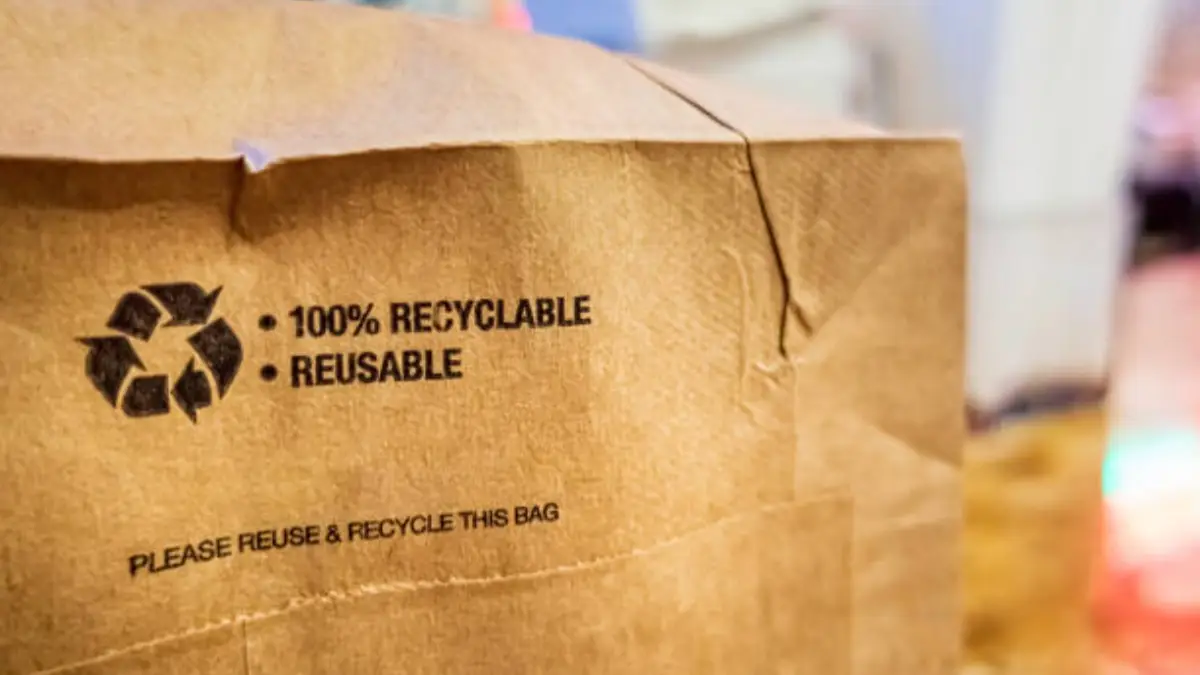
The sheet sets tear strength, shade, and how ink sits. Name it in the spec.
- Virgin kraft. Longer fiber, higher tear at the same gsm, natural brown. The usual face for a retail tote that has to carry weight.
- Recycled kraft. Post-consumer fiber. Shade moves from lot to lot. Put a shade tolerance on the PO or the reorder will not match the approved bag.
- White or bleached. Cleaner solids and photography. The mill does extra work to get there, and the bag reads as a printed piece rather than as brown paper.
- Hemp or bamboo. Real sheets when a mill offers that lot. Ask for the mill spec. A fiber name on the hangtag is not a sheet.
Inks follow the print process.
- Water-based flexo is the workhorse on kraft totes. Solvent load is low. If dry time is short, the ink scuffs at the handle patch.
- Vegetable-oil offset is the route when the bag is printed in sheets before it is formed. Fine type and photographs hold better on a smoother sheet.
- UV cures under lamps and sits on the surface. It holds a sharp solid on coated paper. Confirm the destination market accepts UV on that SKU before you lock it.
FSC is available on request. It is a chain-of-custody claim, so it has to be written on the order if you need the logo on the bag.
Fewer inks, cleaner make-ready
One or two colors, a small logo, and open kraft read as restraint. They also cut plate count and wash-ups. A full-bleed photograph on uncoated brown kraft needs more make-ready and still looks soft. If the brand wants that photograph, move to a coated or white sheet and write that in the spec.
Understated type and a single color work when the sheet is already doing the visual work. A second ink, a foil, or a heavy coverage is a separate pass. Add it because the bag needs it, not because the trend deck had a spare color.
Marks the forming line can hold

- Logo position. Keep art off the handle patch, the side seam, and the bottom paste. Those areas move, get glued, or get covered.
- Foil and blind emboss. Done on the sheet, before forming. Fine type under 6 pt breaks in foil. Textured sheets take a light deboss more reliably than a large flat foil panel.
- Short-run art changes. Digital or a short flexo run fits when the structure is already fixed. Tendlyn’s MOQ is 100, so a seasonal logo change does not require a container-load commitment. The quote still waits on structure, board, print, and quantity.
- Size. Face width, gusset, and height in millimetres. “Small” and “large” are not dimensions.
High-coverage art and a heavy sheet can live on the same bag. The sample has to prove both: registration on the face, and a handle that still pulls after the sheet is that stiff.
Strength
Durability is gsm, fiber, seam, and patch.
- Step the gsm up with the load. A 120 gsm bag and a 180 gsm bag are different products. Write the heaviest item the bag will carry.
- A turned top and a pasted handle patch stop the handle from tearing out of the face.
- A square bottom with enough paste overlap holds a loaded bag. A thin single seam at the bottom is the first place a heavy tote opens.
- A light water-based coating, or a dispersion barrier, sheds rain and light oil. A plastic film laminate changes how the bag is sorted at end of life. Name the barrier and the country where the bag is thrown away.
Color on kraft
Kraft is brown. A bright yellow mixed as if it were printing on white goes muddy. Three routes work: a white underprint, a white sheet, or a color mixed to be read on brown.
Foil is a separate pass, which is why a gold mark reads differently from a CMYK “gold.” Earth colors — sage, terracotta, black, a single red — sit on kraft with a thinner ink film.
A one-color geometric repeats cleanly on flexo. A floral photograph wants offset or digital on a smoother sheet. Checks and stripes need the repeat locked to the bag face so the side seam does not cut the motif in half.
Handles, closures, and the job the bag does

- Twisted paper handles. Standard retail. Strength is the patch and how tight the twist is.
- Flat paper handles. Lower profile. Suitable for lighter apparel and gift sets.
- Cotton or polypropylene rope. Specify the cord and whether it is pasted, riveted, or passed through a reinforced hole. Polypropylene is a plastic component. Cotton is a different waste stream. Say which one you want.
- Die-cut handles. No cord. On a heavier load the hand-hole needs a reinforcement patch.
- Fold-over or tuck top. Closes a gift bag.
- Adhesive strip with a release liner. Belongs on a mailer bag. Test the liner. If it tears the face, the closure is wrong for that sheet.
Retail carry, gift, and delivery are three load cases. Write how the bag is picked up and what sits in the bottom. The forming spec follows that.
A luxury tote is a heavy sheet, even turn-in at the hem, one foil or a blind emboss, and glue that does not show on the face. Metal eyelets only belong where the hole is reinforced. The bag still has to survive the walk to the car.
Price follows structure, board, print, and quantity. A trend name does not. The quote is written after those four are known.
