The flute is the wave in the middle of corrugated board. It is what gives the sheet caliper without a solid block of fiber. Pick it for cushion, flat crush, or a print face. Those three do not peak on the same profile.
What a flute does
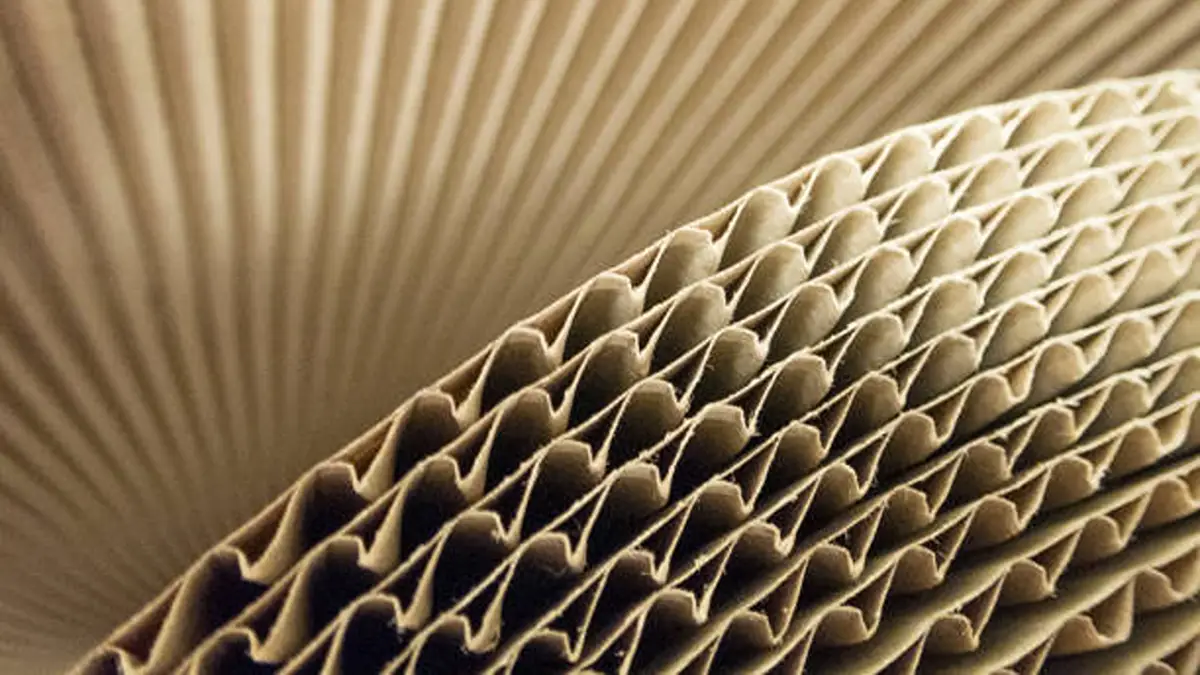
Linerboards are the flat sheets. The medium is shaped into flutes and glued to them with starch at the tips. The air in the wave is the cushion. The columns of paper are the stacking strength. More flutes per foot make a flatter face and raise flat-crush resistance. Taller flutes cushion and, on the same liners, usually stack better because the caliper is higher.
The Fibre Box Association’s point is the practical one. Flute size moves compression and the smoothness of the face. ISO 3034 is one of the methods labs use when they measure board thickness. Your spec still needs a number: flute name, caliper band, and ECT or BCT.
Caliper moves with liner weight. Treat the thicknesses below as the band you will see on a quote, not as a single gauge reading.
A, B, C, E, and F
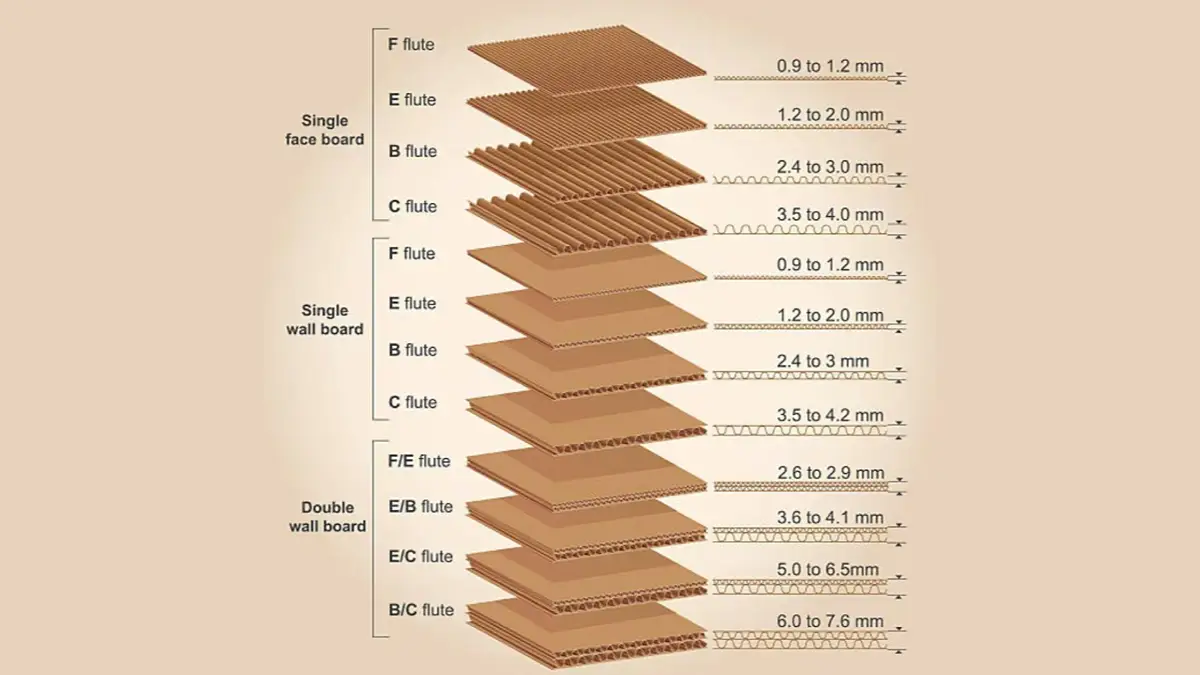
A flute is the thickest of the five. Board caliper is about 4.7–5.0 mm, with about 33 flutes per foot. The wave is tall, so cushioning is the reason to specify it. Glass and other fragile goods use it when a ribbed face is acceptable. Fine print looks poor. The take-up of medium is high, so the sheet uses more paper than E or F for the same blank outline.
B flute runs about 47 flutes per foot. You will see thickness quoted from about 2.5 mm to about 3.2 mm. The low number is flute height. The high number is overall caliper, close to the familiar 1/8 inch. More flutes mean higher flat-crush resistance and a smoother face than A or C. Cans, beverage trays, and die-cut retail use it. It is not the better stacking flute versus C. On the same liners, C’s extra caliper usually wins box compression. B wins when the load is a crushing force on the face, or when you need the print.
C flute is about 3.5–4.0 mm, with about 39 flutes per foot. It sits between A and B. Cushion is better than B, stacking is better than B for a given liner, and the face is better than A. That is why RSC shipping cartons default to C. It is a compromise, and for general freight the compromise is the point.
E flute is a microflute. Caliper is about 1.0–1.8 mm, with about 90 flutes per foot. The face is flat enough for offset-laminated graphics, so mailers and small retail boxes use it. Protection is real and limited. It is not an A-flute cushion. It is a stiff, printable sheet that still has a wave.
F flute is thinner again, about 0.8–1.2 mm, with more than 120 flutes per foot. Some mills quote about 125. Cosmetics, small electronics, and other packs that used to be a folding carton sometimes move here when they need a little more caliper and a fine print face. Moderate protection only. Do not specify F for a heavy export carton.
There is no shared D flute in this set. A profile between the standards usually overlaps C and E, or a mill’s own microflute, and it does not buy you a clearer job than naming C, E, or F.
Order them by caliper and you get A, then C, then B, then E, then F. Order them by flat crush and the fine flutes move up. Order them by print and you specify F or E, then B, then C, then A. Write the order you mean.
Single face, single wall, double wall, triple wall
Single face is one liner and one flute. It is flexible, often wound in rolls, and used as a wrap or a layer pad. It is not a box wall.
Single wall (also called double face) is one flute between two liners. This is the RSC, the mailer, and most retail corrugated. One flute name on the spec means this construction unless you say otherwise.
Double wall is two flutes and three liners. You name both flutes.
- BC puts B and C together. You get C’s stacking caliper and B’s flat crush. Heavy shipments and export cartons use it.
- EB puts E outside and B behind it. The E face takes the print. The B flute supplies the crush resistance a single E wall does not have. Retail and shelf-ready packs use it.
- AC puts A and C together. It is the thick cushion for heavy, fragile export. It is also bulky. Do not specify it for a parcel mailer.
Triple wall is three flutes and four liners. It replaces wood on some machinery and auto-parts moves.
- AAA is the tall cushion, three A flutes. Highest caliper, highest paper use.
- ACC keeps an A for shock and uses C for the rest.
- ABC mixes three heights. Plants use it when they want both rigidity and impact in one board.
- ACA is another build you will see on heavy freight. Name the letters. “Triple wall” alone is not a flute.
Box styles, and which flute belongs
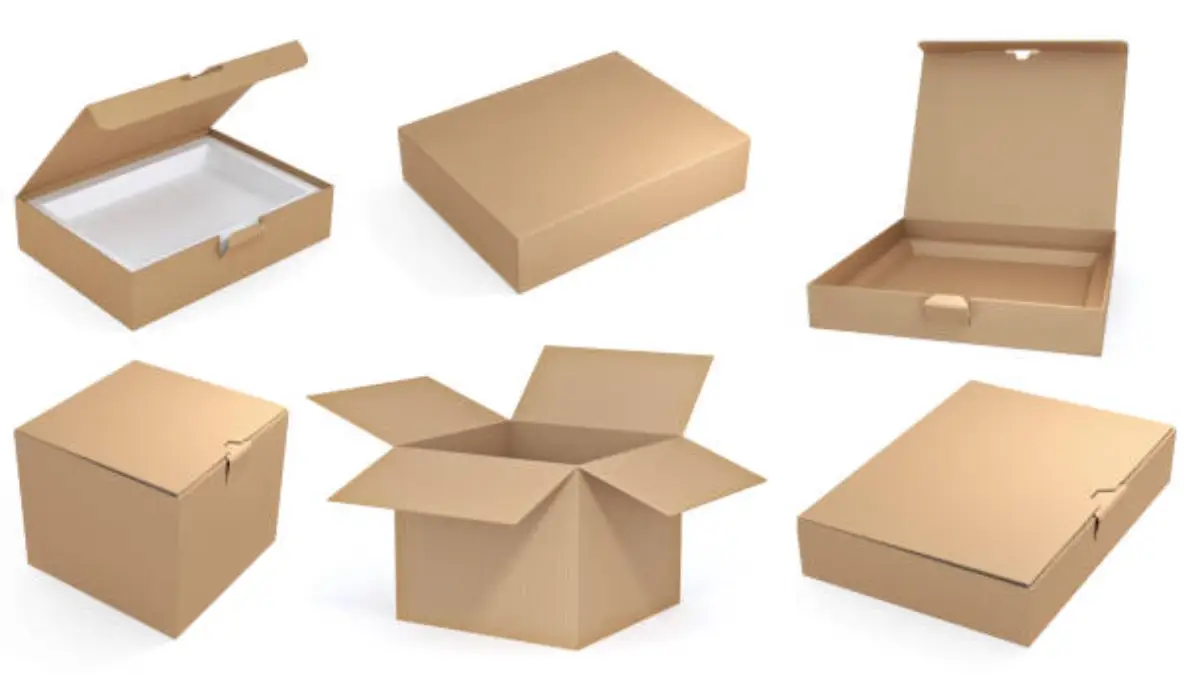
The style is how the blank folds. The flute is the board you cut it from. They are chosen together and they are not the same decision.
RSC, the regular slotted container, has four flaps that meet in the center. General freight is C flute single wall. Heavier loads move to BC. B flute RSCs exist when crush and a flatter face matter more than caliper.
FOL, full overlap, doubles the flap thickness on the top and bottom. Dense goods use it. A or C flute when you need cushion. BC when the carton is stacked high.
Die-cut boxes, including mailers, are cut with a steel rule. E and F are the print flutes. B is the step when the product is heavier and the graphic can live with a slightly ribbed face. The die is cut for one caliper. Changing from E to B later is a different blank and often a different die.
Telescope boxes are two pieces, a cover over a base. Tall or fragile products use them. Double wall, BC or AC, is common because the stack load hits the vertical walls.
Choosing
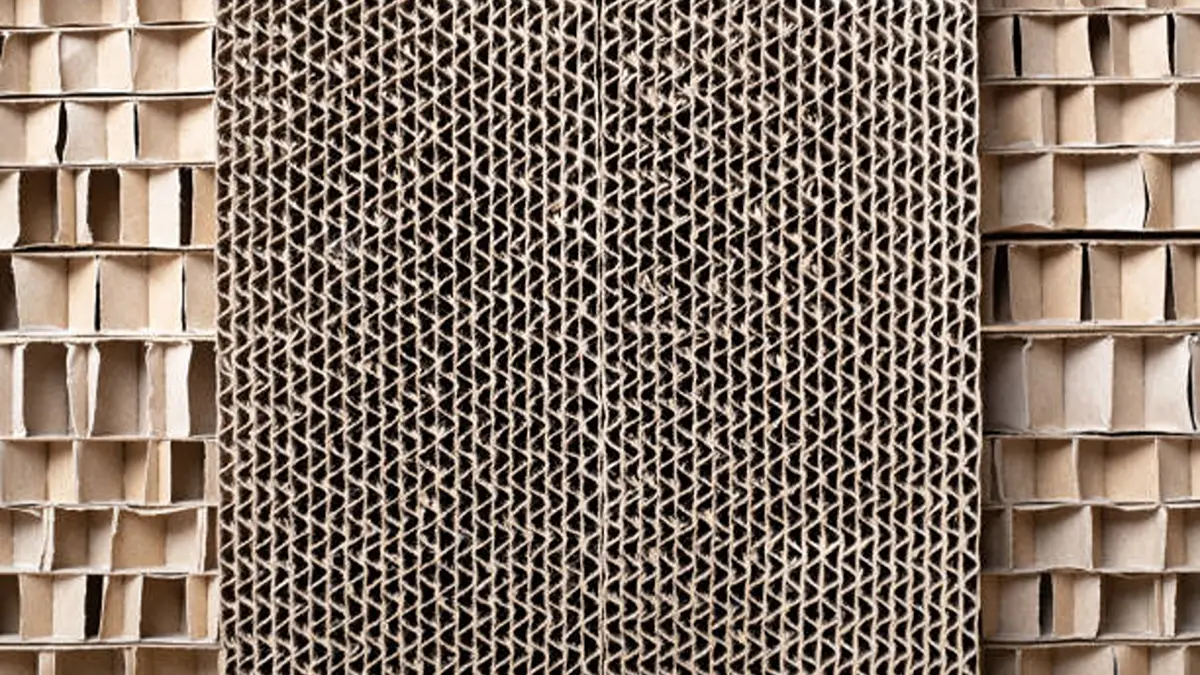
Match the failure you are trying to prevent.
- Mailers and printed retail. E or F. Move to EB if the single wall crushes in the parcel test.
- Food trays and cans. B for flat crush and a decent print face. A or C if the item is glass and shock matters more than the graphic.
- General e-commerce freight. C flute RSC, unless the print is a photograph, in which case look at E with a litho sheet or EB.
- Heavy export. BC or AC double wall. Triple wall only after a single heavy wall has failed the stack, or the product weight makes that obvious on day one.
Then check four constraints.
- Weight and fragility. Heavier or more fragile goods move up in caliper, not up in ink.
- Print. Photographs and small type need E or F, or a litho sheet laminated to B. A flute will show the wave through the image.
- Freight and storage. Thinner flutes cut cube. Thicker flutes spend cube to buy stacking. Dimensional weight can erase a saving from a thin board if the blank is oversized.
- Fiber. Microflutes use less medium per blank outline than A, but a laminated print sheet adds paper. FSC, if you need it, is available on request and has to be on the order. A thinner flute is not automatically a recycling claim.
Write flute, wall count, inside dimensions, and the test (ECT or BCT) on the same line. A quote that says “corrugated, strong” has not chosen a flute yet. The price is real after structure, board, print, and quantity are known.
