A folding carton is paperboard, die-cut and scored, shipped flat, and squared when you fill it. The style name is the closure. Pick the closure for the weight of the product, the speed of the packing line, and whether anyone will hang it on a peg. The print comes after that.
Most cosmetic and retail cartons sit between 250 and 400 gsm. Below that, a heavy jar oil-cans the panel. Above that, you are often better off talking about a rigid wrap, because the folder-gluer and the tuck get stubborn. The board still has to survive the score. Foil and high-build UV crack if they run through the fold.
Guangzhou Tendlyn Trading Co., Ltd. has made folding cartons since 2009, in its Foshan and Zhanjiang factories. Minimum order is 100. FSC board is available on request. A quote follows structure, board, print, and quantity.
What “folding carton” excludes
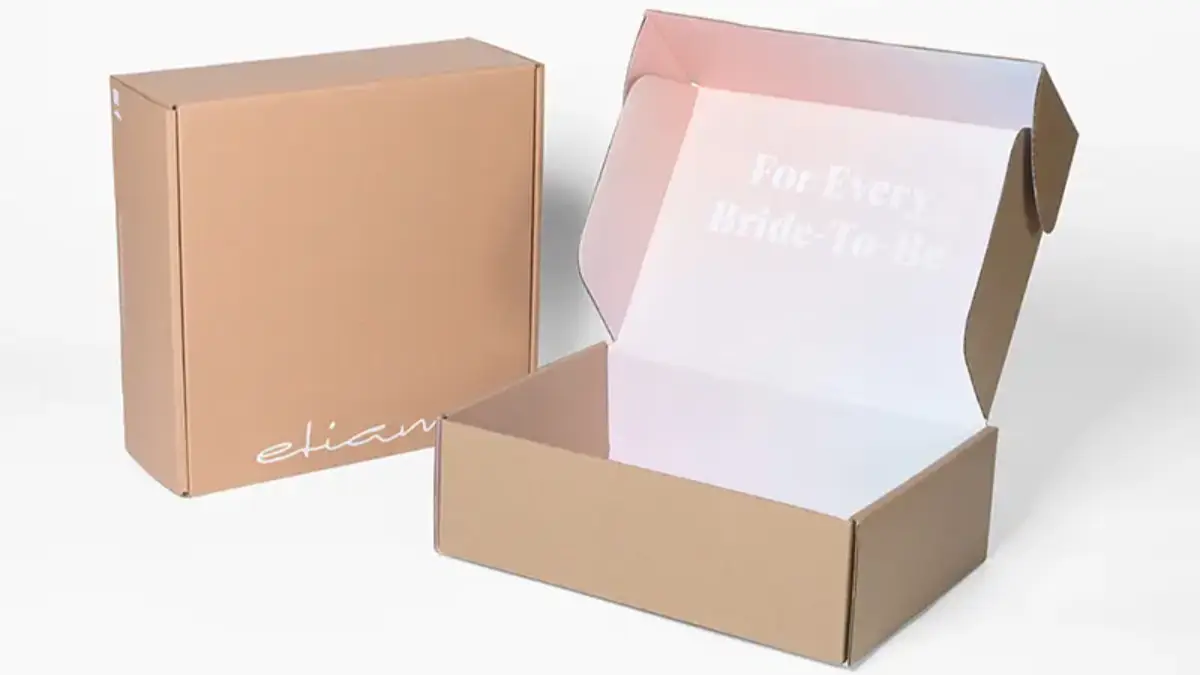
It is not a rigid setup box. A setup box is greyboard, wrapped, and shipped square. It is not a corrugated mailer. A mailer is fluted board, built to be the parcel.
A folding carton can be the shelf pack that goes inside a mailer. It can be the refill that sits beside a rigid launch set. It is the right tool when you need graphics, a tuck or a glue flap, and a pallet of flat blanks.
Coated solid bleached board prints photography and fine type. Coated recycled board is the lower fiber premium. Kraft board is the plain, one- or two-color version. Film lamination, aqueous, foil, and spot UV all run on folding cartons. Keep brittle finishes off the score.
Closures that actually exist
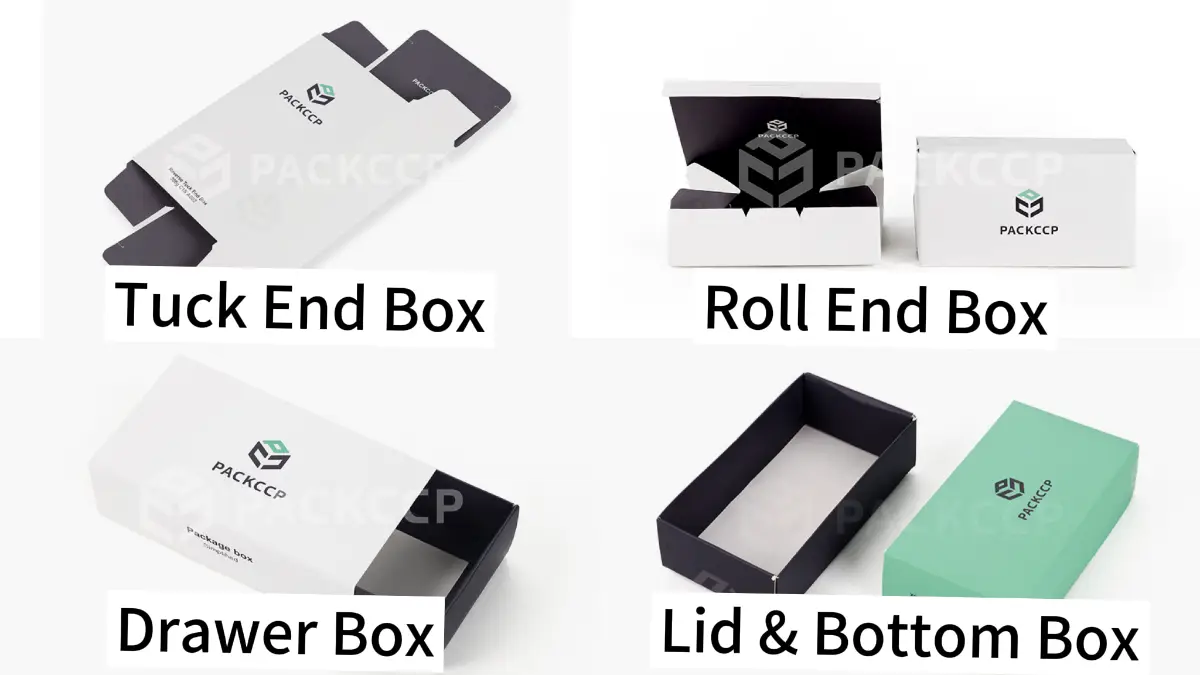
Straight tuck end (STE). Top and bottom tucks come off the same side of the carton, so both close in one direction. The front panel can stay visually quiet. Blanks nest less tightly than reverse tuck, so the sheet yield is a bit worse. Dust flaps and the tuck are simple. The closure relies on friction. A heavy jar can push a tired tuck open. Common on light cosmetics, small electronics, and some food.
Reverse tuck end (RTE). Top and bottom tucks come from opposite sides. The opposing tucks resist racking better than STE on a heavier fill. Blanks nest, which is why RTE is the workhorse on cosmetics and pharma. Assembly is the same gesture as STE, reversed at one end. Packers who are used to STE will close the bottom the wrong way once. A printed “tuck” cue inside the flap stops that.
Crash-lock bottom (auto-bottom). The bottom is pre-glued at the carton plant. When the packer squares the tube, the bottom locks. The top is usually a tuck. This is the fast closure for jars, bottles, and anything you do not want to fold by hand. The gluer setup is fussier than a straight-line tuck, and the bottom uses more board. Sample the lock with the real weight. A lock that pops on an empty carton can still open under a filled one if the flaps are short.
Snap-lock and 1-2-3 bottoms. Interlocking flaps, no glue on the bottom, folded at the packing table. Secure enough for a moderate weight. Slower than crash-lock. Useful when the run is short and you would rather not pay for a crash-lock gluer setup. The flaps have to be folded in order. A diagram on the shipper saves a crooked first thousand.
Seal end. Flaps at one or both ends are glued, on the filling line or as a pre-glue. The carton does not reopen cleanly. That is the point: tamper evidence for tubes, some OTC, some food. You need glue and a compression unit. A tuck carton with a clear sticker is a different, weaker version of the same idea.
Roll end. The side flaps roll in, then a front tuck or a lock closes the end. Stronger than a plain tuck for bottles, tools, and bulky fills. More board, more folds, slower to close. Roll-end tuck-front is the usual name on a drawing. Pair it with a crash-lock only when you have sampled both ends. The names get swapped in casual briefs. Draw the blank.
Sleeve and tray (drawer). Two pieces of paperboard. The tray slides inside the sleeve. This is a folding structure, not a rigid drawer made of greyboard. Clearance is the spec. Humidity swells the board and sticks an over-tight tray. A finger notch has to stay inside the sleeve’s strength. Good for a single row of compacts or a gift that should stay flat in the warehouse until it is filled.
Lid and base, folding. Two trays, one slightly larger, both paperboard, often glued at the corners. It looks a little like a setup box and it is not one. The walls are a single sheet thickness. Use it when you want a lift-off lid and you still need flat freight. For a heavy jar or a keepsake, step up to greyboard.
Hang tab. A panel with a euro slot or a J-hook, usually added to STE or RTE. The tab is a crush point. Grain direction and a longer panel matter more than the graphic. Pegboard cosmetics live here.
A short map
| Style | Closure | Packing speed | Typical fill |
|---|---|---|---|
| STE | Friction tuck, same direction | Fast | Light cosmetics, small electronics |
| RTE | Friction tuck, opposite ends | Fast | Cosmetics, pharma, retail |
| Crash-lock | Pre-glued bottom, pops open | Fastest at the table | Jars, bottles, heavier SKUs |
| Snap-lock / 1-2-3 | Hand-folded lock, no bottom glue | Slow | Short runs, moderate weight |
| Seal end | Glued flaps | Needs glue on the line | Tamper-evident tubes, some food |
| Roll end | Rolled side flaps plus tuck or lock | Slower | Bottles, bulky goods |
| Sleeve and tray | Slides | Medium | Flat gift sets, a row of compacts |
| Folding lid and base | Lift-off lid | Slower | Light gift sets that must ship flat |
Windows, display panels, and inserts
A display carton is still one of the closures above, with a die-cut window or a front that opens. The window needs a patch — PET, acetate, or glassine — glued inside, in register. The patch can cross a score and crack, or it can sit on the panel only. Say which. An open window with no patch shows the product and shows dust.
Inserts for folding cartons should be paperboard if the carton claim is paper: a slotted divider, a crash-folded platform, a double wall that stops a bottle tipping. A silicone foot or a plastic fitment is a separate part with its own drawing. Do not hide it in the word “carton.”
Fifth panels, bookmarks, and interior print are board you pay for. They are worth it when the instructions have nowhere else to go. They are waste when they repeat the label on the bottle.
By product

Light food and dry goods. RTE or STE, aqueous if there is any grease or rub. A heavy bottle moves to roll end or crash-lock. The carton is not the grease barrier. If the food touches the board, name the food-contact sheet.
Cosmetics, 30–50 ml and compacts. RTE, or STE when the front has to stay one clean panel. Crash-lock when the fill is a glass bottle the packer should not have to hold and tuck at the same time. A hanging travel size wants a euro slot and a board heavy enough that the tab does not fold over on the peg.
Fragrance and heavy jars. A folding carton can be the outer retail box if the walls are stiff and the insert holds the bottle. Many of these SKUs belong in a rigid lid-and-base instead, because the wall thickness and the lid fit are the product. Use folding for the refill and the miniature.
Pharma and OTC. RTE or STE for light counts. Seal end when the pack has to show tampering. Print and the lot code need a kept-clear area. Full-bleed art with no inkjet window is a labeling problem, not a press achievement.
Small electronics. RTE with a hang tab for pegboard cables and chargers. A sleeve and tray when the item should slide out in one piece. Heavier devices leave the folding carton and go to a mailer with a fitment.
What changes cost without a price list
Crash-lock and roll end use more board than RTE and need a more particular gluer setup. Seal end adds glue. A window adds a patching station. Foil and spot UV add passes and hate scores. STE can waste more sheet than RTE because the blanks nest worse.
None of that is a unit price. It is the list you send so the quote can name the style. Include board gsm, closure, window material, finishes, and whether the bottom is glued at the carton plant or at your line.
Approve a squared, filled sample. Empty flats hide a tuck that will not stay shut and a crash-lock that sits proud of the base.
