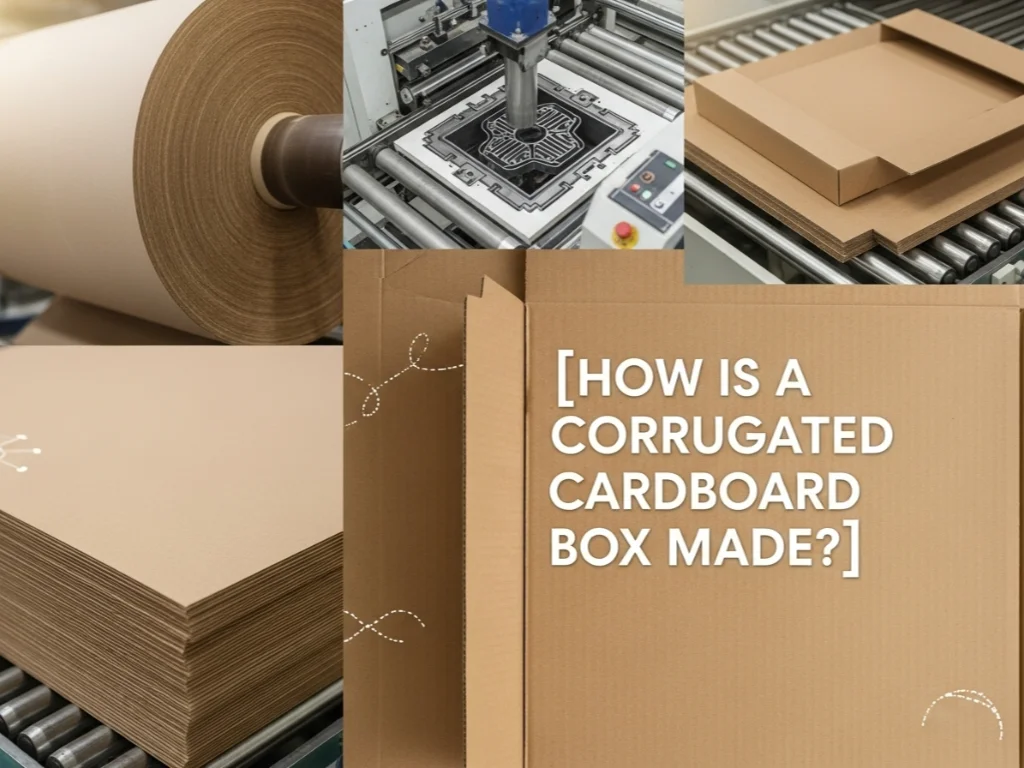
A corrugated box is linerboard bonded to a fluted medium. The flute is what gives the board its cushion and its stack strength. The box you receive has already been through a corrugator and, after that, a converting line that prints, cuts, creases, and joins it.
A rigid setup box is a different object. That one is wrapped greyboard. It is not made on a corrugator. Microflute board can be printed and die-cut into a premium sleeve or a small retail carton. It is still corrugated.
Liner and medium
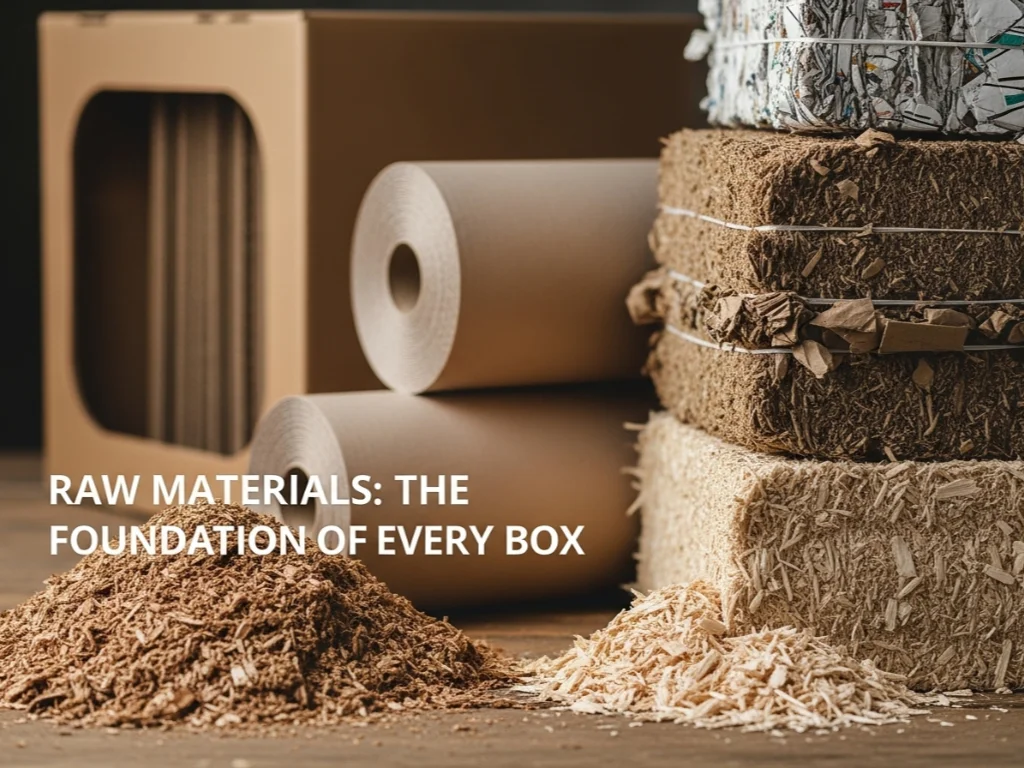
Two papers go into the board.
- Linerboard is the flat face. Kraft liner is made with a high share of long softwood fiber, which is why it holds a score and a tear better than a short-fiber sheet. The outside liner is the one you print on. The inside liner faces the product.
- Medium is the paper that becomes the flute. A lot of it is recycled fiber. Its job is to keep the wave standing after the starch sets.
Mills sell these by grade and by basis weight. A heavier liner resists puncture and burst. It also adds freight weight. The spec should name the liner weights and the flute, not only "double wall."
FSC paper is available on request when the mill and the converting plant can pass the claim through. It is not on every reel.
Steam, rolls, and starch

The medium is heated and steamed so the fibers will take a shape. Corrugating rolls form the wave. Starch adhesive, usually from corn, is laid on the tips of the flutes. The single-face liner is pressed onto those tips. That web is the single face: one liner, one flute, still flexible enough to wrap the rolls.
At the double-backer, a second liner is bonded to the open flute tips under heat and pressure. The starch gels and the board comes off as a flat sheet, still hot. The corrugator then scores, slits, and cuts sheets to the blank size.
The bond is the strength. If the starch skips a flute tip, you can split the liner off with a thumb. That is a reject, whether the print looks clean or not. Starch is the usual adhesive on this board, including on packs for dry food, because the rest of the spec (liner, ink, coating) is what decides food contact. A shipping box around a sealed pouch is not the same specification as a box whose liner touches the food.
Flute profiles
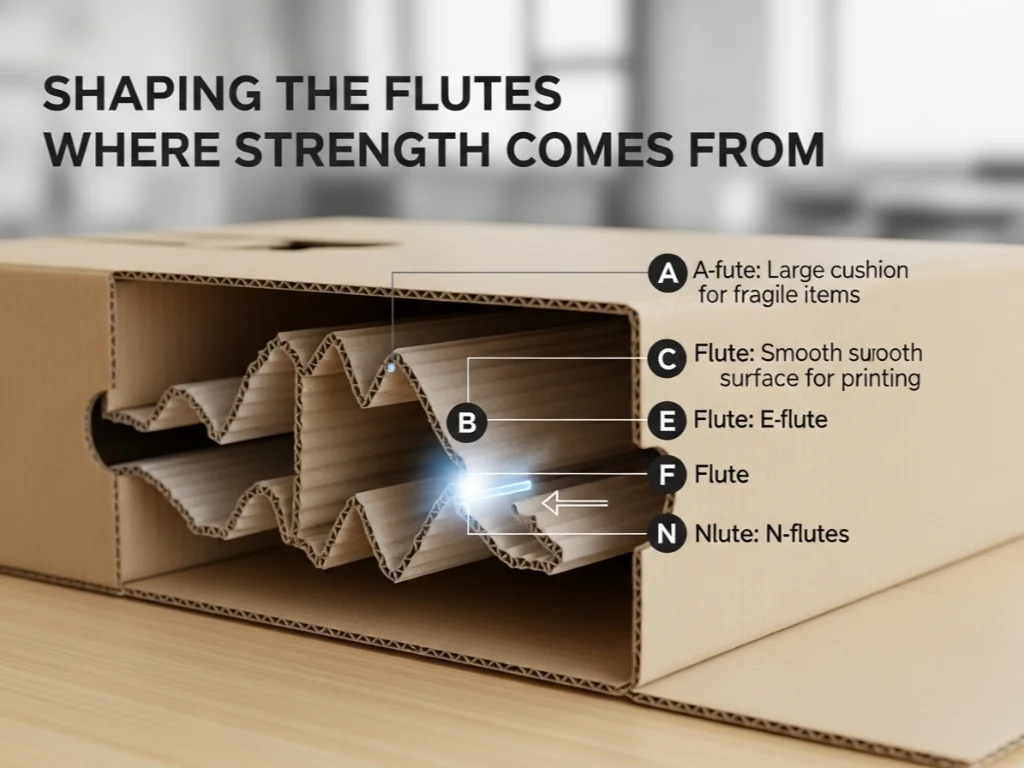
Flute letters are the height and the pitch of the wave. Figures below are typical, and a mill's roll set can sit a little off these numbers. Ask for the flute and the overall caliper on the quote.
| Flute | About | What it is used for |
|---|---|---|
| A | 4.5–5 mm | Tall wave, more cushion, fewer flutes. Less common on new retail work. |
| C | About 4 mm | The usual shipping flute. A balance of cushion and flat crush. |
| B | About 3 mm | Tighter flutes, better flat crush, a flatter print face. Cans, retail trays, die-cuts. |
| E | About 1.5 mm | Retail cartons and mailers. Prints cleaner than B or C. |
| F | Under 1 mm | Small cartons and sleeves where the face has to take fine type. |
A cushions. B resists crush better than A because the arches are shorter and closer together. E and F are chosen when the box is the retail face and the parcel abuse is modest, or when a mailer has to look printed rather than stamped.
Single wall, double wall, triple wall
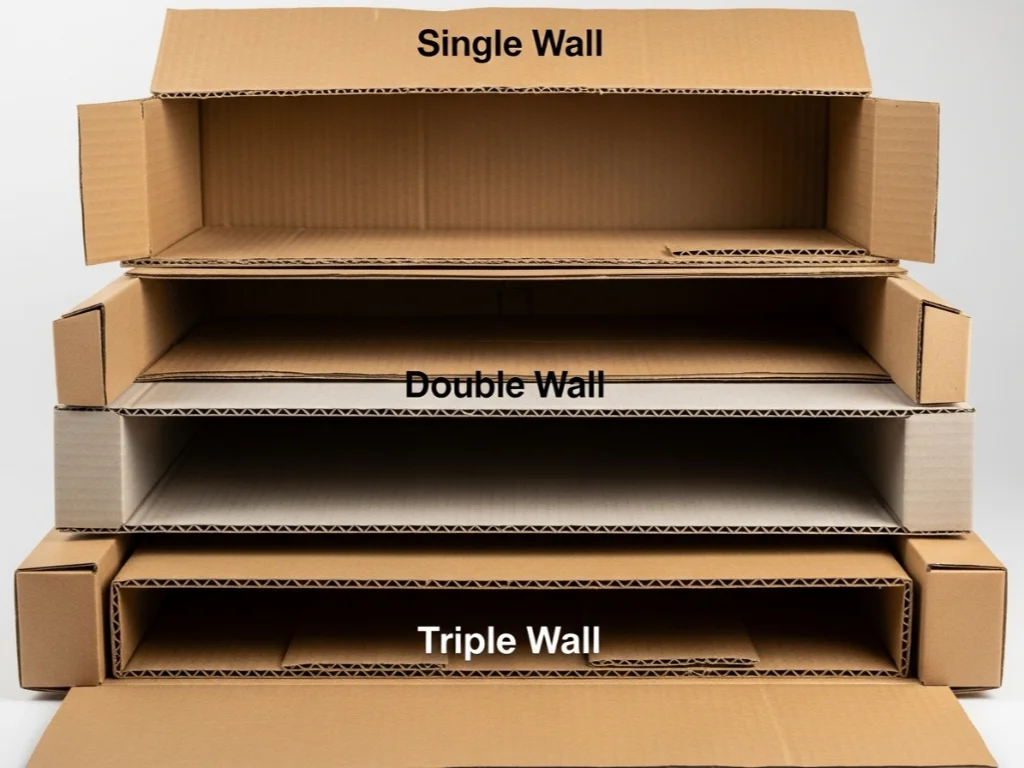
- Single wall: two liners and one flute. This is the everyday shipper and most mailers.
- Double wall: three liners and two flutes, often B+C or E+B. The second flute is there for stacking and for a long export leg. It is also there when one flute is the print face and the other is the cushion.
- Triple wall: four liners and three flutes. It is a heavy-duty board for dense goods. It is still paper. A tested wooden crate or a UN specification pack is a different approval, written for a different hazard.
More wall is more caliper, more weight, and more of the corrugator's time. Specify it because the product and the stack need it, and record the flute combination, not only the word "heavy duty."
From sheet to box
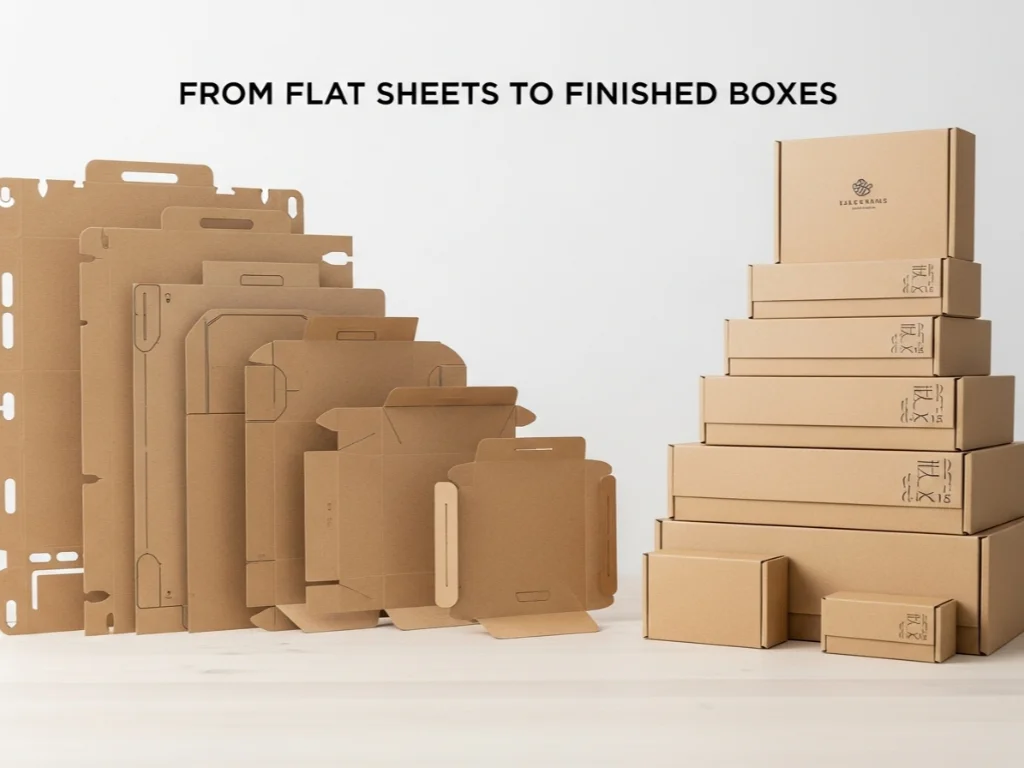
Converting is a separate set of machines.
- Printing. Flexo on the liner is the normal path for shipping marks, a one-color brand panel, or a simple mailer. Process flexo and litho-laminate (an offset sheet glued to the flute) are how you get a photograph onto corrugated. Fine type still prefers E or F, or a folding carton in SBS.
- Cutting and creasing. A printer-slotter makes a regular slotted carton. A die-cutter makes mailers, windows, handles, and shapes that are not a rectangle with four flaps. The crease has to match the caliper. A crease cut for B flute will crack an E-flute sheet or leave a C-flute sheet round at the corner.
- Joining. Glue, tape, or stitches close the manufacturer's joint. Stitches are strong and they are metal in the recycling stream. Glue is the usual joint on a printed mailer.
- Packing. Most of these boxes ship flat. The customer erects them. A rigid box does not.
Guangzhou Tendlyn Trading Co., Ltd. has converted paper packaging in Foshan and Zhanjiang since 2009. Mailer boxes are part of that range, with folding cartons, rigid boxes, paper bags, and paper tubes. MOQ is 100. A quote follows the flute, the print, the die, and the quantity.
What the mill will take back
Old corrugated containers are a standard recovered grade. The starch bond does not stop that. Mills reject or downgrade board that arrives wet, waxed, or covered in a plastic film. A polyethylene window, a full-film laminate, and a heavy soft-touch coating are the details that change the answer. An aqueous coat on a kraft mailer is a different story from a waxed produce box.
If a brand needs a recyclability line, name the coatings and the extras (window, stitch, plastic handle) in the same sentence. FSC, when you need it, is requested on the order and checked against the certificate scope.
Questions buyers actually ask
Why is this board stronger than a sheet of the same paper? The flute holds the two liners apart, so the panel acts as a beam. Edge crush follows the flutes that are still standing. A crushed flute in the warehouse has already spent that strength.
Can a corrugated box be the luxury pack? E and F flute, litho-laminated or cleanly flexo-printed, with foil or emboss where the process allows, is a retail carton. A wrapped greyboard lid and base is still the other construction. Use the flute when you need the board to ship flat and take a knock. Use greyboard when you need the weight in the hand and a lid that stays fitted.
Which flute for a mailer? E flute is the common printed mailer. B flute is the step up when the product is heavier or the route is rough. A fragile, high-value unit often wants an insert inside, and sometimes a double wall, rather than a thicker single flute with empty space around the product.
Is every corrugated box recyclable? The fiber is, when the extras are. Wax, extruded film, and metal stitches are the usual reasons a bale is turned away. Ask the plant what is on the sheet before you print a recycling mark.
