A rigid box is greyboard, cut, wrapped, and turned in. It does not ship flat. The supplier is either the plant that does that work or a desk that sends it out. The difference shows up in the corner, the magnet, and whether the second order matches the sample you signed.
What the floor should be able to show you
Watch the sequence, not a showroom wall.
- Board coming in, caliper checked against your spec.
- Die-cutting of the greyboard chips.
- Wrap: grain direction, glue film, no lumps on the face.
- Turn-in on the inside edge, tight, no raw board flashing.
- Magnet or ribbon setting, if the structure has them.
- Insert fit, with your product, not with a block of foam they had on the bench.
Automation helps where the plant actually has it: a die-cutter that repeats, a gluer, a wrapper. A lot of a rigid box is still hands, especially corners, magnets, and cloth. Ask which steps are hand, and who trained those people. A line that only looks fast in a brochure, and then hand-wraps your job in another building, is a trading arrangement with extra steps.
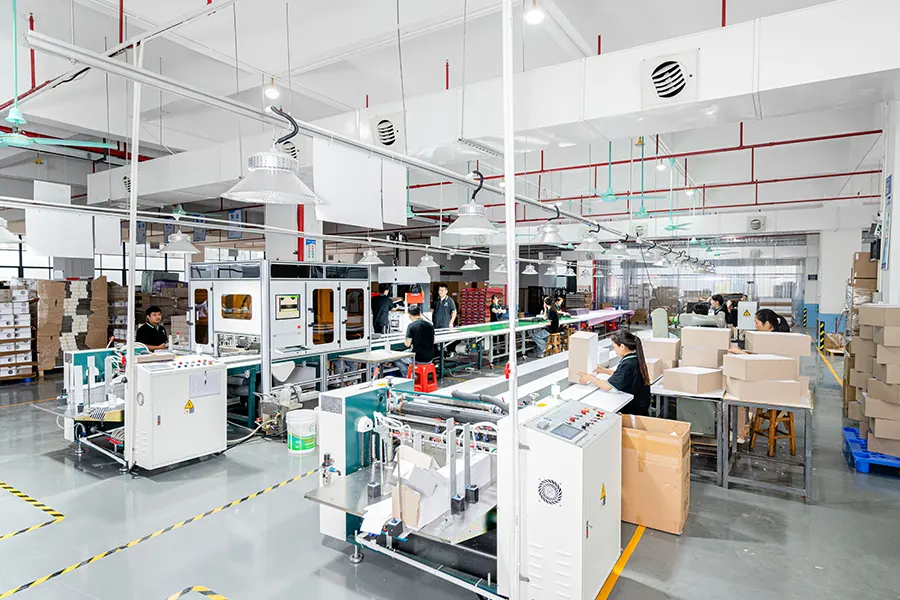
Quality is those checkpoints written down. Incoming board. In-process corners and registration. A finished-goods look before the master carton is taped. You define the defects: open corner, glue stain, foil shift, lid too loose, magnet proud of the wrap. A certificate on the wall is not that list. If you need a named system for your retailer, ask for the document that matches the spec you issued. Do not treat a logo on a slide as the audit.
Capacity is whether this structure fits the line in the month you need it. Skip the annual-unit speeches. Ask what else is on the wrapper that week. Tendlyn's plants are in Foshan and Zhanjiang. The company, Guangzhou Tendlyn Trading Co., Ltd., was founded in 2009 in Guangzhou. It converts folding cartons, mailer boxes, rigid boxes, paper bags, and paper tubes. It is not a trading desk.
Engineering before the artwork
Bring the product, or a drawing with length, width, height, and the fragile points. A rigid box for a glass jar is a different caliper and insert from a rigid box for a folded scarf.
Useful recommendations from the plant sound like this: greyboard around 1.5–2.5 mm for a small premium lid, thicker if the span is wide; wrap paper named by weight and finish; a paperboard collar instead of EVA if you want a fiber cavity; foil on the wrap before or after film, and why. "We can do luxury" is not a recommendation.
Structures you should be able to point at:
- Lid and base, the lid sliding with even friction.
- Magnetic book-style, magnets seated below the wrap.
- Drawer and sleeve, tray travel that does not tear the ribbon.
- A shaped box only if they will show the wrap seam and the master-carton plan.
Sampling is two objects. A white sample for caliper, fit, and the open. A wrapped and printed sample for color, foil, and scuff. In-house sampling means the same people who will run the job can change the die without a week of email. Sign one box. That box is the master.

The audit
On site or on a live video of your job, look at material storage. Greyboard that is wavy from moisture will not make a square lid. Wrap paper should be labeled so a night shift cannot pull the wrong grain. Finished goods need a pack method: how many per master carton, whether the corners are protected, whether the carton can take the humidity of a sea leg.
Ask who supplies the board and the wrap, and what they do when that mill slips. A plant with a second approved sheet for the same caliper is easier to keep on schedule than a plant with one secret source.
Business registration and export documents should match the factory you are standing in. Photos of someone else's ISO plaque do not.
How the project is run
Quote conversations predict the production conversations. You want answers on caliper, grain, and magnet pull without a three-day pause. One person who can speak for structure, print, and the ship date is enough. A inbox of strangers is how approvals get lost.
Revisions need a rule. White sample comments in writing. Printed sample comments in writing. Production starts after the second sign-off, not after a chat message that said "looks good."
If you import, the plant should be able to issue the packing list, marks, and the carton spec your forwarder asked for. The delivery promise is the schedule for this die, this wrap, and this quantity. Peak season is a capacity fact. Put it in the same email as the ship date.
The relationship that lasts is the one that will change a collar when your jar supplier changes the neck by a millimeter. Price-only sourcing does not do that revision well.
Price and the minimum
Tendlyn's MOQ is 100. At 100, you still pay make-ready, the cutting die, and any foil plate. A plain lid-and-base in a stock wrap is a different job from a cloth-wrapped magnetic box with a pulp tray. The quote is written after structure, board, print, and quantity are known. Freight and duty are outside the unit.
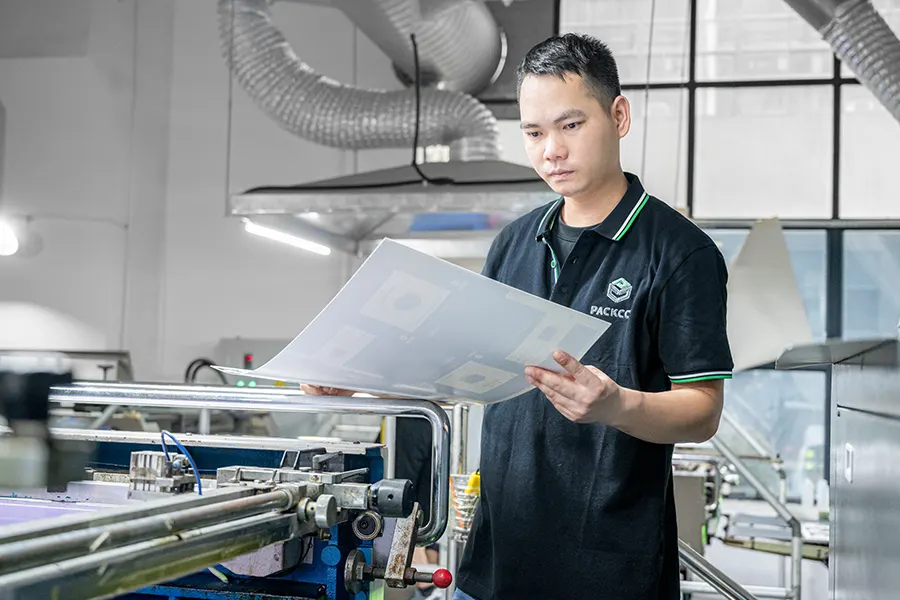
FSC paper is available on request for the wrap you name. A declaration of conformity follows your spec.
Send the product size, the structure, the greyboard caliper, the wrap and finish, and the quantity. info@axwp.com, +86 158 1238 1273, WeChat trimgem.
