A corrugated box is a liner bonded to a fluted medium. The flute is the strength and the cushion. The liner is the face you print on. Everything after that — the wall count, the die, the joint — is there to turn that board into a specific carton.
Guangzhou Tendlyn Trading Co., Ltd. supplies custom mailer boxes and folding cartons from its factories in Foshan and Zhanjiang. Folding cartons are paperboard. Mailers may be corrugated or solid board. When you order a corrugated mailer, the spec should say the flute and the wall. Whether that board is run from reels in the building or bought as sheets is a question to ask the plant. Founded in 2009. MOQ is 100.
Liner and medium
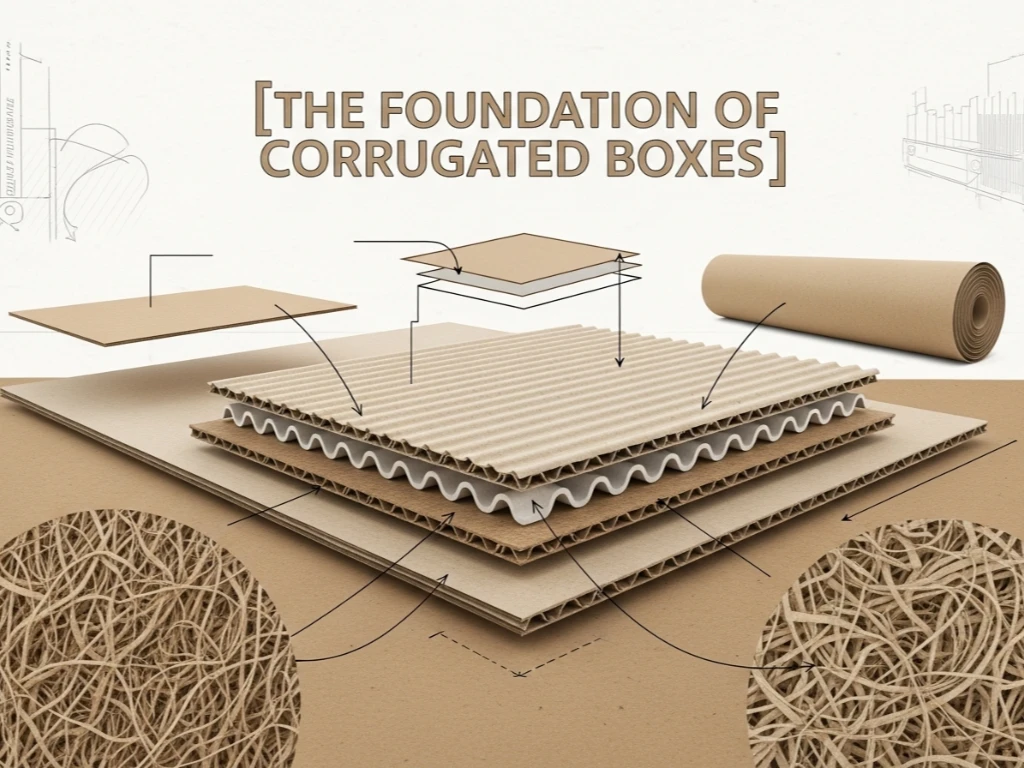
Two papers make the board.
- Linerboard is the flat face. Kraft liner uses long virgin fiber and takes print and moisture better. Test liner uses more recycled fiber and is the usual inner face, sometimes the outer face on a utility carton.
- Medium is the paper that will be fluted. It is often recycled. It has to form a wave and then hold it under compression.
Most shipping board in the US and Europe already carries a high share of recycled fiber. That is a normal mill mix, not a special grade. If you need an FSC claim on the liner, ask for it. It is chain of custody, and it has to be on the order.
The grade is what you are buying: liner weight, medium weight, and the flute. A pretty print on a light liner still crushes if the board was specified for a lighter load.
Steam, starch, and the corrugator
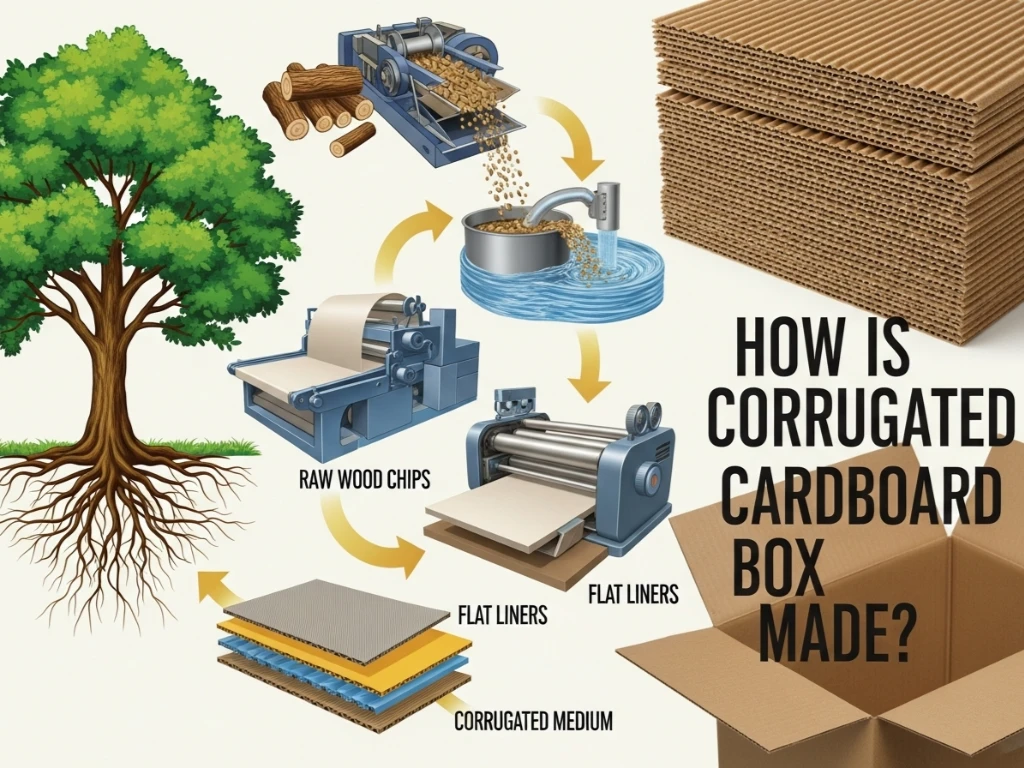
Reels are conditioned with heat and steam so the medium will take a flute without cracking. Corrugating rolls form the wave. Starch adhesive, typically from corn or wheat, is applied to the flute tips and bonds them to the liner. Starch is a renewable adhesive and is the standard bond on corrugated board, including board used around food when the rest of the spec allows it.
The single facer bonds medium to the first liner. The double backer bonds the second liner, then the board is heated, cooled, slit, and scored. Cutoff length becomes the blank.
Flute profiles, in round terms:
- A-flute. The largest common arch, about 5 mm. More cushion, more thickness.
- B-flute. About 3 mm. Flatter, better crush resistance, a better print face for many retail packs.
- C-flute. About 4 mm. The usual shipping wall when you want stacking strength without A-flute’s bulk.
- E-flute. About 1.5 mm. Retail cartons and mailers that need to print cleanly and stay thin.
- F-flute. Under 1 mm. Small cartons, close to a folding carton in feel, still a flute.
Pick the flute for the job. A perfume mailer on A-flute is a lot of air. A 15 kg part on F-flute is the wrong wall.
How many walls
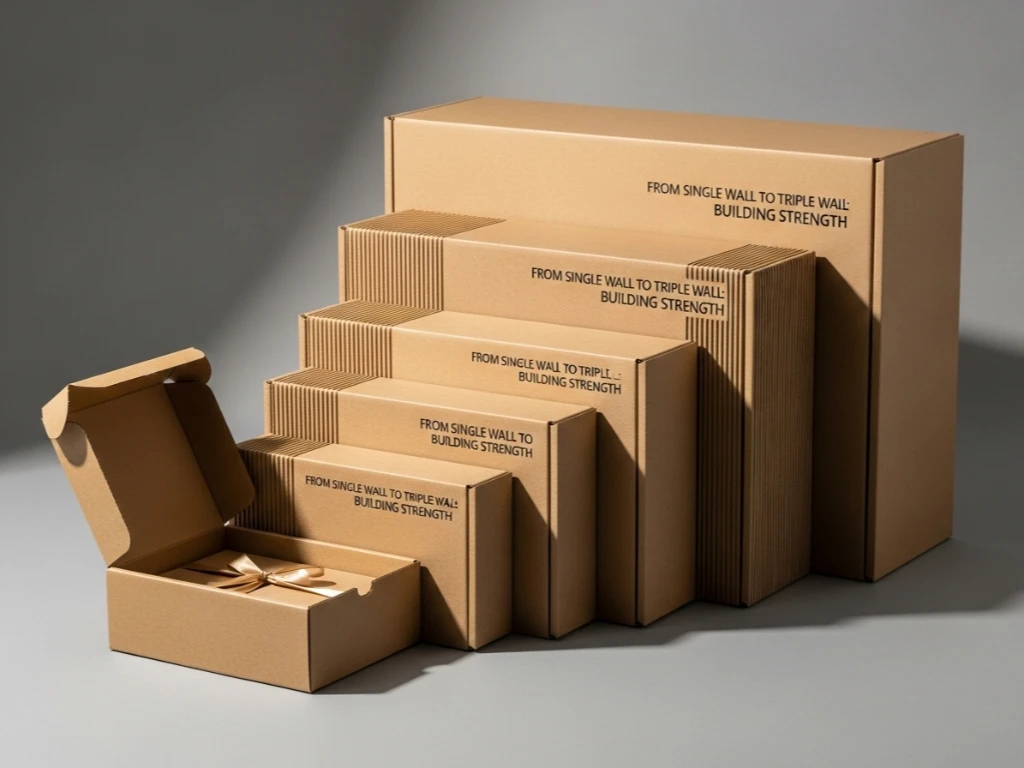
- Single face. One liner, one flute. A wrapping or a roll, not a shipping carton.
- Single wall. Two liners and one flute. The normal mailer and the normal shipping carton.
- Double wall. Three liners and two flutes, often BC or EB. Heavier goods and longer routes. EB keeps a finer face for print and a stronger flute behind it.
- Triple wall. Four liners and three flutes. Export crates and dense product. It replaces wood in some routes and it changes the die, the freight, and the packing line.
Wall count is a spec, not a default. EU packaging rules, including the direction set by the Packaging and Packaging Waste Regulation (PPWR), care about whether the finished pack is recyclable. A double wall of plain board still recycles as paper. A plastic window, a heavy film laminate, or a wax curtain coat is what complicates the mill. Specify the wall for the load. Keep the extra materials off unless the product needs them.
Converting
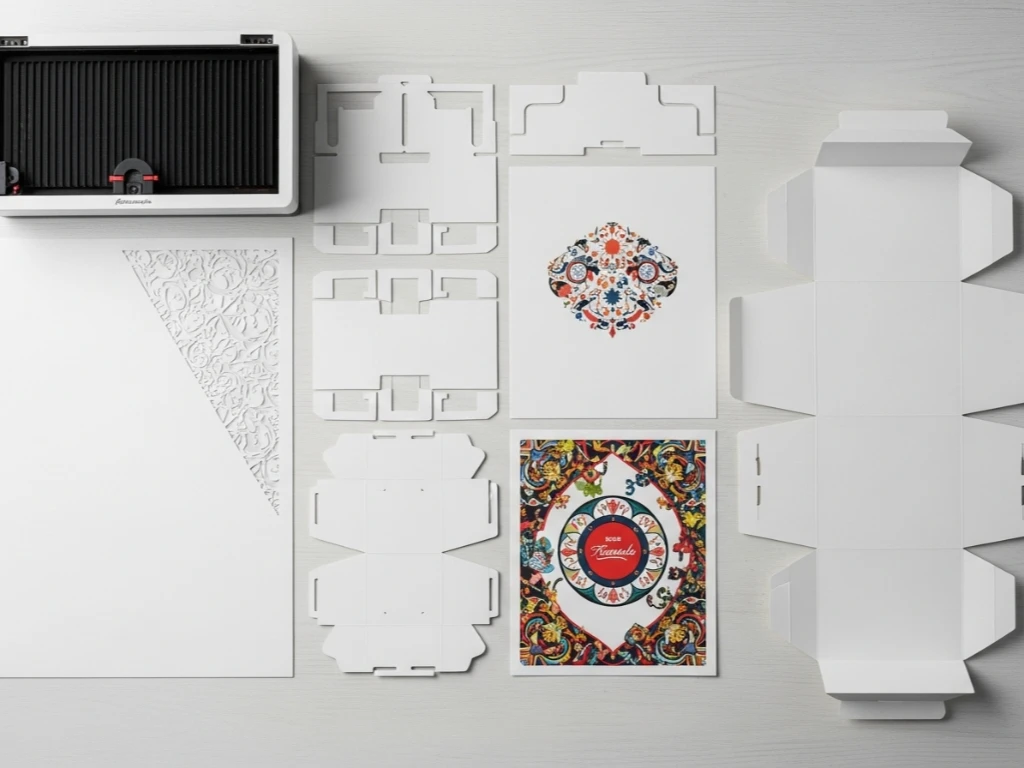
Board becomes a box in a second set of operations.
- Print. Flexo is the usual press on corrugated, with water-based ink. Digital is used for shorter art and for sheets that cannot wait on a plate. Fine type and photographs belong on E-flute or F-flute, or on a coated liner. C-flute and A-flute show the flute through a large solid.
- Cut and slot. A printer-slotter scores and slots a regular slotted carton. A die-cut does mailers, handles, and locks that a slotter cannot.
- Fold and join. The manufacturer’s joint is glued or stitched. Glue wants a clean liner and a flap that is not coated. Stitch is for a heavy or a dusty board where glue is unreliable.
- Crash-lock and mailer locks. These are cut into the blank so the packer erects the box without a separate tape step. The dieline has to match the flute direction or the lock cracks.
Foil, emboss, or a laminated wrap can sit on a corrugated gift mailer. Each one is an extra pass. They also change the recycling description. Use them when the mailer is the brand face. Leave them off a plain shipper.
The quote moves with flute, wall, liner grade, colors, die, and quantity. It is written after those are known. There is no price list.
Recovery
Corrugated is one of the most recovered paper packaging grades in the US and in Europe. Mills want it clean. Tape, film windows, and wax are the pieces that cause problems in the pulper. Design the carton so a person can remove a non-paper part, or do not add that part.
PPWR is the EU text that pushes packaging toward recyclability and toward records that match the pack. A US retailer may ask for the same material list for a different reason. Answer both with the board grade, the inks, and any coating or window. FSC on the liner is available when you request it. The declaration of conformity follows that spec.
What to send with the inquiry
Internal size, product weight, flute, wall, print, and whether the box is a shipper or a gift mailer inside another carton. If you have a dieline, send the vector file and mark cut, crease, and glue. If you only have the product, the plant can draw the blank after the flute is chosen. Grain and flute direction are part of that drawing.
A sample should be the real board, erected, with the product in it. Color is approved on that liner, not on a coated folding-carton proof that will never be the job.
Short answers
What is the board made of? Linerboard and fluted medium, bonded with starch at the flute tips.
Which wall should a mailer use? Most lightweight DTC mailers are single wall, E-flute or B-flute. Heavier products move to double wall. The product weight decides it.
Is it recyclable? Plain corrugated is recovered as paper. Film, wax, and plastic windows are separate materials and belong in the spec.
Can it be printed as a brand pack? Yes. Flexo or digital on the liner, with foil or a wrap only if you accept the extra pass and list it.
What is the MOQ? 100 at Tendlyn for custom mailers and cartons once the structure is agreed. Lead time is quoted with the spec.
For a mailer or a shipping carton, send the product size and weight to info@axwp.com, +86 158 1238 1273, or WeChat trimgem.
