A paper bag fails at a seam, a handle patch, or a soft sheet. The face print can be perfect and the bottom still opens. Use this list on the signed sample, then again on random bags from the bulk.
Sheet

Write the paper into the spec before you argue about art.
- Virgin kraft. Longer fiber, higher tear at a given gsm, natural brown. The default for a tote that carries weight.
- Recycled kraft. The right call when the brand wants post-consumer fiber. Shade and strength move with the lot. Set a shade range, and do not assume it matches virgin kraft tear for tear.
- White or bleached. Use it when the art needs a clean ground. It is a different sheet, with a different cost and a different look under the same ink.
Gsm follows the load. Record the heaviest item and whether the bag is carried by the handles or cradled underneath. A gift bag for a light carton and a shopping tote for two bottles are not the same gsm.
If you need an FSC claim, ask for it on the order. It is chain of custody, not a default stamp on every lot.
Dimensions
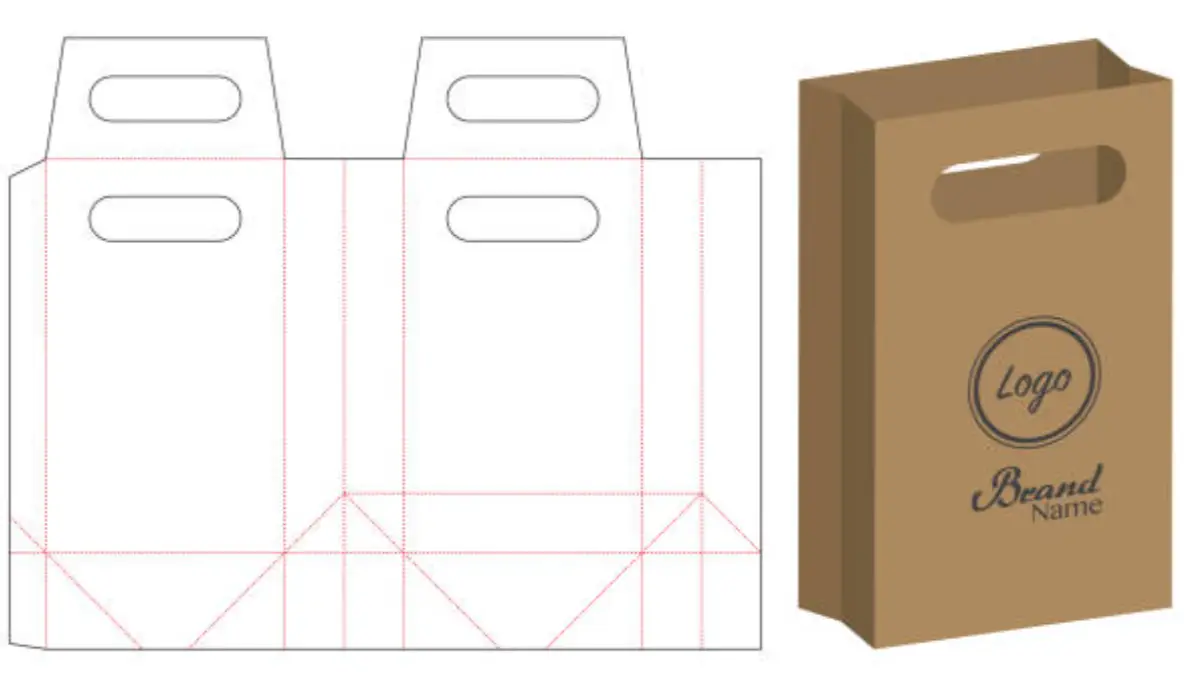
Numbered bag sizes mean different things in different markets. Specify millimetres.
- Face width. The front panel, not including the gusset.
- Gusset. The side or bottom expansion. A deeper gusset holds more and moves the handle patch closer to a fold. Check that the art still clears it.
- Height. Include the turned top if the hem is part of the visible bag.
- Bottom style. Flat bottom or square bottom, and the paste overlap.
Measure a formed bag, not the flat blank. Gusset and bottom consume paper. A blank that “looks big enough” can still produce a short face.
Handle type belongs in the same block: twisted paper, flat paper, cotton cord, polypropylene cord, or a die-cut hole. The patch size and where it sits on the face are part of the dimension, because they decide whether the art and the reinforcement fight each other.
Face and sheet strength
Smoothness helps solids and fine type. A very smooth, heavily calendered sheet can tear more cleanly once a nick starts. For a heavy tote, fiber and gsm matter more than a glass-smooth face.
Finish is a separate line.
- Uncoated shows the fiber. Scuffs show less. Print is softer.
- Aqueous matte or gloss changes rub and sheen. It stays in the paper family more easily than a film.
- Film lamination toughens the face and blocks water. It also changes sorting at end of life. Name it only if the use needs it.
Tensile and tear are mill properties. Ask which gsm and which grade you are buying, then confirm on the sample with a load test. A datasheet without a formed bag does not tell you how the bottom paste will behave.

- Ink. Water-based flexo on kraft, offset on sheets, UV when you need a hard solid on a coated face. The ink has to survive a rub against another bag in the pack.
- Registration. Type and logo edges should be sharp. A flexo plate that is over-impressed fills counters in letters and plugs fine reverses.
- Color. Pull a drawdown on the real sheet. A Pantone book is printed on white. Kraft will not match that chip unless you mix for kraft or lay white first.
- Art clearance. Keep ink off the side seam, the bottom paste, and under the handle patch. Glue on wet ink fails, and the patch hides whatever you put under it.
- Barcodes. 100% K, quiet zone intact, on a ground that scans. A barcode reversed out of a brown kraft photo is a returns problem.
Small type should stay at or above 6 pt. Foil hairlines below that break. If the bag is flexo, look at the sample under the same light you use in the store.
Seams and reinforcement
The bag is only as strong as the joint you can peel with a thumb.
- Side seam. Glue should wet out along the whole overlap. A dry end opens when the gusset is pulled square.
- Bottom. Extra paste area or a turned bottom on larger bags. Load the bag and lift. The bottom corner is where heavy SKUs fail.
- Handle patch. Extra paper or a board patch behind twisted handles and rope. The patch should be square to the face, not rotated, and both handles should sit at the same height.
- Top hem. A turned top stiffens the mouth. An uneven turn-in looks like a bad cut even when the print is fine.
On a die-cut handle, the hole needs a smooth edge and, on heavier gsm, a patch so the hand does not start a tear.
Load and abuse
Test formed bags, not flats.
- Fill to the stated weight and lift by the handles. The face should not split at the patch. The bottom should stay closed.
- Repeat on bags from the start, middle, and end of a forming run. The first bags after a setup are the ones with light glue.
- If the bag will see rain, a fridge, or oil, test that condition on the coated sample. An uncoated kraft tote and a grease-resistant bag are different specs.
- Rub the print face to face. If color transfers, the ink is not dry or the varnish is missing.
Agree the test method with the plant and write the weight into the spec. A verbal “strong enough” does not survive a reorder.
Release inspection and packing

Before the cartons close:
- Shade against the retained sample, on the same sheet grade.
- Print defects: hickies, streaks, setoff, type that filled in.
- Size: face, gusset, height, handle height. A few millimetres of gusset error changes how the product sits.
- Seams and patches, as above.
- Count and pack. Bags should be dry, nested so handles do not dent the next face, and marked with the lot. Moisture in the carton cockles the sheet and blocks the next print if you ever reuse a leftover.
Keep one signed bag from the bulk, not only the pre-production sample. The next order is compared with that bag.
Tendlyn runs paper bags in its own factories in Foshan and Zhanjiang, alongside folding cartons, mailer boxes, rigid boxes, and paper tubes. MOQ is 100. A quote comes after structure, board, print, and quantity are on the request. Questions on a spec: info@axwp.com, +86 158 1238 1273, WeChat trimgem.
