A rigid box is a wrapped board, not a folded carton. The strength is greyboard. The face is a separate sheet, turned in at the edges and glued down. Lid and base are made apart and then fitted. If you approve the sample with that sequence in mind, the reorder has somewhere to match.
Guangzhou Tendlyn Trading Co., Ltd. builds rigid boxes in its Foshan and Zhanjiang factories, along with folding cartons, mailer boxes, paper bags, and paper tubes. The company was founded in 2009. MOQ is 100.
What the box is made of
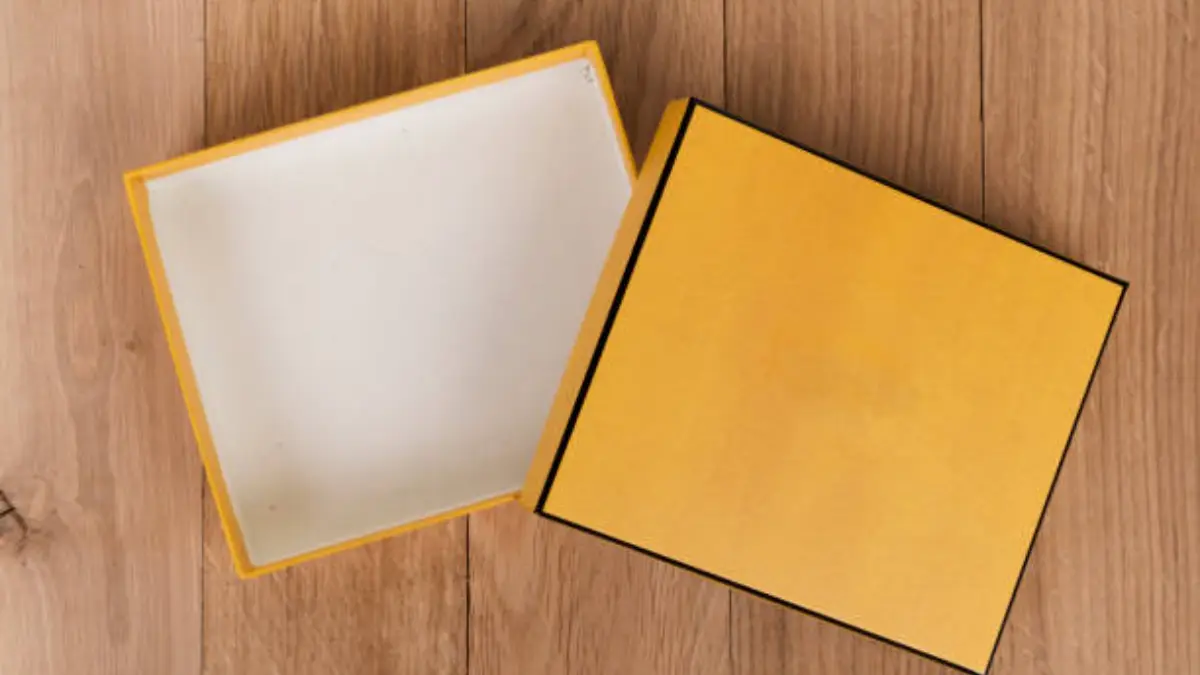
Greyboard. Also called chipboard. It is the structure, commonly in the 1.5–3 mm range. A small jewelry box can sit at the low end. A larger gift or a bottle box needs more caliper or it will twist. Greyboard is typically recycled fiber. The caliper is a spec line, chosen for the size and the product weight.
Wrap. Printed paper, specified by gsm and finish: uncoated, aqueous, textured, or film-laminated. The wrap is cut larger than each panel by the turn-in. Foil, emboss, and offset color are done on this sheet before it meets the board. Cloth or a leatherette wrap is a different material and a different glue. Name it if you want it.
Lining and insert. A paper liner on the inside, a paper-covered board insert, a fabric lining, or EVA foam. The insert is its own drawing. It has to fit the product and the internal size after the wrap thickness is in place.
Hardware. Ribbon, magnet, or a catch. A magnet is set into the board. Polarity and position are part of the sample sign-off.
FSC on the wrap is available on request. Ask before the paper is ordered if the logo has to print.
The sequence
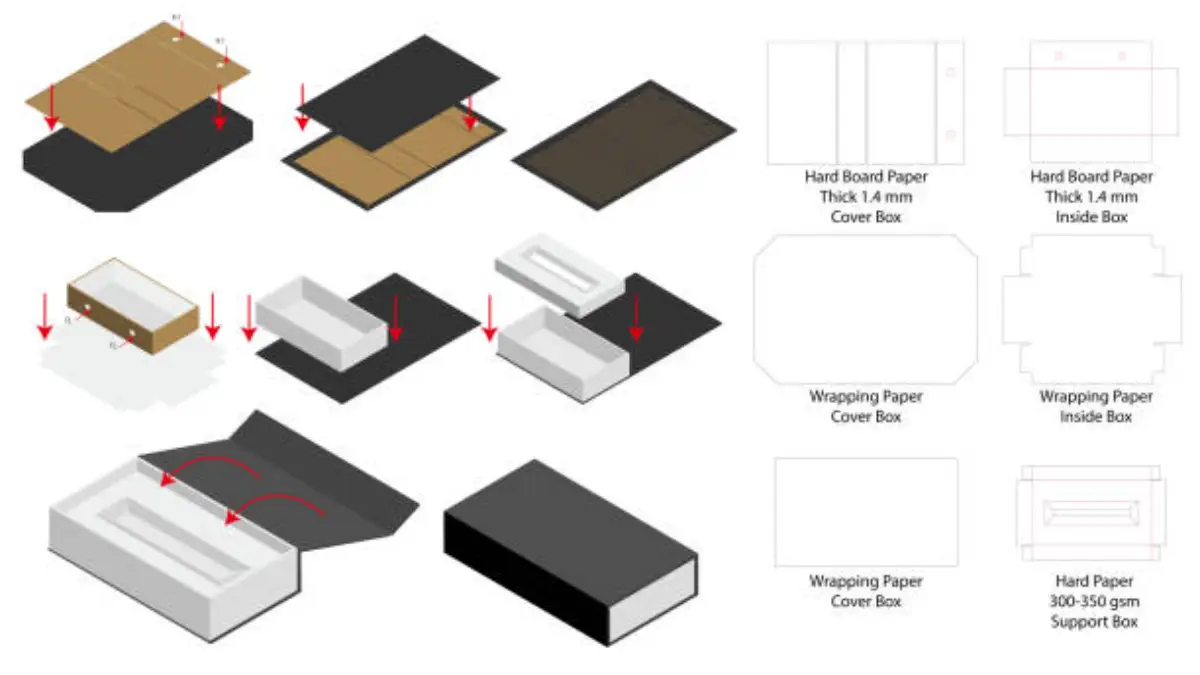
Dieline and sample
Two drawings, not one. The greyboard dieline shows panels and V-grooves. The wrap dieline shows panels plus turn-in, bleed, and any areas that must stay free of coating so the glue holds. Lid and base are separate. A drawer box adds a sleeve.
A structural sample is cut and wrapped before bulk art is final if you are still checking fit. Put the real product in it. A rocking lid or a tight corner shows up here.
Cut and groove
Greyboard is cut to size. Corners are V-grooved so the board folds to 90 degrees and the outside corner stays tight. Groove depth has to leave a hinge of fiber. Too deep and the corner cracks. Too shallow and the corner rounds off and the lid will not sit square.
Wrap
The printed wrap is cut with grain running the way the plant will fold it. Grain across a tight turn-in cracks the sheet and shows white at the edge. Glue goes on in an even film. The board is placed, the faces are smoothed out from the center, and the turn-in is folded down inside. Corners are tucked or mitered so they do not stack into a lump.
Assemble and fit
After the wrap is down, the box is held so the glue sets without spring-back. Edges are cleaned of squeeze-out. Then lid and base are paired. The lid should seat square and lift off without rocking. That fit is approved on the sample and held on the bulk. It is not a number you guess from a render.
Inserts go in after the fit is right. A magnet is checked for position and for the direction it pulls.
What inspection looks at
Material checks happen before wrapping: caliper, wrap shade against the drawdown, and any dents in the greyboard. A dent telegraphs through a thin wrap.
After assembly, look at corners, turn-in evenness, glue marks on the face, foil registration to the panel, scuffs, and warp. Warp comes from moisture and from a wrap grain that fights the board. A warped lid gapes at one corner.
If the box has to survive a parcel network, the test is the set inside its master carton, not the rigid box alone. Rigid boxes ship set up. The freight cube is part of the spec.
What you can change
Change size, and you change the board dieline and the wrap dieline together. These are the usual options:
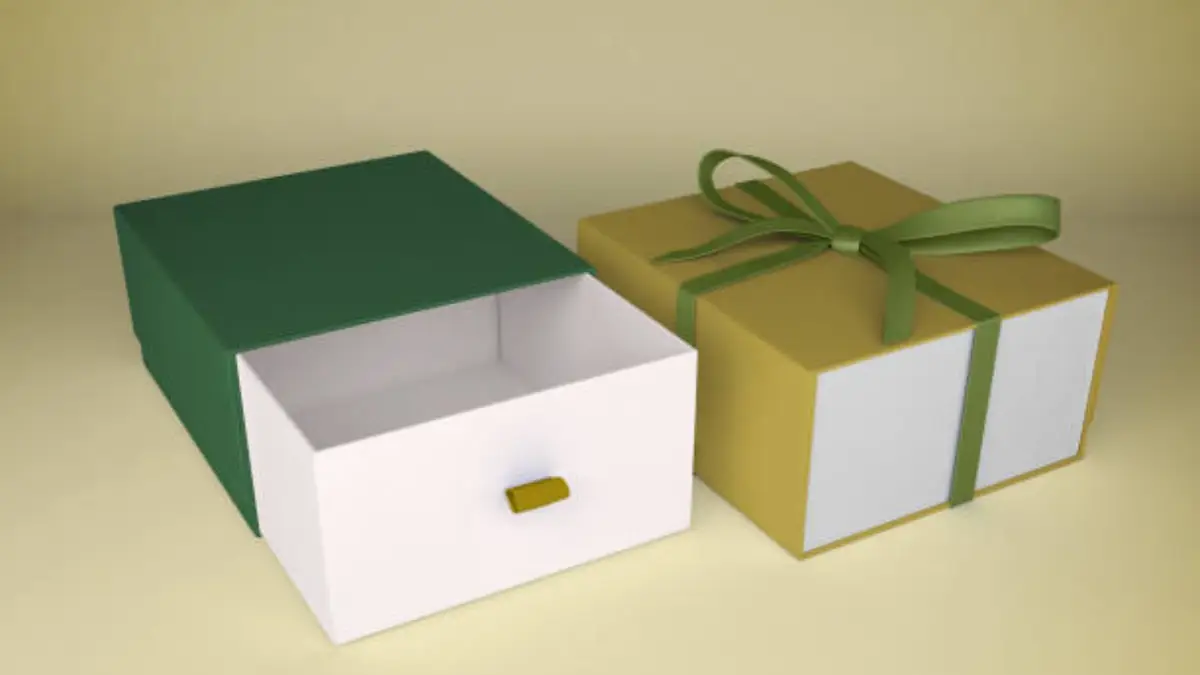
- Lid and base, book-style, drawer, or a collapsible magnetic box. Collapsible structures save cube and add a fold in the board. Approve that fold on a sample.
- Print on the wrap: offset, then foil or blind emboss if the face needs it.
- Surface: uncoated, aqueous matte or gloss, soft-touch, texture, or fabric.
- Inside: paper liner, paper insert, fabric, EVA.
- Closure: lift-off lid, magnet, ribbon pull.
Each extra pass and each non-paper part moves the quote. The quote is written after structure, board, print, and quantity are known. There is no price table. A magnet plus foil plus a fitted insert is a longer route than a plain lid and base with one-color wrap. Pick the route the product needs.
Fiber, glue, and finish
Greyboard is already, in most cases, a recycled-fiber board. The wrap and the adhesive decide what you can claim next. Water-based glue is the normal bond. Vegetable-oil or water-based inks on an aqueous-coated or uncoated wrap keep the face in the paper family. A film laminate, a metallic film, or an EVA tray should be listed as what they are.
FSC applies when you request it for the wrap or another certified sheet. The declaration of conformity follows the spec: board, wrap, coating, ink, magnet, insert.
Waste on this product is mostly wrap offcut and a bad corner that cannot be unglued. A dieline with a sensible turn-in, and a sample signed before bulk, is how you keep that scrap down. Machine settings matter, and they are the plant’s job once the spec is stable.
Tendlyn will quote a rigid box from the product size and the structure. Write to info@axwp.com, call +86 158 1238 1273, or WeChat trimgem. Say whether you have a dieline or only the product dimensions.
