The secondary pack on a lipstick decides three practical things: how the tube is held, how much air you ship, and what the customer feels before the bullet is open. A rigid box and a folding carton answer those differently. Pick the one that matches the SKU's job. A gift set and a 12-shade wall are not the same job.
What each one is
A rigid box is greyboard, typically 1.5–3.0 mm, wrapped with printed paper. The board is chosen for the size, the structure, and the insert. A single slim tube often sits at the thinner end of that range. A set, a drawer, or a heavy insert pushes the board up. The box is a shell. It does not fold flat after it is made.
A folding carton is one sheet of paperboard, scored, and usually shipped flat. Cosmetic cartons are often specified somewhere in 250–400 gsm, or by caliper in the 16–24 pt band. Those two numbers are not a fixed conversion. Record both from the mill ticket. On a tall, narrow lipstick carton, run the grain parallel to the main folds or the panels bow.
The rigid shell resists a squeeze that would crease a folding carton. The folding carton still needs a corrugated shipper once it leaves the retail tray and enters a parcel or a pallet. Do not ask the carton wall to be the only protection on that route.
Closures follow the same split. A rigid box can take a magnet, a shoulder, or a drawer. Specify the magnet and cycle it on the sample. Do not accept a pull-force adjective in place of a part number. An EVA or paperboard insert holds the tube so it does not rattle. A folding carton holds the tube with tuck depth, dust flaps, and a tongue or a collar cut into the blank. A tuck that is only a couple of millimeters deeper can be the difference between a tube that stays and a tube that slides. Prove it with the real component, not with a rendering.
What drives the cost

A rigid box costs more to convert because the board is thicker, the wrap is a separate operation, and assembly is manual or semi-automatic. Magnets, ribbons, foil, and a fitted insert add make-ready and labor. A folding carton runs on a print, die-cut, and folder-gluer sequence. Its unit cost is dominated by board, plates, the cutting die, and any foil or emboss tools.
There is no honest price table until those choices are fixed. A quote is written after structure, board, print, and quantity are known. Guangzhou Tendlyn Trading Co., Ltd. starts custom paper packaging at 100 pieces. A one-color tuck carton and a wrapped rigid box with a magnet will not price alike at that count, because the make-ready is not alike.
Freight and the warehouse sit on top of the unit price. Folding cartons ship and store as blanks, so inbound cube is the stack of flat pieces. Rigid boxes occupy their finished volume from the day they leave the plant. That difference is large on a shade library. It is also why a rigid box can be the right pack for a low-SKU gift and the wrong pack for forty everyday shades.
Damage cost belongs in the same sum. A rigid wall and a fitted insert reduce the ways a decorated tube can be crushed or rubbed in a parcel. A folding carton plus a proper outer mailer can do the same job if the outer is specified for the route. Count reships. Do not assume either format wins before you have seen the packed parcel dropped.
How it reads on the shelf and in the hand

Weight, a clean edge, and the way the lid comes off are what people mean by luxury on a lipstick. A rigid box supplies those with board thickness and a closure that takes a deliberate motion: magnet, drawer, or a lid that has to lift clear of a shoulder.
A folding carton can still feel considered. Caliper in the upper part of the cosmetic range limits panel bow. Soft-touch, a small foil, emboss, or spot UV gives the hand something to find, provided the effects are few and the glue flaps stay clean. Stacking foil, emboss, spot UV, and a film on one small panel reads as noise at this size.
Use the formats as a range, not as a moral ranking.
- Everyday shades that must turn on a fixture and change art often: folding carton.
- Limited runs, holiday sets, and anything the customer is meant to keep: rigid box.
- E-commerce, where the parcel is the first object: either a rigid box inside a right-sized mailer, or a folding carton in that mailer. The mailer is doing the transit work.
Interactive openings — a drawer, a textured wrap — get handled. That is useful. It is not a reason to add an empty cavity. Size the box to the tube plus the insert and the clearance you measured.
Shipping and the line
Folding cartons erect on a cartoner or by hand from a flat blank. Rigid boxes are built before they are filled. Magnetic lids and wrapped trays are slower at the bench than a tuck. If the launch quantity is small, that labor is manageable. If the line is fast and the shade count is high, the flat carton is the one that keeps up.
A collapsible rigid structure exists for brands that want a stiff opening and a flatter inbound shipment. It is its own tooling problem. Treat it as a third option with its own sample, not as a rigid box that happens to fold.
Fiber, coatings, and the bin
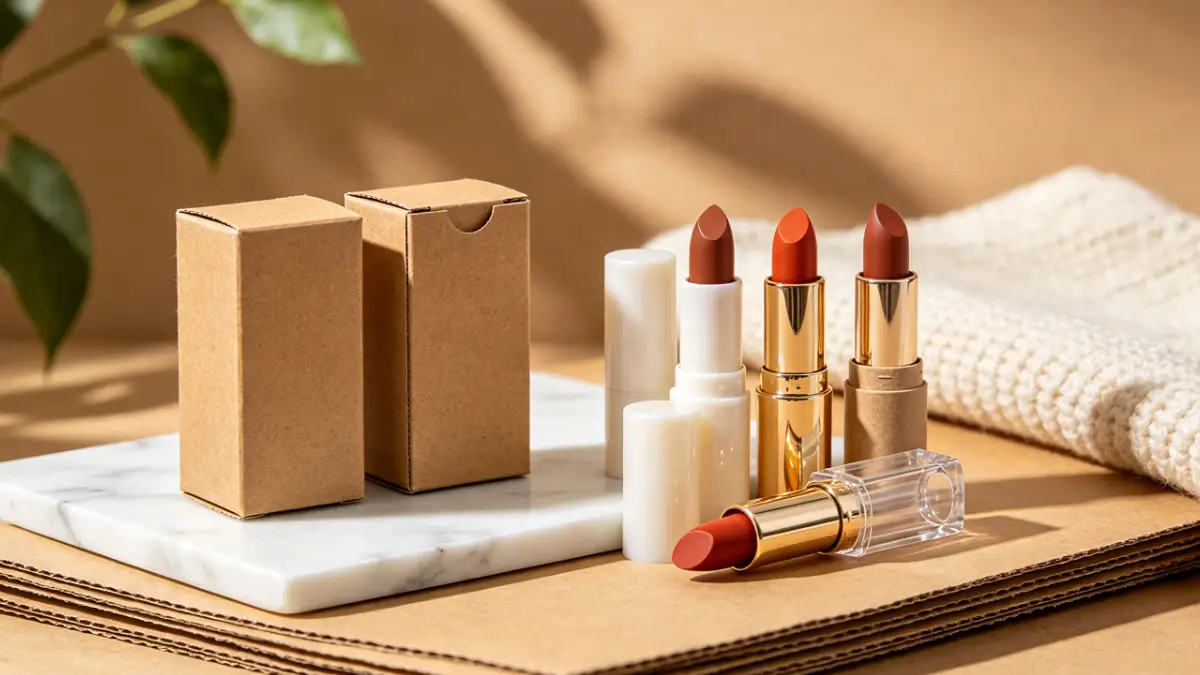
A folding carton uses less fiber per unit and, when it is one paper grade with a light coating, it is the easier object for a paper mill. A rigid box uses more board. Some customers keep it. Keeping it delays disposal. It does not make the magnets, the foam, or the film disappear.
What complicates recovery on either format:
- Film lamination and a heavy soft-touch coat
- Foil over a large area
- A magnet left in the board
- EVA or plastic foam
- Ribbon and metal badges
A paperboard insert in place of foam, and a magnet the customer can pull out, are the changes that move a rigid box toward a simpler fiber stream. FSC-certified board is available on request when you need a chain-of-custody claim. It is not assumed, and it is not a recycling certificate.
PPWR, in force for the EU since 12 August 2026, will ask why the weight and the extra wall are there. "It feels premium" is a weak answer on its own. A crush requirement, a closure that has to survive reuse, or a set that needs separation are answers you can document.
A checklist without a price list
| Question | Rigid box | Folding carton |
|---|---|---|
| Board | Greyboard about 1.5–3.0 mm, wrapped | Paperboard; record gsm and caliper from the mill ticket |
| Ships as | Set up | Flat |
| Holds the tube with | Insert, shoulder, magnet, drawer | Tuck, dust flaps, collar |
| Transit | Shell resists squeeze; still pack it sensibly | Needs a corrugated outer on parcel and pallet routes |
| Art changes | New wrap and often new tooling | New plates; the cutting die can often stay |
| Recycling | Easier if foam and fixed magnets are designed out | Easier when coatings stay light and the grade is one fiber |
| Quantity | Tendlyn minimum 100; make-ready includes wrap and assembly | Tendlyn minimum 100; make-ready includes plates and the cutting die |
Questions that come up
Is a rigid box better for lipsticks? It is the better fit when the SKU is a gift, a limited run, or a tube that must feel heavy and stay put in a parcel. A folding carton is the better fit when the shade count is high, art changes often, and margin depends on a flat blank.
Which looks more expensive? The rigid box, because of thickness and a closure that does not collapse. A folding carton in a stout caliper, with one or two finishes, can still hold a premium line. The hand tells the truth faster than the adjective on the brief.
Which protects the tube? The rigid wall resists crush and, with an insert, stops the tube walking. A folding carton protects the surface and relies on the shipper for stack and drop. Test the packed unit either way.
Do luxury brands only use rigid boxes? No. Core retail shades are often folding cartons. Rigid boxes show up on sets, seasonal work, and PR kits, where the opening is part of what was sold.
Are rigid lipstick boxes recyclable? They can be, when the structure is mostly fiber, foam is replaced with a paper insert, and magnets come out. A fixed magnet, a film wrap, and a foam tray put the pack in a harder stream. Say what the customer should separate.
What about minimums? At Tendlyn the minimum for custom paper packaging is 100, for both formats. The quote changes with wrap, magnets, foil dies, plates, and quantity. It is not a published rate card.
Can a folding carton look premium? Yes, on SBS toward the upper caliper of the 16–24 pt conversation, with foil, emboss, spot UV, or soft-touch used sparingly, and with grain that does not bow the panel.
Send the tube, the shade count, and whether the pack is a fixture carton or a kept box. Tendlyn was founded in Guangzhou in 2009 and converts both formats, plus mailers, paper bags, and paper tubes, in its own plants in Foshan and Zhanjiang. info@axwp.com, +86 158 1238 1273, WeChat trimgem.
