The choice is structural. A rigid box is greyboard, wrapped, and shipped set up. A folding carton is a paperboard blank that ships flat and is squared later. Mix those up and you either pay cube for a lid the product never needed, or you ask a 300 gsm carton to do a gift-set job.
What each one is on the floor
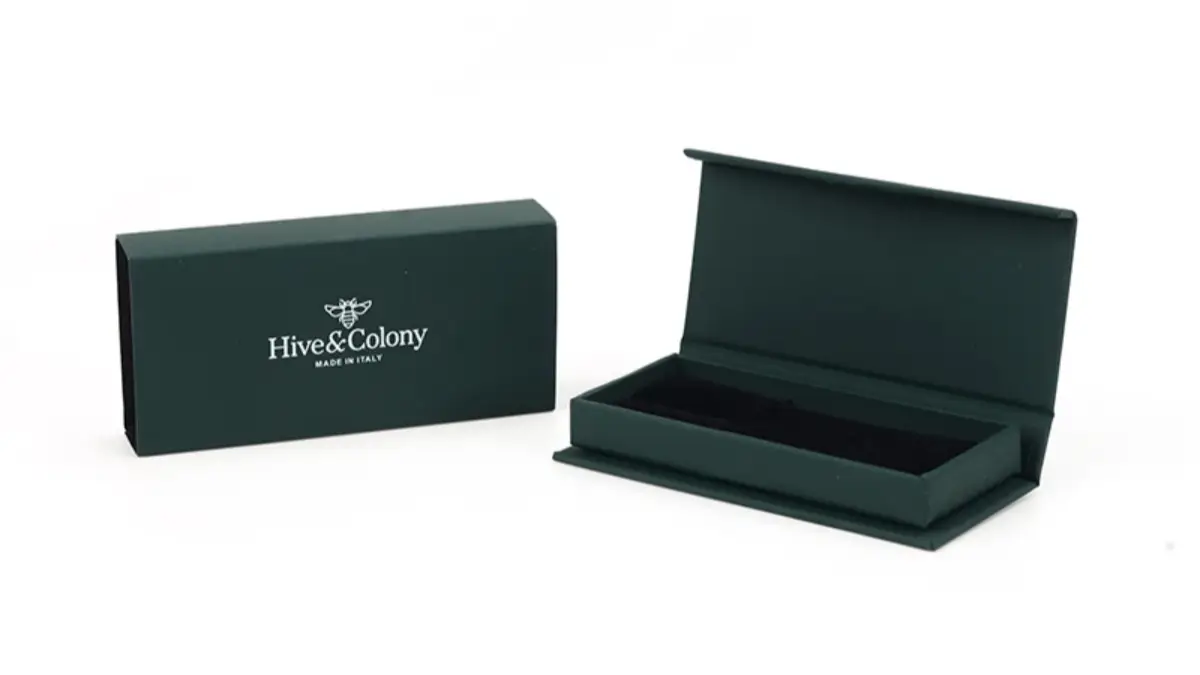
Rigid box. Also called a setup box. Greyboard, typically 1.0–3.0 mm, is V-grooved, then wrapped with art paper, linen, or another face sheet. The turn-in folds inside the wall. Lid and base are made as two pieces. They leave the plant already square. A collapsible rigid is the variant that ships flatter and locks at the corner or with magnets. Check that sample for corner scuff and for how square it stays after one opening.
Folding carton. Paperboard, mostly 250–400 gsm, about 0.3–0.8 mm. Die-cut, scored, and usually glued on a folder-gluer into a flat tube. At the brand or the 3PL someone squares it and closes a tuck, a crash-lock bottom, or a seal end.
| Folding carton | Rigid box | |
|---|---|---|
| Board | 250–400 gsm paperboard, about 0.3–0.8 mm | Greyboard 1.0–3.0 mm, plus a wrap |
| Leaves the plant | Flat | Set up, unless it is a collapsible rigid |
| Who squares it | Brand, filler, or 3PL | Already square |
| Closure | Tuck, crash-lock, seal end | Lid fit, magnet, drawer, ribbon |
| Print surface | The board | The wrap |
| Sheet that hates a gluer | — | Thick linen, leatherette, heavy texture |
Guangzhou Tendlyn Trading Co., Ltd., founded in 2009 in Guangzhou, runs both structures in its Foshan and Zhanjiang factories. Minimum order is 100. That number is the floor, not a promise that a 100-piece rigid and a 100-piece carton cost the same. Make-ready is still there. A quote is written after structure, board, print, and quantity are known.
Where the money actually moves
Unit price is the smallest honest picture. Split the cost into board, converting, labor at your packing table, and freight.
Folding cartons are die-cut and glued at speed. The blank nests on a sheet. You pay the die, the plates, and the make-ready, then the run gets cheaper per piece as quantity climbs. Your warehouse holds a lot of units per pallet. Someone still has to pop the carton and close it. A crash-lock bottom shortens that. A hand-tuck on a slow gift line does not.
Rigid boxes take V-grooving, gluing, wrapping, and turn-in. Magnets and ribbons are extra stations. The box then ships at full volume. You pay freight on the air inside the lid. Inbound cube and warehouse cube are part of the rigid decision even when the ex-works quote hides them.
Ask for the quote to state ship condition: flat or set up. Add freight, duty, and the packing labor on your side before you compare a tuck carton with a magnetic lid. Duty follows the HS code and the importing country. It is not a single rate you can lift from a blog.

Protection
A rigid wall stays square because the greyboard is already formed. A folding carton stays square while the folds and the fill allow it. Under a heavy master case, carton panels bow. Corners crush. That is oil-canning, and it shows on a cosmetic shelf even when the bottle inside is fine.
The wall is only half of transit survival. A glass dropper in a rigid box with an empty cavity still hits the lid. Fit the insert to the component. Paperboard cells, molded pulp, or a die-cut corrugated cradle do that job. EVA does it and adds plastic.
A candle jar or a heavy cream jar is a weight problem first. Rigid lid-and-base is the usual answer because the walls carry the stack. Leave clearance so a warm jar is not pressed into the wrap. The box is not a thermal pack.
Damage claims fall when the cavity is tight and the outer wall matches the stack height. They do not fall because a format has a reputation. Sample with the real component, then drop the filled pack the way your carrier will.
Hand, lid, and what the customer actually feels

Weight, corner sharpness, and lid friction are the whole “unboxing” spec.
A lid should lift with a steady drag. Too loose and it falls off in the mailer. Too tight and the wrap scuffs on the way off. Put a lid-fit note on the drawing and approve it on a physical sample, after the wrap and any soft-touch film. Film thickness changes the fit.
A magnet adds a click and a buried component. Specify pull and position. The wrap stays clean only if the magnet sits in a pocket in the greyboard, not under a lump of glue.
Folding cartons can feel considered. A 400 gsm board, aqueous matte, a deboss, and a crash-lock that closes square will beat a thin rigid that dishes in the lid. The format does not supply the quality. The caliper, the score, and the finish do.
Customers keep a rigid box when the lid still fits after months and the corner has not whitened. That is a case for 1.5–2.0 mm board and a through-dyed or carefully turned-in wrap. It is a weak case for adding a second decorative layer the plant cannot hold in register.
What you can put on the surface

Rigid wraps are finished as flat sheets, then wrapped. Foil, emboss, and spot UV sit on the panel. Keep them off the corner and the turn-in, or the foil cracks and the UV whitens. Because the wrap never goes through a folder-gluer, you can use sheets that would burst or scuff on a high-speed fold: linen, felt, leatherette, heavy pearl.
Folding cartons have to survive the gluer and the tuck. Coated board, aqueous, film lamination, foil, and spot UV are all normal. Foil and high-build UV crack on a score if the die runs through the fold. Windows, euro slots, and fifth panels are straightforward here. A window in a rigid box means cutting greyboard and wrap and usually patching a film. It is done. It is a slower station.
When the carton is the right tool
- The SKU lives on a shelf or in a mailer, and the outer shipper is a separate corrugated box.
- You need the pack flat: refills, minis, a line with many SKUs and a small cage.
- The closure is a tuck, a crash-lock, or a seal end, and the fill line can close it.
- You need a hang tab or a large window.
- The face sheet has to be something a gluer can fold without cracking.
When the rigid box is the right tool
- The box is the gift. Lid, ribbon, or magnet is the opening.
- The fill is heavy, fragile, or a set that has to stay put without a master-case crush.
- The face is a texture or a cloth that will not run on a folder-gluer.
- You want the component presented in a cavity that stays square without tape.
Retail price does not choose the format. A heavy fragrance set and a light lip balm both fail in the other’s box. Match the wall to the product weight and to the way it ships.
Use both on purpose
Keep the rigid lid-and-base for the launch set. Put the refill in a folding carton on the same art paper and the same foil, at a lower gsm. The brand still matches. The freight does not.
A rigid outer with a folding sleeve or a paperboard divider inside is the usual hybrid. The greyboard does the crush. The paperboard does the tight cell, and it is easier to change when the bottle supplier changes the cap by 2 mm.
Approve one filled sample of each format before the dies are cut for the whole line. The sample is where lid fit, oil-canning, and foil on the score show up. A render will not.
