Sustainable apparel packaging is a material and a dieline, not a leaf icon. The pack still has to keep a garment clean and uncreased. After that, the question is whether the customer can put it in a real recovery stream, and whether the claim on the panel matches the converted piece.
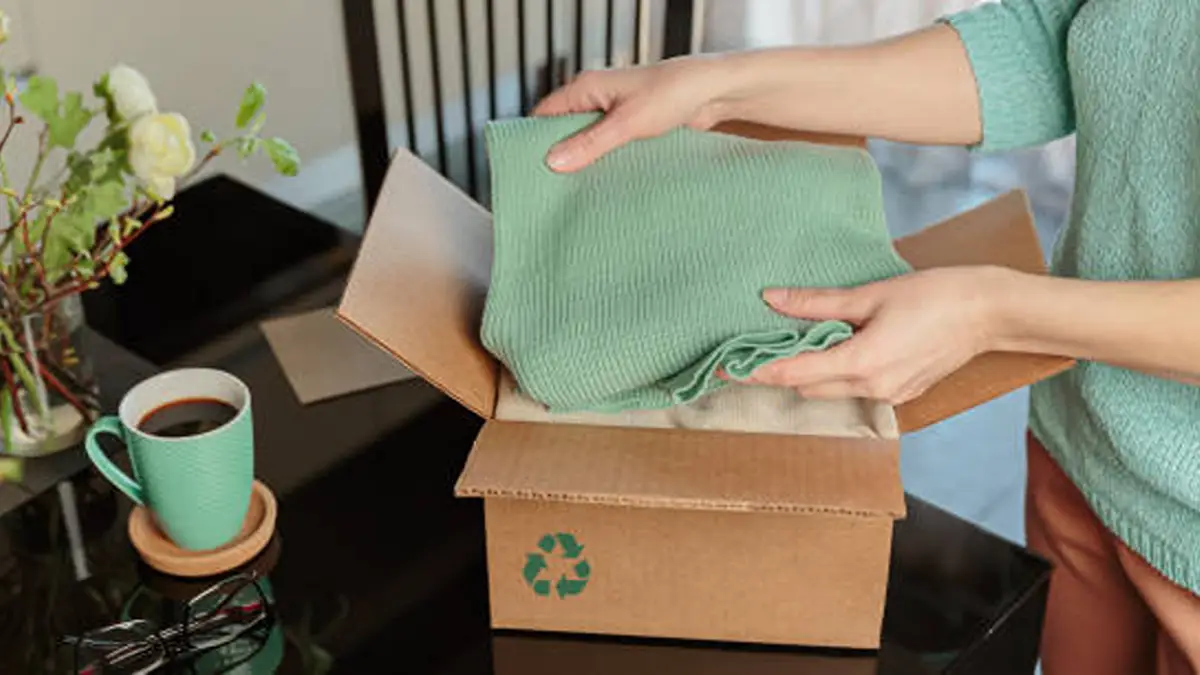
What the customer and the retailer actually check
The first test is still protection. A crushed blazer in a "recyclable" mailer is a return, and the board still got made. Moisture, scuff, and a fold that the flute did not prevent are packaging failures before they are brand failures.
The second test is the claim. Buyers and, increasingly, EPR schemes want the fiber, the ink, the adhesive, and the coating named. "Eco" and "planet friendly" are not specs. A sentence you can defend looks like: uncoated kraft liner, soy or water-based ink, no film lamination, plastic window omitted, FSC claim only if that lot is in chain-of-custody.
Most shoppers will not pay a second time for the baseline. They will notice a poly bag inside a paper sleeve that you called plastic-free. Match the shipper to the words on it.
Fiber, film, and what "mono-material" means on a mailer
For a paper mailer or carton, mono-material means the converted pack is fiber plus adhesive and ink that a mill can live with. It does not mean "mostly paper with a small window." A PET window, a film laminate, and a magnetic closure are other materials. Call them out, or design them off.
Practical fiber choices:
- Kraft or white liner on E flute or B flute for the shipper. E flute is the lighter cube. B flute is the stronger wall.
- SBS or FBB folding cartons for in-store garments and sleeves, specified by gsm, not by a color name.
- Recycled liner when the print and the strength still pass. Recycled content and FSC are different claims. FSC is chain-of-custody for the fiber you label. It is available on request. It is not the default stamp on every job.
- A paper bag or a paper tube where the product is a scarf, a belt, or a rolled knit. Same rule: the handle, the cord, and the end cap are part of the material list.
Flexible mailers made from recycled polyethylene are a different plant and a different disposal path. They can cut mass. They are not the paper bin. If you use one, print the drop-off instruction, not a recycling logo borrowed from paper.
Biobased films and compostable mailers only count where the customer can actually send them. Industrial compostability on a bag that goes in household trash is a claim without a route. Do not print it.
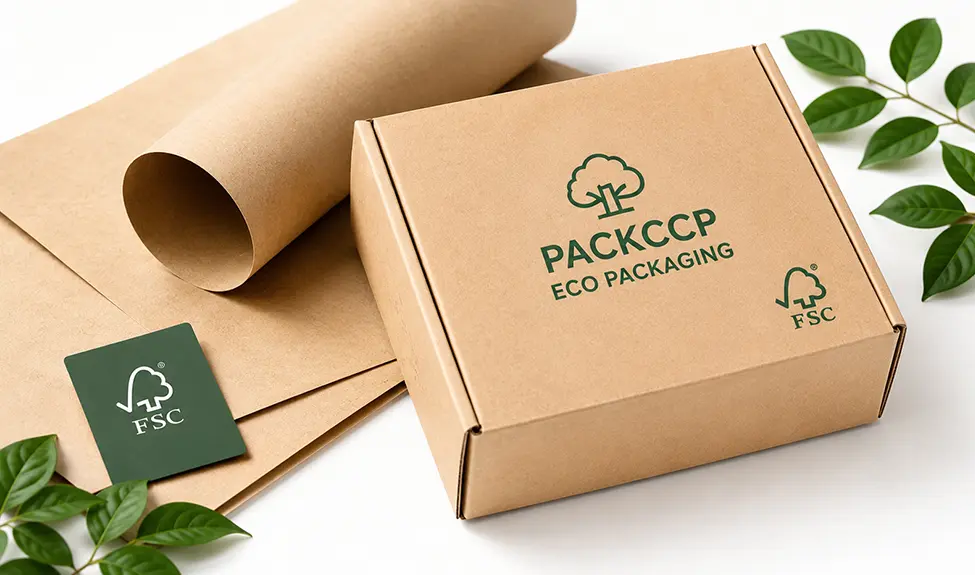
Design moves that change the bill and the bale
Right-size the dieline to the folded garment. Void fill is material you bought so the box would not rattle. A shorter mailer also changes dimensional weight. That is the operational reason to redraw the blank, not a slogan.
Strip parts that do not hold the garment:
- Plastic clips and a second carton around a carton
- Tissue on every tee, if the liner already protects the cloth
- Full-bleed film lamination used as a default scuff coat
- Foil across a whole panel when a small stamp would carry the mark
Low ink coverage, water-based or soy ink, and an aqueous coat instead of film keep the pack closer to the paper stream. Spot UV and foil are small areas. They are still contaminants if the mill's spec excludes them. Ask the recycler you are designing for, then write the disposal line to that answer. "Recyclable everywhere" is the line that fails first.
A QR code can move the long story, the care copy, and the fiber percentage off the panel. The code does not fix a laminate. Put the disposal instruction on the pack in type a person can read without a phone.
Certifications worth asking for
Ask for the certificate that matches the claim, and check that the scope is the plant converting your job.
- FSC or PEFC chain-of-custody for a forest claim on paper. The code on the artwork has to match the certificate you were shown.
- A recycled-content declaration for a PCR number. The number is the lot, not the brochure.
- Compostability marks (EN 13432, BPI, OK Compost) only on the component that was tested, and only if you will tell the customer which bin that implies.
A badge you drew in-house is not one of these. Green-brown ink on a film-laminated carton is not one of these either.
EPR fees in the EU and rules such as California SB 54 price the format: recycled content, whether it is widely collected, and how much of it you put on the market. Designing a mono-material paper mailer is a fee conversation as well as a material one. Get the classification from whoever files your report. Do not guess the category off a dieline nickname.

How the pack should talk
Three art directions show up constantly. They are not equally honest.
Quiet board. Matte aqueous, one color, a lot of unprinted liner. This works when the board is actually simple. It looks cynical when the inside is a poly bag you hoped nobody would mention.
Kraft and a recycling mark. Visible fiber is fine. The mark has to match local collection. Kraft laminated to film is still a laminate.
A code and a short disposal line. Useful when the claim is specific: percent recycled fiber, "remove the cord before recycling," "window is PET, tear it off." Vague copy wastes the space.
Print the number you can document. "Made with 80% post-consumer fiber" is allowed when the board mill's declaration says that for this sku. "Zero waste" is not a board spec.
Greenwashing that shows up in apparel packs
These are the ones that get a brand in trouble with a retailer or a regulator:
- "Eco," "natural," or "green" with no fiber, no ink, and no end path
- Earth tones and a leaf used in place of a certificate
- A self-made seal that mimics FSC or How2Recycle
- A recycled paper sleeve around a plastic mailer, with the claim on the sleeve
- "Recyclable" on a pack whose lamination, foil, or adhesive the mill will reject
- "Plastic-free" while a window, a tape, or a coated liner is still on the dieline
The fix is a bill of materials for the converted pack: board, flute, ink, coat, adhesive, window, tape, insert. Claims attach to that list.
What to test before you switch
A lighter mailer that creases the garment will erase the material saving in returns. Run the new blank with the real garment:
- Drop and stack on the flute you specified, not on a white sample in a heavier board
- A wet carton or a damp doorstep if that is the lane
- Pack time at the bench, because a fussy crash-lock gets tape and the tape was not in the recycling claim
- A read of the disposal line by someone who does not work on the brand

Guangzhou Tendlyn Trading Co., Ltd. has converted paper packaging in Foshan and Zhanjiang since 2009: mailer boxes, folding cartons, rigid boxes, paper bags, and paper tubes. FSC board is available when you ask for it. Declarations follow your spec. The paper-pack minimum is 100, and the quote waits on structure, board, print, and quantity. Reach the plant at info@axwp.com, +86 158 1238 1273, or WeChat trimgem.
