For a beauty brand, the paper pack is the carton, the rigid box, the paper tube, or the insert around the jar. The jar, the pump, and the cap are a different spec. Sustainable, on the paper component, means you can name the fiber, the coating, the ink, and the extra parts, and those names match how the pack is collected.
Guangzhou Tendlyn Trading Co., Ltd., founded in 2009, makes those paper components in Foshan and Zhanjiang: folding cartons, rigid boxes, paper tubes, and the mailers that ship them. MOQ is 100.
What to name in the spec
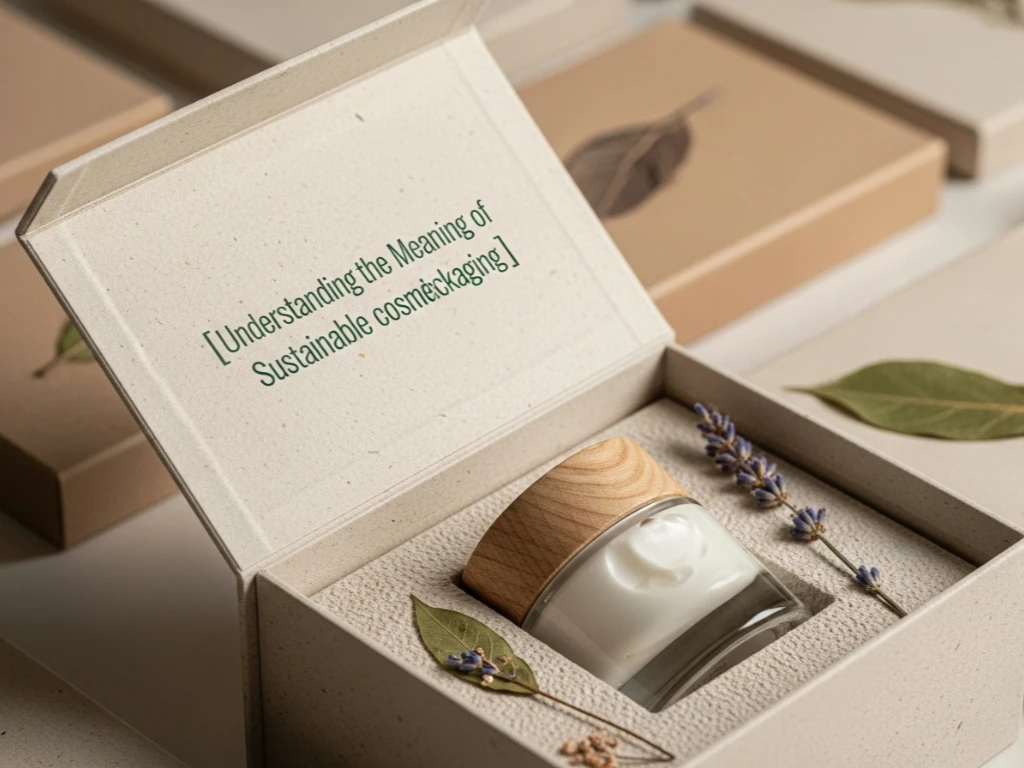
Write four lines.
- Fiber. Carton board grade and caliper, or greyboard caliper plus wrap gsm. Recycled fiber, virgin fiber, or a stated mix. FSC if you need the mark. FSC is available on request. It is not printed unless the order says so.
- Coating. Aqueous, film, soft-touch, or none. Film is a plastic layer. Soft-touch is often a film too. If the EU recyclability story matters, start with uncoated or aqueous.
- Ink. Water-based, vegetable-oil, or UV. UV cures hard and clean. Confirm the brand accepts it on a cosmetic SKU.
- Other parts. Magnet, ribbon, EVA insert, plastic window, mirror. Each one is a component in the declaration.
The declaration of conformity follows that spec. A general “eco box” line does not.
Under the EU Packaging and Packaging Waste Regulation (PPWR), packaging placed on the EU market is being pushed toward recyclability. A folding carton with aqueous coating and a paper insert is a straightforward paper pack. A rigid box wrapped in film-laminated paper, with a vacuum-formed plastic tray, is a mixed pack. Both can look precise. Only the first one is simple to describe as paper.
Finish that still reads as beauty

A cosmetic box feels finished because of caliper, edge, and one surface decision. Uncoated board with a blind emboss, a cotton-content wrap, or a single foil stamp does that. A thick film is not required for the lid to feel considered.
Rigid boxes use greyboard, which is commonly recycled fiber, wrapped with printed paper. The wrap is the face the customer sees. Keep the wrap aqueous-coated or uncoated when the claim is paper. Turn-in should be even, and glue should stay off the face.
Folding cartons for tubes, jars, and palettes ship flat and erect on the line. Crash-lock and tuck closures need glue and ink kept off the flap. A belly band adds a second printed piece without a second board.
Paper tubes work for balm, powder, and short pencils of product. The wall is paper; the closure may be a paper disc or a separate cap. Name the cap material.
A magnetic lid is a small magnet in the board. It closes cleanly and it is a non-paper part. Declare it. A paper tab or a tuck can close a carton with no magnet at all.
Board does the structural work
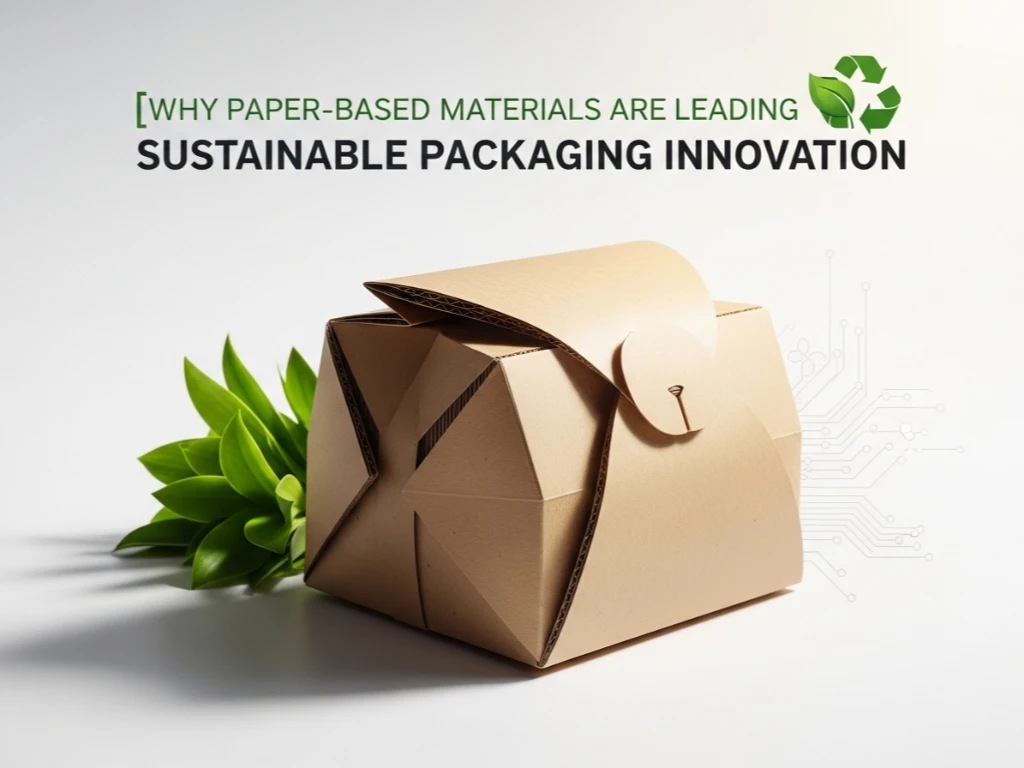
Paper holds type, foil, and emboss, and it is the stream mills already collect. That is the practical reason beauty brands put the sales pack on board.
Use the barrier the formula needs, and stop there. A water-based coating resists rub and light moisture. A grease or moisture barrier is for a formula that will actually touch the board. A full PE laminate is for a performance the coating cannot give, and it belongs in the material statement.
Soy or other vegetable-oil inks and water-based flexo or offset inks are the normal set. Metallic ink is still ink. Foil is a stamped film. They are different lines on the spec.
Design that the die can cut
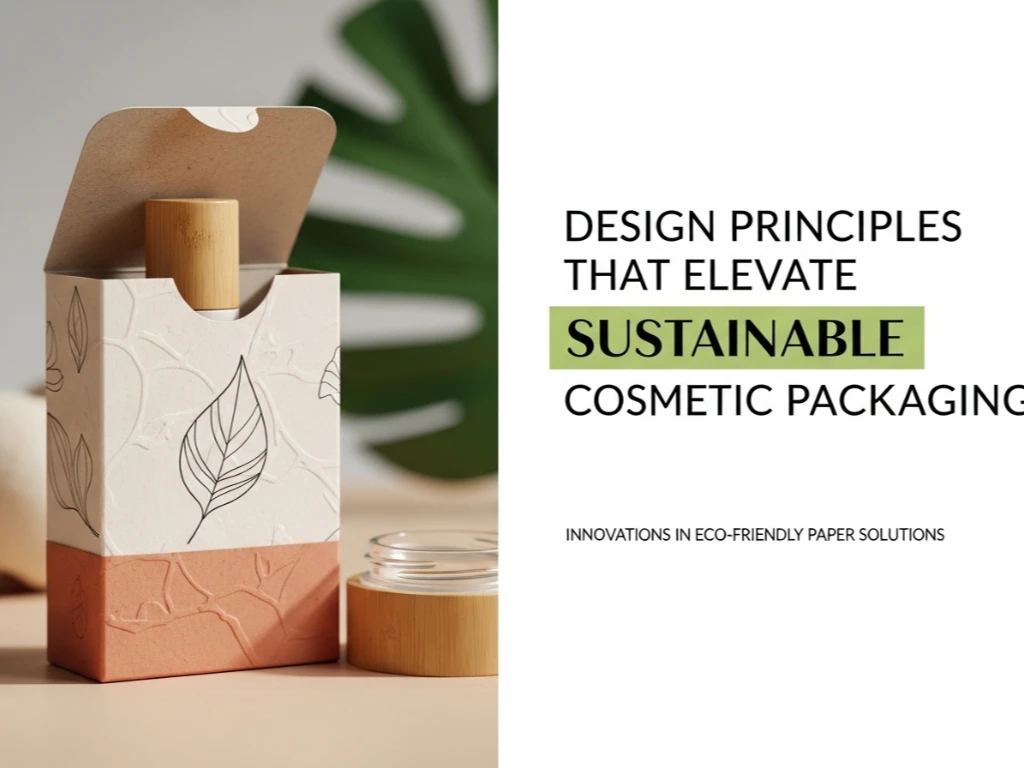
- Keep geometry simple enough to cut and glue. A tuck carton with a clean face beats a shape that needs a custom tray you then have to make in plastic.
- Texture from the sheet or from emboss reads as material. Texture from a heavy film reads as plastic.
- One color, or a Pantone plus foil, is enough on a small carton. Full-bleed photography wants a coated face and more make-ready. On a 40 mm carton, that photography often turns to mud at the crease.
- Paper inserts and dividing walls hold jars without a molded plastic tray. EVA is available when the product is fragile. EVA is a plastic foam. Say which one you are specifying.
Custom work without extra material

Customization is size, board, print, and insert layout. A carton cut to the jar, with a 3 mm clearance and a paper neck support, uses less air and less filler than a generic mailer packed with shredded paper.
Short runs are normal for a new SKU. MOQ 100 lets you approve a size before a shade launch. The quote waits on structure, board, print, and quantity. A foil die and a magnet add operations. They do not require a story about luxury to be priced. They require those lines filled in.
What the customer can check
The customer can see fiber, a coating sheen, and whether the insert is paper or plastic. They cannot see a claim that is only on the website. Put the material in a form you can stand behind: board grade on the spec, FSC logo only when chain of custody is on the order, and a line of type on the carton if you want the recycling instruction in the market’s format.
Inside print is a good place for a refill note or a material line. It does not fight the front panel.
What is changing in the rules

PPWR is the EU text to design against: recyclability, and documentation that matches the pack. Refill programs keep the outer carton in use longer and change the primary container more often. Design the carton so a second jar still fits. A QR code can point to the material note. It is a printed mark. It does not replace the spec.
Coatings, inks, and adhesives are the details auditors ask for. Keep them consistent with the declaration. If a US retailer has its own packaging scorecard, answer it with the same four lines: fiber, coating, ink, other parts.
How a project actually runs

Send the jar or bottle dimensions, including the cap. Tendlyn draws the dieline or checks yours: cut, crease, bleed, glue areas clear. A structural sample proves fit. A printed sample proves color on that board. Bulk follows the signed sample.
FSC, when you need it, is requested at this stage so the logo and the paperwork match. Lead time is quoted after the structure and the finishes are known.
Questions on a carton, a rigid set, or a tube: info@axwp.com, +86 158 1238 1273, WeChat trimgem.
