Chocolate packaging is secondary most of the time. The chocolate already sits in its own wrap, cup, or tray. The box still has a job: hold the assortment, survive the parcel, and read as a gift when the lid comes off.
If the board, the ink, or the glue will touch the chocolate, that is a different spec. You need a food-contact declaration that matches your market. Do not assume a decorative foil or a soft-touch film is food-contact, or that it will recycle with the paper.
What “paper only” actually changes
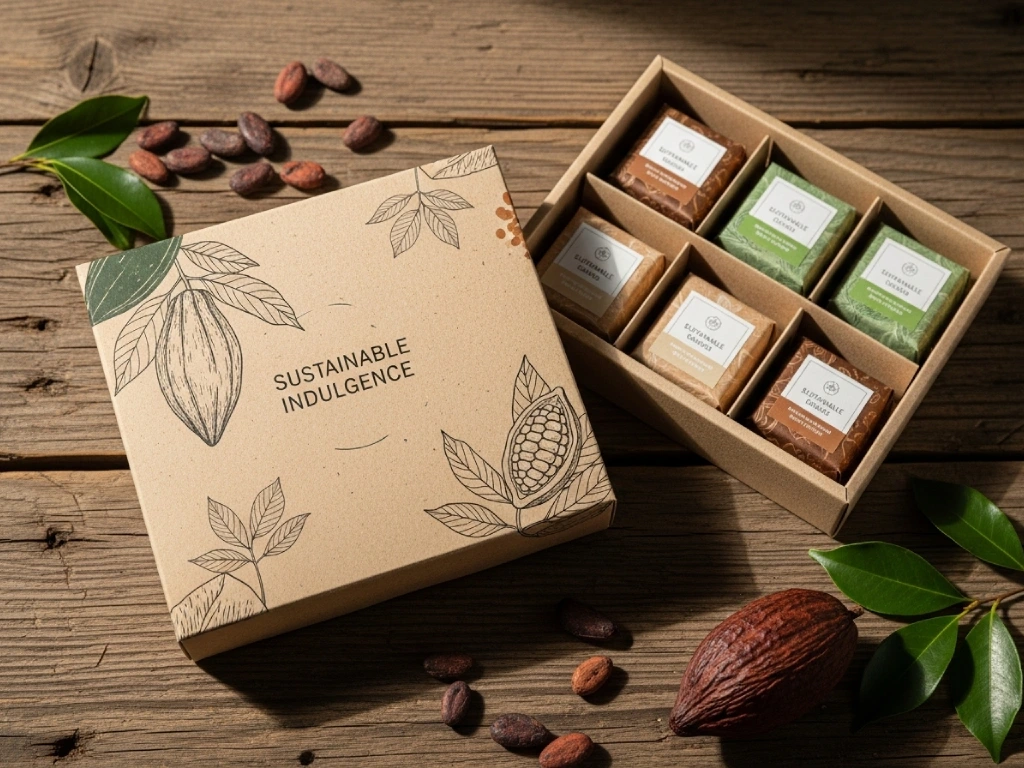
A recyclable chocolate box is a set of choices, not a slogan.
- Fiber. Greyboard or corrugated for the structure. Kraft, C1S art paper, or an uncoated specialty sheet for the wrap. FSC fiber is available on request. It is not the default on every job. If you need the logo, order it, and expect the claim on the invoice.
- Ink and glue. Water-based ink and starch or water-based adhesive stay in the paper stream more easily than a plastic film. Soy ink is an oil-based offset option. It is not automatically a flexo ink.
- Windows. A PET window is a plastic part. If the goal is a paper pack, drop the window or show the primary wrap through an open die-cut with no film.
- Foil and film. A small foil stamp is a metal die and a thin foil patch. Full-coverage metallic film is a plastic layer. Blind emboss on uncoated paper avoids both.
The box can look finished without a film laminate. Matte aqueous on a coated sheet, or no coating on a kraft wrap, is the usual route. Film lamination (gloss, matte, or soft-touch) adds rub resistance and makes recycling harder. Say which one you want before the quote.
Structures that fit a gift assortment
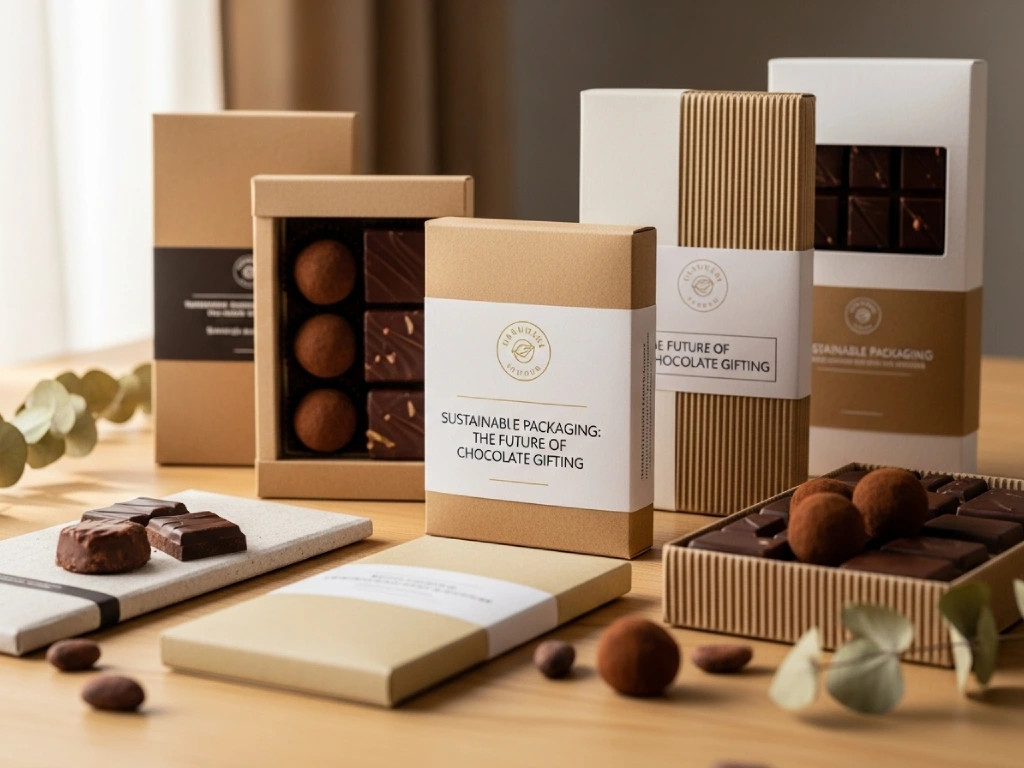
Pick the structure from how the chocolate is packed and how it ships.
- Lid and base. Two rigid pieces. Greyboard, typically in the 1,200–1,800 gsm range, wrapped with paper. Stable on a shelf. The lid has to clear the tallest chocolate, including cups.
- Magnetic flip-top. Same greyboard family. Magnets sit in the turn-in or between the wrap and the board, so the outside stays clean. The closure is only as good as the magnet placement and the board thickness.
- Drawer. A sleeve and a sliding tray. It reopens without a torn tuck. The tray needs a stop, or it shoots out when the sleeve is lifted.
- Folding carton. A crash-lock or tuck carton in ivory or kraft board, often 210–400 gsm if you are in solid board rather than greyboard. Better for a single bar or a small count. Ships flat.
- Corrugated mailer. E flute or B flute when the gift goes parcel-direct. Print is litho-lam or flexo. The insert, not the mailer wall, should hold the chocolates.
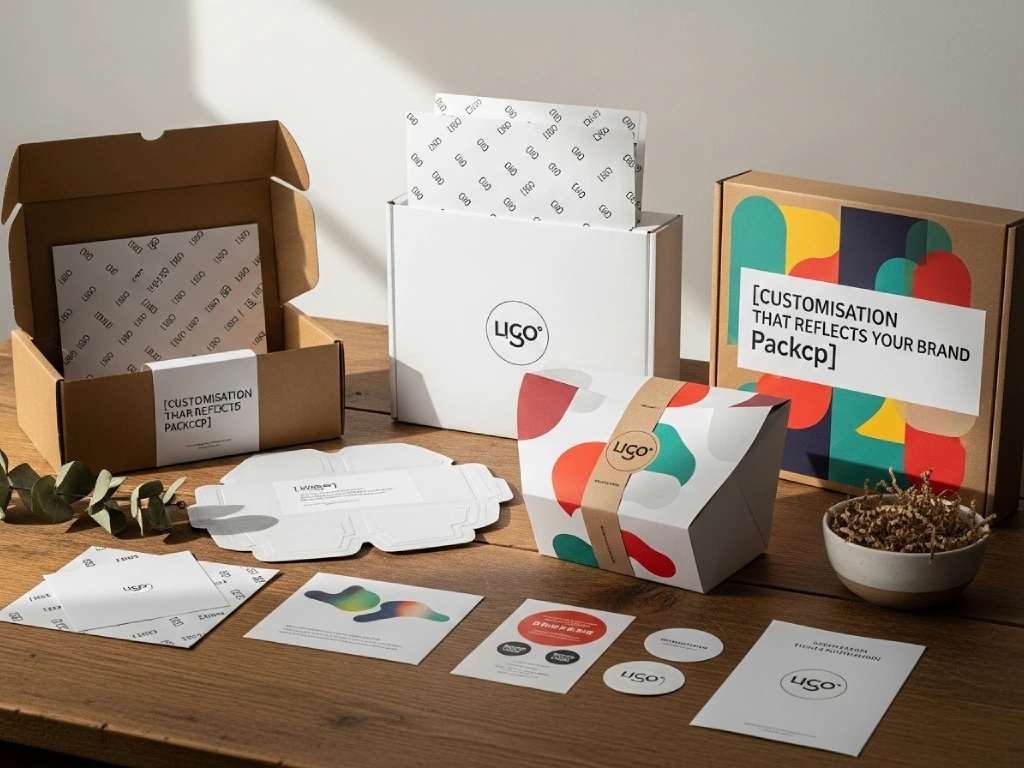
Public packs already show these routes. Some bar brands use uncoated FSC paper and a blind emboss, with no film. Some gift sets use kraft with almost no print. Others use a rigid outer box, a paper compartment, and a ribbon, so the box can be kept. The useful part is the structure, not the brand name.
Inserts
The insert does more work than the lid. Chocolates rattle, scuff, and mark each other.
Molded pulp and die-cut kraft or paperboard are the paper options. Size the cavity to the cup, not to the nominal praline diameter. A cavity that is loose needs a tuck or a band. A cavity that is tight scars the chocolate.
EVA or plastic trays hold a precise shape. They also put a non-paper part in the pack. Use them only if the brand has accepted that.
Interior print can carry flavor names or a short lot note. Keep ink off any surface that touches unwrapped chocolate. Bleeds on an interior panel need the same trap and margin as the outside. A QR code is fine if it is large enough to scan after aqueous or film. Do not place it across a score.
Finishing that still looks like a gift
On uncoated kraft or cotton-content sheets, blind emboss and a small foil stamp are the usual pair. Foil needs a stable sheet. Heavy texture and deep emboss in the same spot will break the foil.
Spot UV wants a coating underneath that the UV will grip, usually a matte aqueous or a matte film. On raw kraft it crawls. Spot UV is also a plate and a make-ready. It is not a checkbox on a PDF.
Edges matter on rigid boxes. A thick wrap cracks at the turn-in. A very light wrap shows the greyboard color at a scuffed corner. Approve the turn-in on the sample, not on the render.
What to put in the brief
Write these before you ask for a number. The quote comes after structure, board, print, and quantity are known.
- Assortment: count, piece size, and whether a primary wrap already exists.
- Structure: lid and base, drawer, magnetic flip-top, folding carton, or mailer.
- Board and wrap, and whether FSC is required on this order.
- Ink, coating, foil, emboss. State if the pack must stay recyclable as paper.
- Insert material and cavity count.
- Food-contact: secondary pack only, or board that touches the product. Declarations follow your spec.
- Quantity. MOQ at Tendlyn is 100.
Questions that come up
What sells at Christmas is not a box style
Seasonal volume follows the chocolate brand and the count, not a particular carton. The pack still has to survive a parcel and a warm car. Specify board and insert for that, not for a holiday keyword.
What makes the box feel expensive
Weight from the greyboard, a clean turn-in, a closure that meets, and one finishing step done properly. A second laminate plus a hologram foil plus a ribbon usually looks busier, not better.
Why the pack costs what it does
You are paying for board grade, print method, foil or emboss dies, the insert, and hand assembly. Magnets, ribbons, and fitted trays are labor. A quote that arrives before those are chosen is a guess.
