A paper bag supplier is the plant that forms the bag. The shortlist is the set of plants that can run your construction on their own line, print it, and sign a sample they can repeat. Start from the bag. Then walk the floor against that bag.
Write the bag first
Put this on one page before you email anyone.
- Face width, gusset, and height, in millimetres.
- Bottom style and top hem.
- Sheet: virgin kraft, recycled kraft, white, or coated, plus gsm.
- Handle: twisted paper, flat paper, cotton, polypropylene, or die-cut, and the patch.
- Print: number of colors, flexo, offset, or digital, and any foil or emboss.
- Coating: none, aqueous, grease-resistant, or film.
- Where the bag is sold and where it is thrown away. US and EU recovery rules are not the same, and a film window or a plastic cord has to be declared.
- The heaviest product the bag will carry.
Without that page, every factory will send a catalog bag and a price that cannot be compared.
Who stays on the list
Keep a plant when you can see the work.
Forming is in the building. A trading desk can forward a PDF. It cannot show you the side seam from last Tuesday. Ask which constructions run on site: SOS, euro tote, die-cut, twisted handle, flat handle, adhesive mailer. If your bag is not on that list, the plant is the wrong one, however polished the sales sample is.
Print matches the art. Line art on kraft is a flexo job. A photograph on a coated sheet is offset or digital, printed before forming. Ask where the plates or the press sit.
Papers and claims are specific. FSC only if they hold chain of custody and you ask for it. A declaration of conformity follows your spec. A generic “eco” line on a website is not a document.
Quantity matches the way you buy. You should be able to approve a short run before a season. At Guangzhou Tendlyn Trading Co., Ltd. the MOQ is 100. The company was founded in 2009 in Guangzhou and runs its own factories in Foshan and Zhanjiang. Paper bags are made there with folding cartons, mailer boxes, rigid boxes, and paper tubes. Use the same questions on every other plant. The point is whether converting happens on their floor.
Questions to send before you fly
- Mill, gsm, recycled or virgin, and how shade is checked between lots.
- Side seam glue, bottom paste, and top turn-in.
- Handle material, patch size, and the pull test they actually run. Ask them to describe it.
- Print process, color count, and the registration they will sign.
- Coating, and whether any SKU is food contact. If it is, ask for the paper and ink declaration for that food and that market.
- How bags are nested, and what is printed on the carton.
- Who keeps the retained sample, and what happens if the sheet lot changes.
A quote that arrives before these answers is a unit price for a bag you have not specified. Tendlyn writes the quote after structure, board, print, and quantity are known. Ask any plant on the list to do the same.
Paper store
Look at labels: mill, grade, gsm, lot. Mixed lots without labels become shade complaints after the bags are printed. Feel the sheet you were quoted. A 120 gsm quote made on a softer 100 gsm reel will pass a visual check and fail the load.
Moisture shows up as cockle and as curl on press. The store should be dry, and the reel or the sheet stack should match the spec, not the neighboring job.
Watch a live job if you can. Plates or blankets, ink that is dry before forming, make-ready waste kept apart from good sheets. Over-impression on flexo fills type. Setoff in the stack means the bag will mark the one under it in the carton.
Pull a drawdown on the production sheet. A Pantone chip is not the color on brown kraft. If you need white underprint or a coated face, it should already be on the spec you sent.
Foil and emboss, if you use them, should be on the sheet before the bag is formed. Look at type below 6 pt. If it is broken on the sample, it will be broken on the order.
Forming

Stand at the forming line and watch ten bags, not one.
The side seam should be glued along the whole overlap. A dry tail opens when the gusset is squared. The bottom paste should hold when you lift a loaded bag. Gussets should match left and right. The mouth should be square, not twisted.
The first bags after a setup are the ones to pull. Light glue hides in a sales sample that was picked off the end of a good run.
Handles
The patch should sit square, at the same height on both sides, and it should be glued or stitched so the face does not split when you pull. Twisted paper should be tight enough to carry the stated load. Rope ends should be finished. A die-cut hole should be clean, and reinforced if the gsm and the load need it.
Pull one handle in front of the person who runs the line. You learn more from that than from a printed tensile number on a sheet that was never formed.
Inspection and packing
Ask to see the written check, not a slogan on the wall. Shade against the retained sample, size, seam, patch, print defects. Someone should be allowed to stop a pallet.
Bags should be dry, nested so handles do not dent the next face, and marked with a lot you can quote later. If the plant cannot trace a carton back to a sheet lot and a print date, a color complaint on order two has nowhere to go.
Lock the sample
Sign a formed bag. Attach the spec: dimensions, gsm, paper, handle, Pantone or drawdown, coating, pack count. Both sides keep a copy. The next order is checked against that bag.
Change the art only if the structure stays. A new logo on the same tote is a print change. A new gusset is a new bag.
MOQ 100 is enough to make this sample a real production bag rather than a handmade one-off that the line cannot repeat. Lead time for the bulk is quoted from the signed spec. It is not a number to invent before the seam and the ink are chosen.
Reorders
The second order fails when the sheet lot changes and nobody pulls a new drawdown. Write that into the agreement: same grade, and a drawdown before bulk if the mill lot moves.
Keep the conversation with the plant that formed the bag. A new broker between you and the line is how the patch gets smaller and the gsm slips. Export paperwork should match the spec you signed: invoice, packing list, and a declaration that lists fiber, coating, ink, and any plastic component.
Let the use change the questions
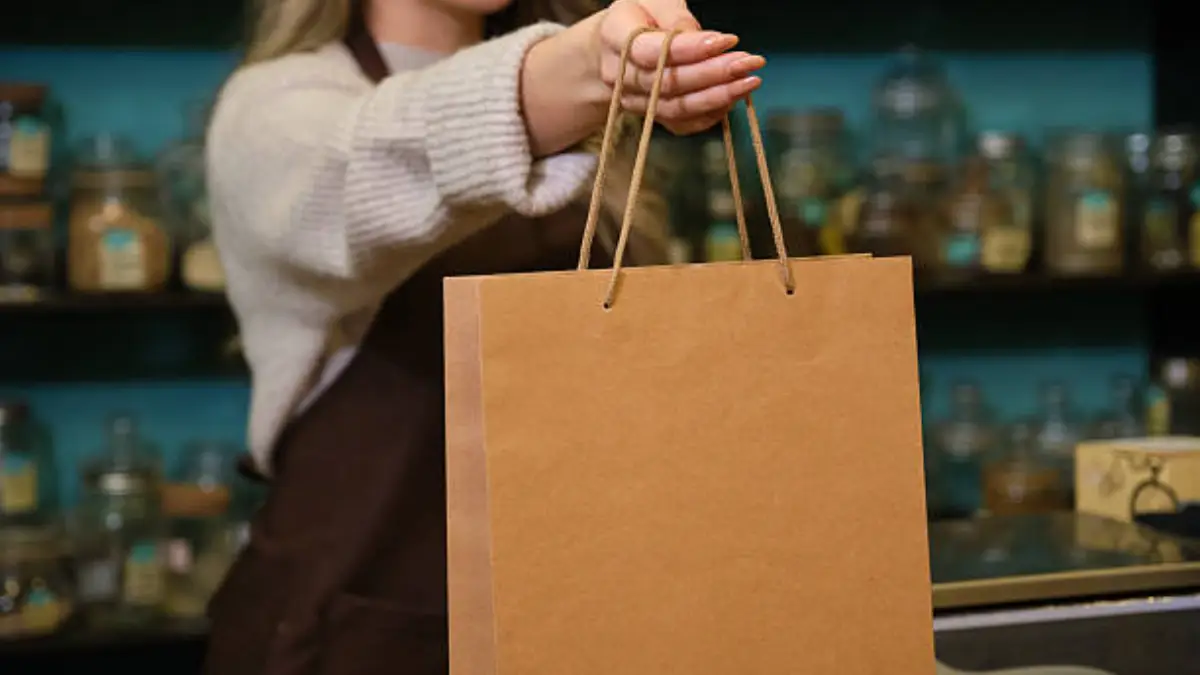
A fashion tote, a bakery bag, and an apparel mailer do not share one audit.
- Retail and fashion. Turn-in, patch, rub of the ink, color on the real sheet.
- Bakery and takeaway. Grease resistance at the bottom corner, food-contact paperwork, a sheet that still has strength after oil.
- Apparel and e-commerce. Adhesive flap and liner, crush in a parcel, art clear of the seal.
- Beauty gift. Heavier sheet, foil or emboss off the seam, a handle that survives the walk to the car.
Food-contact work stays on a line that can give you the declaration. A shopping-bag press does not become a food line because the art is a loaf of bread.
If you have the one-page spec and want it read against a forming line in Foshan or Zhanjiang, write to info@axwp.com, call +86 158 1238 1273, or WeChat trimgem.
