The box you approve is the box the line can repeat. Price does not tell you that. The corrugator settings, the die, and the test sheet do.
A weak box shows up as crushed corners, split scores, and returns. ISTA and your own damage log are the reason to treat the supplier choice as a spec, not as a brochure.
Why the plant matters as much as the flute

Retail, freight, and factory supply all punish the same faults. The carton crushes in the stack. The print rubs off. The inside size is short and the insert does not drop in.
Look at three things together: the equipment that will run the job, the board grade, and whether the plant can hold both on the next order. A one-off sample from a different line is not evidence.
What the floor should be able to show
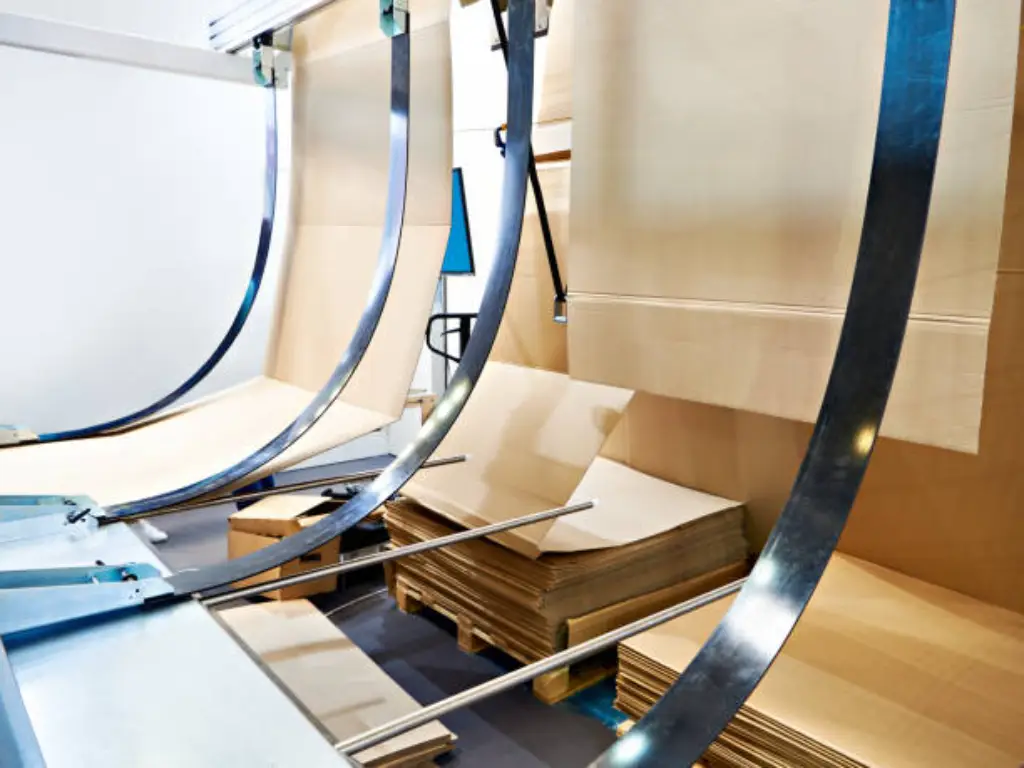
Corrugator, press, die-cutter, folder-gluer
The corrugator forms the medium with heat and steam, applies starch to the flute tips, and bonds the liners under pressure. That bond is the box. A glazed glue line and a starved glue line both fail, one by cracking and one by letting go.
Flexo is the inline press for shipping marks and simple brand color. Die-cutters, flatbed or rotary, cut the blank. The folder-gluer folds the glue tab and squares the box. Older machines can still hold size. What you want to see is that the plant measures, not that the paint on the machine is new.
Ask for a walk-through of the line that matches your structure. An RSC in C flute and a litho-lam E-flute mailer do not share a process.
Flute and the number you will write on the order
A, B, C, and E cover most briefs. F is the finer retail flute.
- B flute, about 2.5–3.2 mm and near 47 flutes per foot, is the crush-resistant, cleaner-printing flute. Die-cut retail and cans sit here.
- C flute, about 3.5–4.0 mm and near 39 flutes per foot, is the general shipping flute. On the same liners it usually beats B on stacking, because the caliper is taller.
- A flute, about 4.7–5.0 mm and near 33 flutes per foot, cushions. The face is too ribbed for fine graphics.
- E flute, about 1.0–1.8 mm and near 90 flutes per foot, is the mailer and retail face.
- Double wall (BC or EB) is the step up for export and heavier goods. EB keeps a printable E face.
ECT is the edge-crush number. BCT is the finished box. Ask which one they will report, on which grade, and how often. A certificate for a different flute does not cover your mailer.
Dielines, not just a picture
A useful plant draws the blank in a structural program (ArtiosCAD and Impact are the common ones) with flute direction, grain, and the glue tab. You should get a dieline you can check: inside dimensions, scores, bleed, and any crash-lock.
A 3D view helps the brand team. It does not replace a creased board sample. Inserts, perforations, and a tear strip belong on that drawing before steel is ordered. Once the die is cut, a “small” size change is a new die.
Documents
ISO 9001 is a quality-system certificate. It does not measure your ECT. FSC is a fiber claim, available on request, and it belongs on the job only if you ordered it. ISTA is a transit-test method. If you need a passed protocol, name the procedure and the lab. Ask for current copies. Declarations of conformity follow your spec.
Fiber, adhesives, and the recycling claim
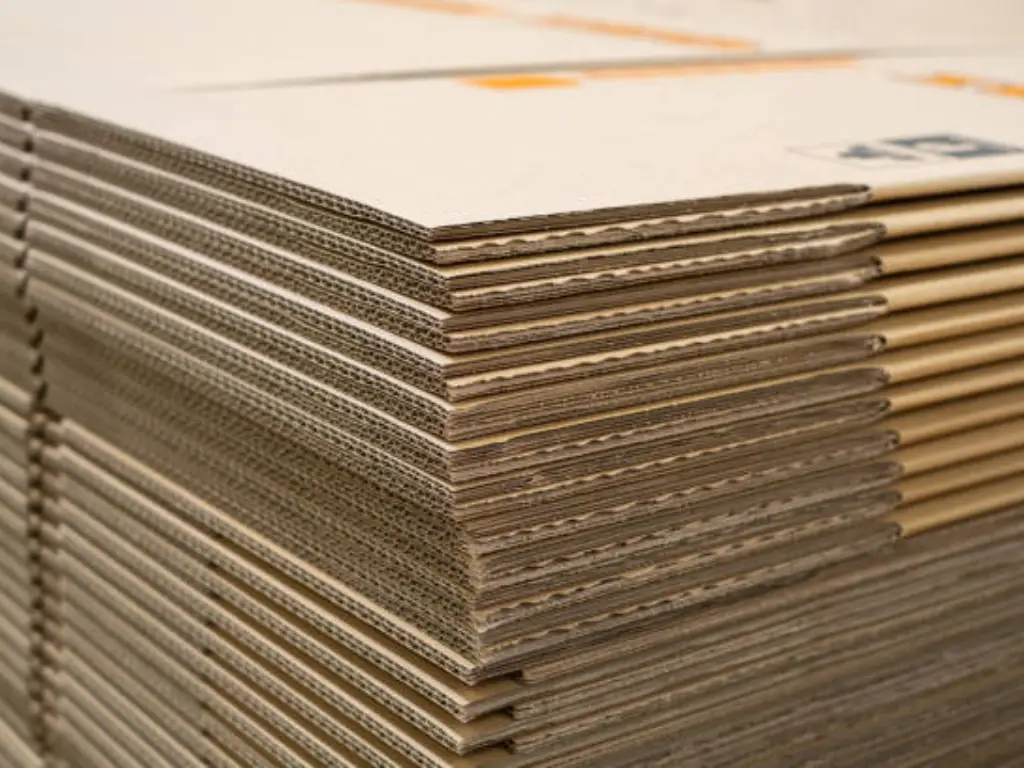
Corrugated is paper, starch, and ink, until someone adds a coating. Virgin kraft liner, recycled liner, or a mix all run. FSC or PEFC is a chain-of-custody claim you request. It is not printed by habit.
Low-VOC starch adhesives and water-based inks are the normal corrugated set. Wax, polyethylene, and heavy film lamination are the changes that knock a box out of many mill streams. Right-sizing does more for freight than a paragraph about carbon. A box that is 40 mm too tall on every shipment is a spec error.
In Europe, buyers now write recyclability into the brief because of the Packaging and Packaging Waste Regulation (PPWR). Extended producer responsibility rules in parts of the US do the same. Put the requirement in the purchase order. Do not leave it as a hope that the plant “does sustainable.”
Region is logistics, not a quality grade
A plant in China, the US, the EU, or India can hold a flute spec or miss it. What actually changes is the handoff.
From China you will work in millimeters, agree an Incoterm, and allow ocean time. A domestic plant sits closer to the warehouse and usually speaks the same document set as your DC. None of that is a unit price, and none of it is a capacity claim you can borrow from a country. Ask the specific site what it runs, what the MOQ is for your structure, and what the sample is made on.
Tendlyn’s floor is in Foshan and Zhanjiang, under Guangzhou Tendlyn Trading Co., Ltd., founded in 2009. The work is folding cartons, mailer boxes, rigid boxes, paper bags, and paper tubes. MOQ is 100. That is one plant’s answer. Use the same questions everywhere else.
Lead time, packing, and the account
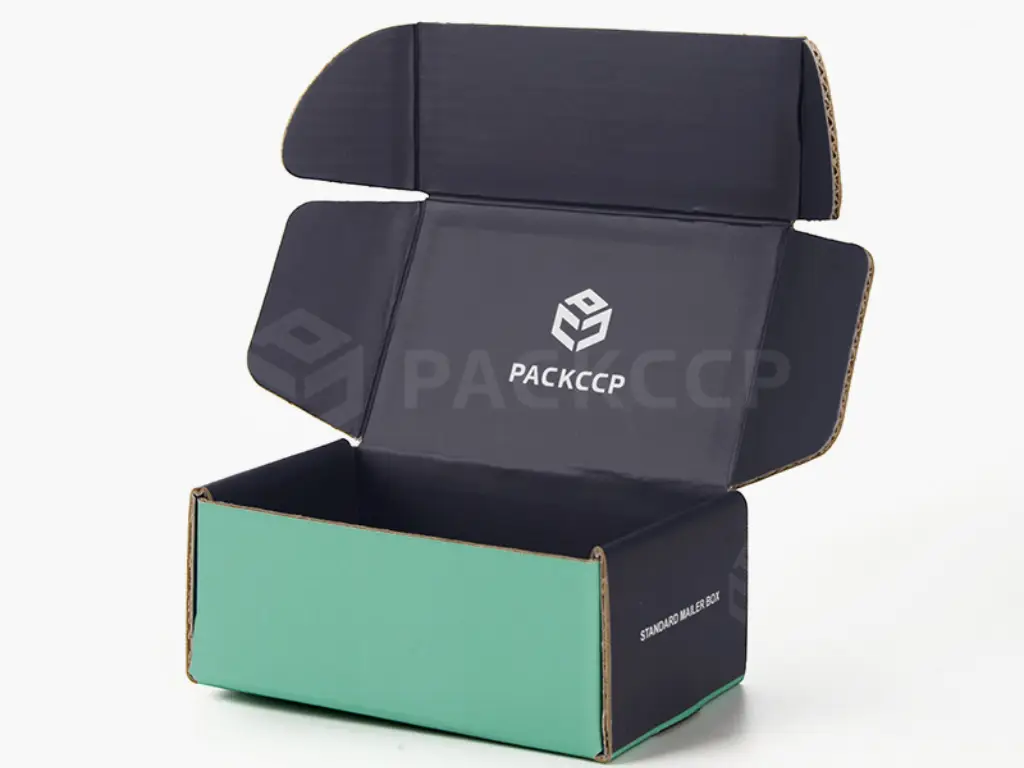
Ask when the die is ready, when the printed sample ships, and how many cartons are on a pallet. Those dates are part of the quote. A promise with no calendar is not a lead time. Do not accept a number that was copied from another job.
For export, the plant should already know packing marks, a packing list that matches the physical count, and the Incoterm you named. Vendor-managed inventory is a separate contract. It is not included because a factory ships containers.
You want one person who can answer a score question and a color question, or who will put you with the person who can. Claims, reprints, and “the glue tab was short” all go more cleanly if that name is on the file.
A short list before you award the job
- Line that will run it: corrugator or litho-lam, die-cutter, folder-gluer.
- Flute, liners, ECT or BCT, and a recent test on that grade.
- Dieline with inside size, flute direction, bleed, and glue tab.
- White sample and printed sample from the production board.
- FSC only if ordered. Declarations named by you.
- Coatings called out, especially anything that blocks recycling.
- Incoterm, pallet pack, and who signs revisions.
Send the dieline and that list when you want a price. Tendlyn reads it at info@axwp.com, +86 158 1238 1273, or WeChat trimgem.
