A logo on a gift box is a placement, a color, and a finish that have to match the next order. Recognition comes from that repeat. The product is what brings the order back.
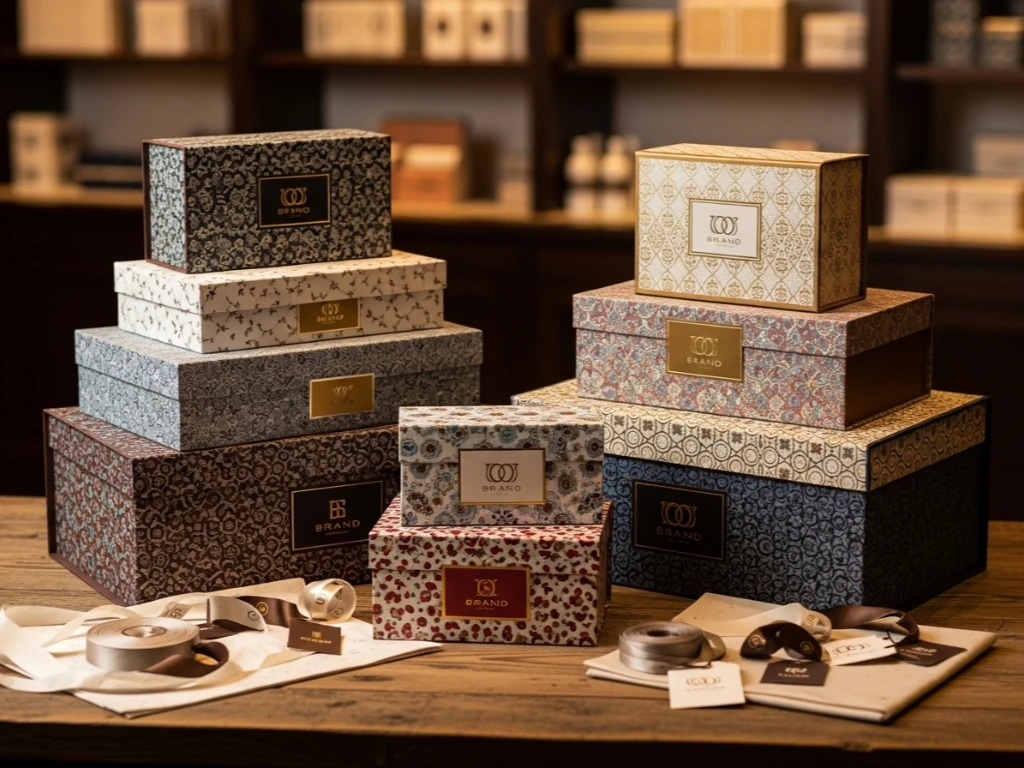
What the recipient actually sees
The box is the object in the hand before the product is. On a corporate gift or a retail set, that look is fixed by construction: board, wrap or print, and where the mark sits relative to a crease, a turn-in, or a tuck.
Three things make the mark readable a second time.
- The same position, clear of folds and glue.
- The same color standard. A Pantone on coated art and the same number on kraft will not match. Write the substrate into the color call.
- The same finish. Foil on the sample and ink on the bulk is a different box, even when the drawing is identical.
Guangzhou Tendlyn Trading Co., Ltd. prints and converts these packs in Foshan and Zhanjiang, and has done so since 2009. Folding cartons, mailer boxes, rigid boxes, paper bags, and paper tubes are the range. MOQ is 100.
Placement that survives converting
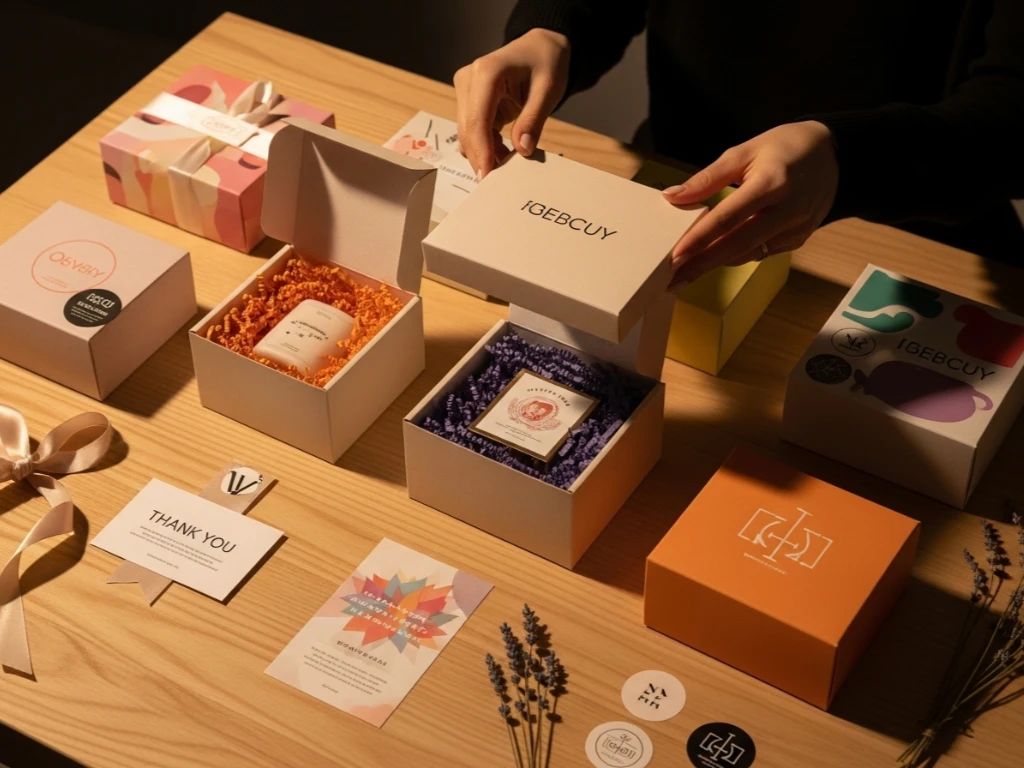
On a folding carton, keep the logo off the crease and off the glue flap. Type that crosses a score breaks in the folder-gluer and looks cracked on the shelf. Leave a quiet margin at the tuck, because the flap covers it when the carton is closed and reveals it when the carton is open. Decide which of those two moments the mark is for.
On a rigid box the logo is printed on the wrap, then the sheet is mounted. The turn-in eats the edge of that sheet. A mark placed on the flat PDF with no turn-in allowance ends up over the lip or down the inside wall. Ask for the wrap layout with the turn-in drawn, and place the mark on the visible panel only.
Foil and blind emboss carry a logo with almost no ink. They also show every registration miss. Spot UV on a matte film does the same job for a smaller mark. All three are make-ready. A 100-piece first order pays for the stamp or the plate. A reorder of the same tool does not start from zero. Ask which tools are kept.
Inside the lid is a second surface. A tinted board, a printed liner, or a plain grey interior are three different specs. If the brand wants the mark on the inside, it has to be on the drawing. A plain greyboard lid is the default when nobody asks.
Opening, and the second order
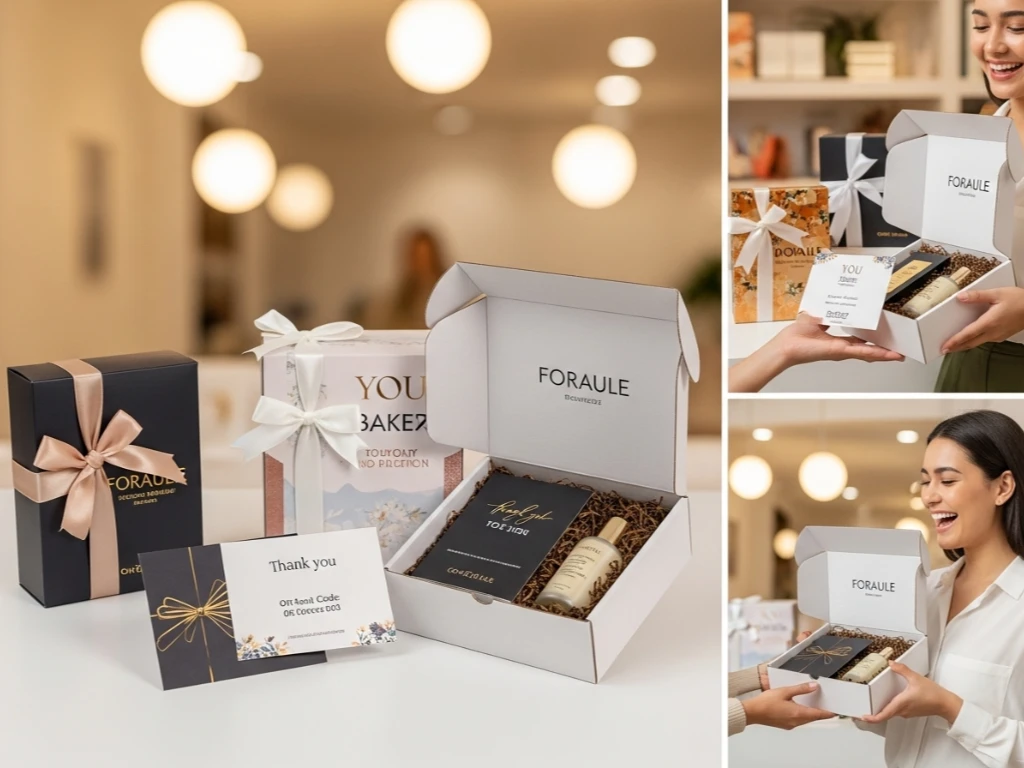
People photograph packs that open in one motion and hold the product still. That is a fit problem.
- The lid or tuck opens without tearing the face.
- The insert keeps the item on center. A product that slides to a corner photographs as a packing error.
- Tissue, if you use it, should not shed dye onto a light product. Specify the tissue. Do not leave it as "some filler."
- A ribbon crushed under a master-carton flap arrives as a crease in the lid. Pack the ribbon flat, or leave it off the parcel unit and add it at the store.
None of that creates a reorder by itself. A buyer who liked the product can find the brand again if the mark is still legible and the color is the one they remember. A buyer who disliked the product will not be kept by foil. Spec the box so the brand is identifiable. Keep the loyalty claim on the product.
The packs that get reused are usually the rigid ones: a lid and base that still close, a drawer that still runs. A folding carton with a cracked crease is discarded. If "they might keep it" is part of the brief, spec the caliper and the closure for that, and say so on the order.
Coatings, fiber, and the logo

Buyers now ask what the box is made of before they ask for a second foil. Answer with the construction.
- Board: SBS, FBB, kraft, greyboard, or a recycled grade, with caliper.
- Surface: aqueous, film, soft-touch. Film and soft-touch change the recycling conversation.
- Extras: magnet, metalized foil, plastic window, EVA insert. Each one is a material the recycler has to deal with.
- Fiber claim: FSC paper is available on request. The certificate and the claim (Mix or Recycled) belong on the order, not only on the mood board.
A recycling icon printed next to a full soft-touch laminate and two magnets is a claim the retailer may ask you to pull. Match the icon to the build. Any declaration of conformity follows the brand's spec.
Finish and trust are the same inspection

A recipient does not measure caliper. They notice a fuzzy foil edge, a logo that sits 3 mm off the sample, a soft-touch sheet full of fisheyes, and a lid that scrapes. Those are converting defects. They read as carelessness because they are visible on a gift.
Hold the bulk to a signed sample: logo position, foil or emboss depth, color under the agreed light, and the closure after it has been opened a few times. Write the deviations on the sample. The next order is matched to that sheet, not to the memory of a meeting.
The quote is written after the structure, the board, the print, and the quantity are known. Send the dieline or the product size, the logo placement, and the finish list.
info@axwp.com, +86 158 1238 1273, WeChat trimgem.
