A flip-top magnetic box is a rigid lid hinged to a base, pulled shut by magnets you should not see. The click is the magnets meeting the strike plate or the second magnet. If the board is twisted or the magnet sits low, there is no click. There is a lid that stands open.
The format shows up in jewelry, skincare, confectionery, home fragrance, and small electronics because the lid can carry a graphic and the cavity can hold an insert. It is still greyboard, wrap, and hardware. Specify those.
What is in the joint
The board is greyboard, commonly 1,200–1,800 gsm for this style. Thicker board when the product is dense. The stiffness you feel is that core. A soft-touch film on 800 gsm board will not imitate it.
The hinge is a wrap, or a separate hinge paper, crossing from lid to base. It has to flex without cracking the print. Grain direction matters. A hinge that runs against the grain splits after a few openings.
Magnets are hidden in the turn-in or sandwiched between wrap and board. The outside stays one sheet, with no glue bump if the well is routed or built to the magnet thickness. Adhesive-free on the outside means the closure hardware is buried. It does not mean the box is made without glue. The wrap is glued to the board.
Place two magnets, or a magnet and a steel plate, so they meet when the lid is square. A magnet that is proud of the board prints a lump through C1S. A magnet that sits too deep never catches. Approve the closure on a wrapped sample, not on a rendering.

Where it earns its cost
Labor is the reason this box costs more than a crash-lock carton. Someone wraps the board, sets the magnets, and fits the insert. The quote cannot be real until those steps are in the spec. MOQ at Tendlyn is 100.
Jewelry and watches. The cavity is usually a pulp tray, a die-cut paper fitment, or a padded platform. Velvet and satin are textiles glued into that cavity. They change the recycling story. If the claim is a paper box, use a paper fitment and say so.
Skincare. Jars and tubes need a stop so they do not hit the lid. A clean open matters because the customer uses the box more than once. Size the lid clearance to the cap, including a pump.
Chocolate and food gifts. Most of these are secondary packs. The confection is already wrapped. If board or glue touches the food, you need a declaration that matches your spec. A magnetic gift box is not food-contact by default.
Home fragrance and small electronics. The box is a shipper and a keeper. Glass and devices want a cavity that locates them. The magnet does not cushion anything.
Details that separate a good one
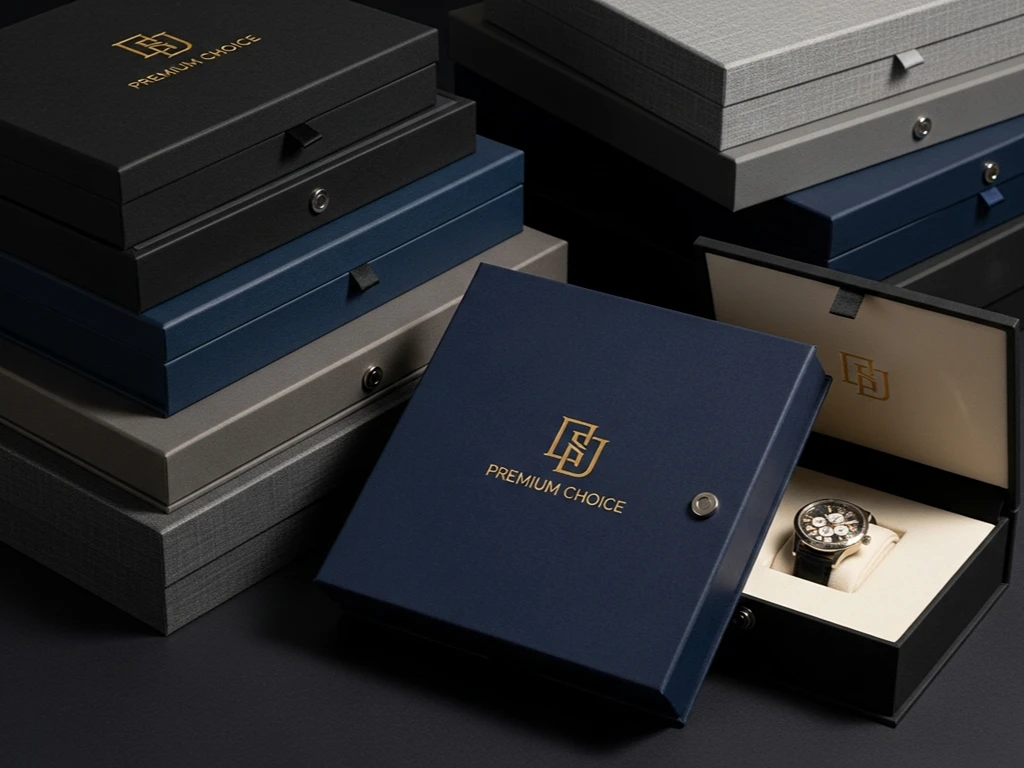
- Hidden hardware. No magnet visible on the face, no steel plate shining at the front edge unless that is a design and you drew it.
- A quiet outside. One graphic, not a hinge covered in type. Nordic-style packs stay almost blank because foil on a hinge cracks.
- An insert that matches the SKU. Molded pulp, die-cut kraft, or paperboard. Foam only if you have accepted a plastic part. A modular insert is a second tool. It is worth it when the outer box stays and the tray changes by season.
- A way to open it. A thumb notch or a short ribbon. The notch is a cut in the board. It has to be on the dieline. A ribbon is hand work and a material you should name.
The wrap decides the hand as much as the magnet does. C1S art paper, a textured sheet, a soft-touch coating, or an FSC kraft if you ordered FSC. FSC is on request, not assumed. Thick texture and a tight turn-in crack. Check the corner.
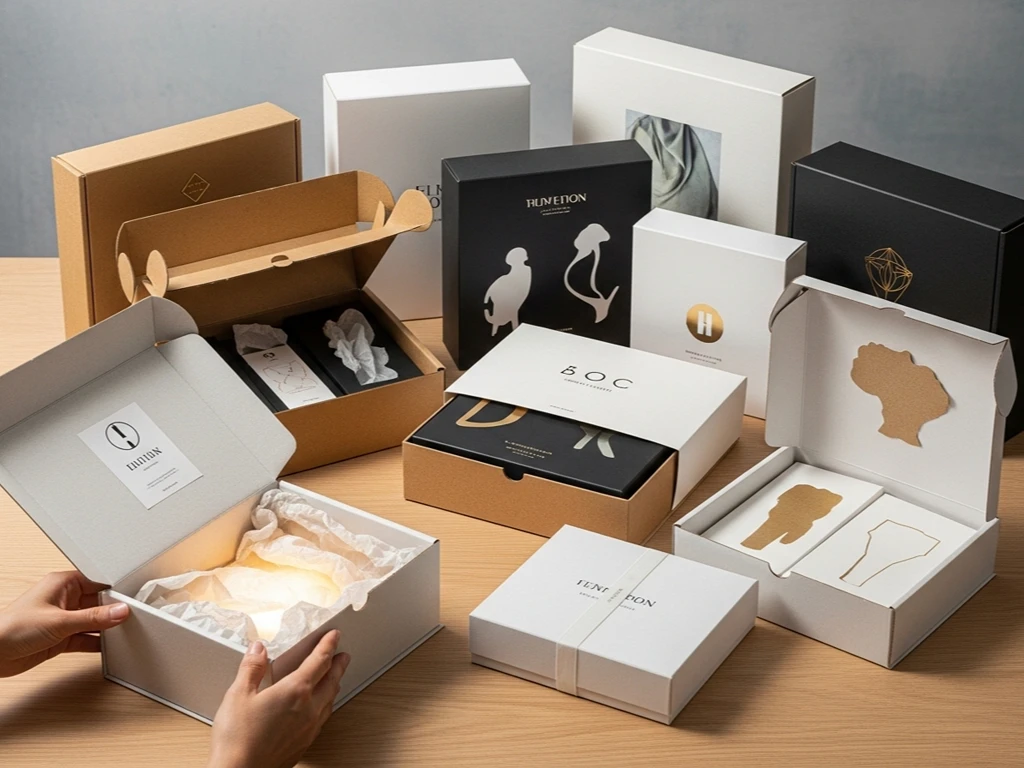
Finishes
Foil, matte or gloss film, pearlescent film, aqueous, and spot UV all go on the wrap. Often they are done before the sheet is mounted.
Foil is a metal die and heat. Keep it off the hinge and off the turn-in. Spot UV needs a matte field that will take the varnish. Film lamination resists scuff and adds plastic. Aqueous resists less and stays closer to paper. Pearlescent film is a film. If the brief says recyclable paper, write which of these are allowed before the dieline is pretty.
Printed interiors, a lot code, or a QR code sit on the inside wrap. Leave a quiet margin at the hinge. Ink that crosses the fold cracks and looks like a print fault.
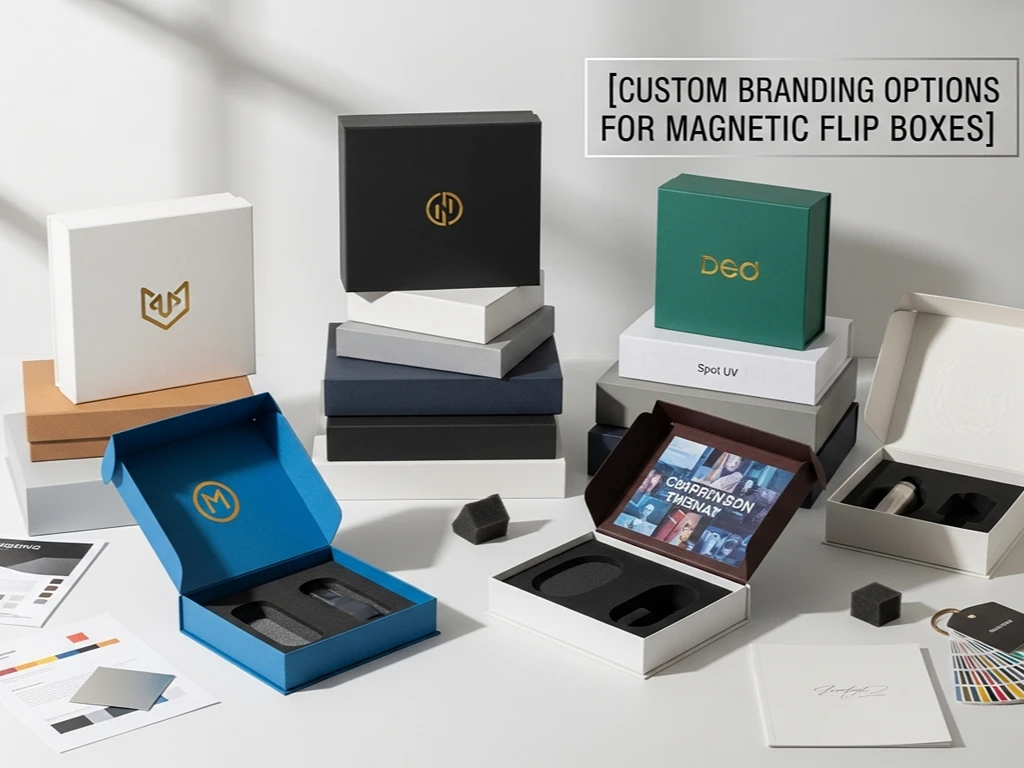
Emboss and deboss need their own die. On a wrapped rigid box you are pressing the sheet and the board under it. A deep deboss into 1,200 gsm greyboard is visible. A shallow one disappears under soft-touch. Approve it on the production board.
Opening, weight, and the claim
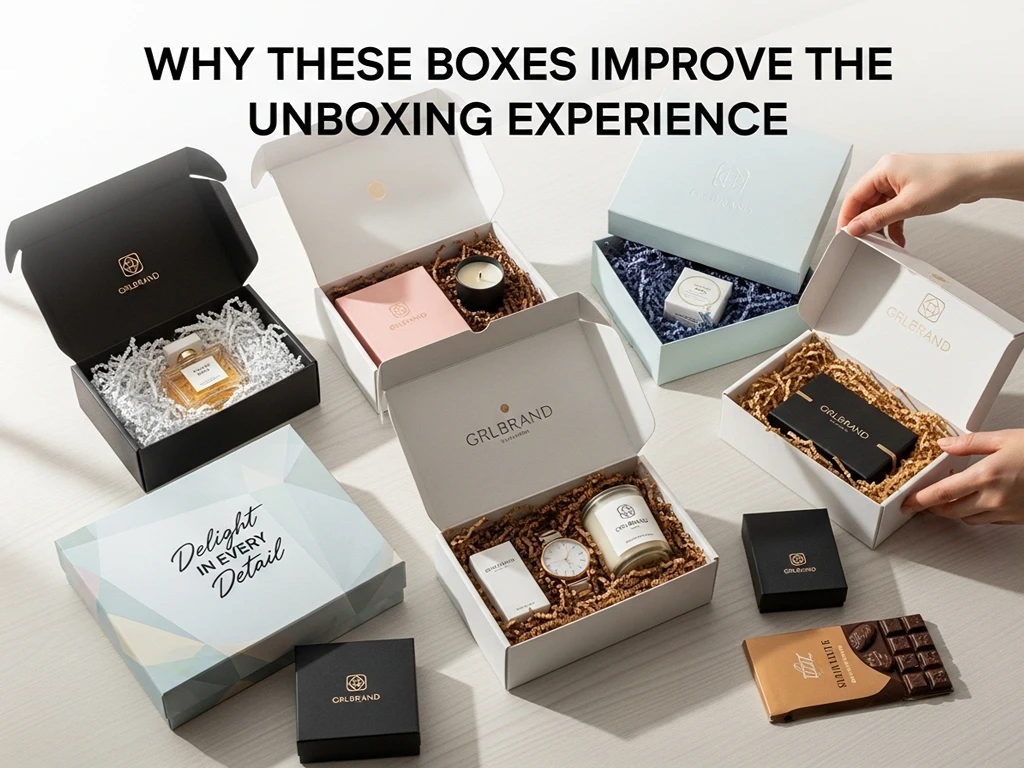
The useful parts of the open are mechanical. The lid reaches the magnets without a shove. The magnets hold if the box is lifted by the lid, or they do not, and you decide which you wanted. The insert keeps the product off the hinge.
People dislike gift packs that need a knife. A flip-top avoids that only if the notch is large enough and the magnet is not oversized. An oversized magnet looks “premium” in a meeting and tires the user. Specify the hold you want by testing the sample with the filled weight.
A heavy board reads as quality only when the corners are square. Twist, a gap at the front, or a magnet lump will be what they notice instead.
On materials, kraft board, water-based ink, and a paper insert are the paper path. A textile lining, a foam tray, and a film laminate are the path away from it. European and US buyers who reject surplus packaging are reacting to those extra parts, and to empty volume. A magnetic box that is twice the product, filled with foam, is the pack they mean. Size the cavity to the product.
What to send
Inside dimensions, greyboard gsm, wrap sheet, magnet closure, hinge side, insert, finishes, and whether FSC or a conformity declaration is required. Declarations follow your spec. Quantity next. The price is written after structure, board, print, and quantity are known.
